
Time and place
Iran
These dates mark the focus of this case, not the full history of the place or its communities.
Connected worlds · Institutions · Iran
518 BCE–330 BCE (focus interval)
What does a palace complex choose to make visible?
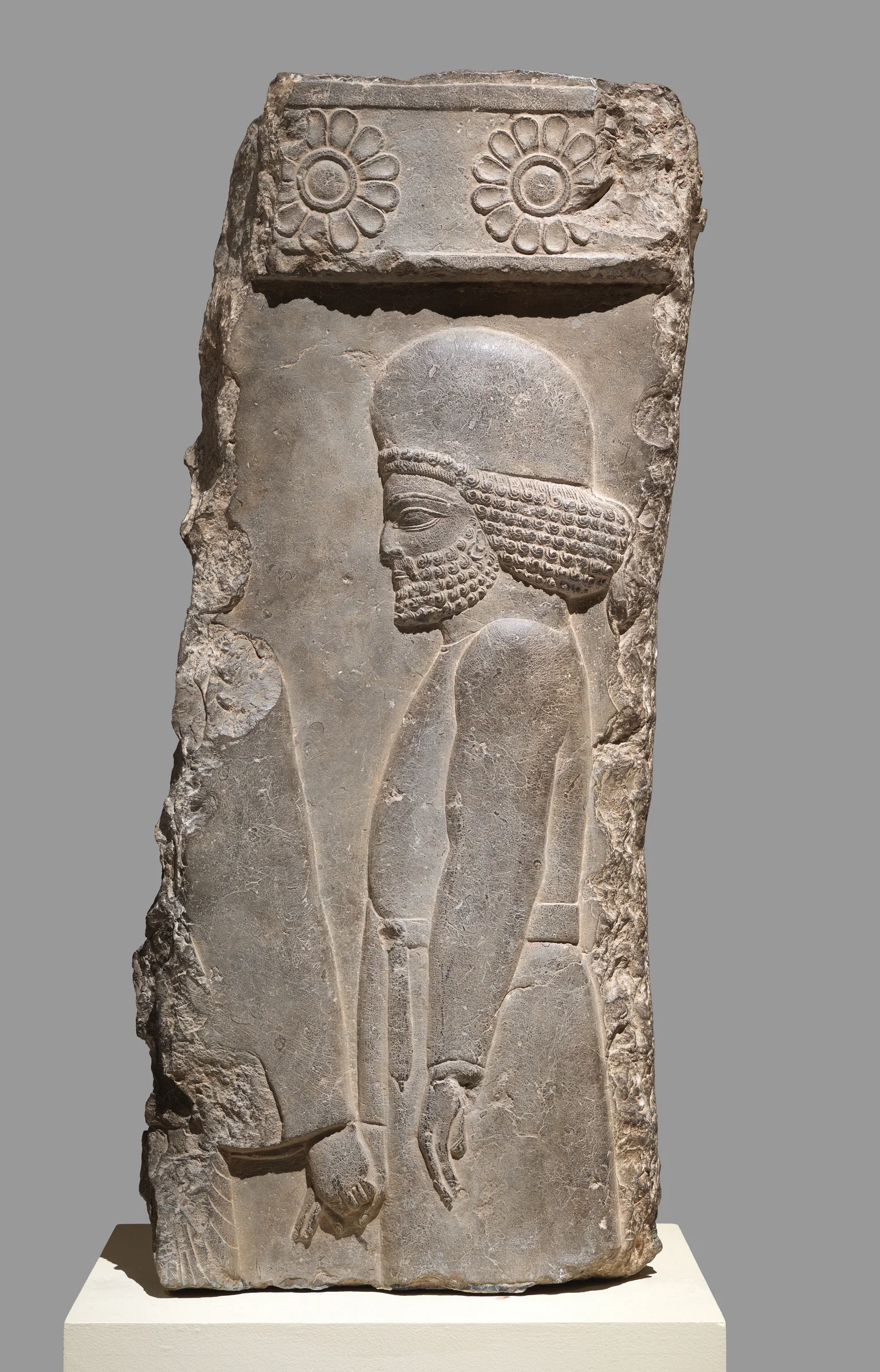
Darius I began the Persepolis complex in 518 BCE on a monumental terrace. Its buildings and surviving objects provide ways to examine royal presentation and the work of construction.
Iran · 518 BCE–330 BCE (focus interval)
These points locate named sites or parts of a listed property. They show geographic references, not ancient borders or excavation plans. They make no claim about present-day sovereignty.
● Published reference point. Natural Earth public-domain land outline. No political boundaries are shown. The map does not capture scrolling.
Published heritage-property reference point; not an excavation coordinate or ancient boundary. Present-day geographic reference for the named site/component; does not date an occupation or establish a territory.
29.9344°, 52.8903° · Coordinate source ↗
N29 56 3.984 E52 53 25.008
Coordinate source checked 2026-10-27.
Iran
These dates mark the focus of this case, not the full history of the place or its communities.
Darius I began the Persepolis complex in 518 BCE on a monumental terrace.
A palace complex shows selected aspects of royal life and building; it cannot represent all of Achaemenid society.
An Achaemenid palace is not a complete reconstruction of Achaemenid society or the later Sasanian period.
The excavating institution’s catalogue was read. For Schmidt’s Persepolis I, only the publication page and contents were inspected, not the full 1953 monograph.
Source links apply to specific claims. Several links can lead back to the same study. Read what each source supports.
What remains uncertain
An Achaemenid palace is not a complete reconstruction of Achaemenid society or the later Sasanian period.
Institutional primary description; introductory synthesis
Description and statement of Outstanding Universal Value
What remains uncertain
One inscribed object does not explain all royal administration.
Excavating institution’s object catalog
Egyptian-Blue Wall Peg highlight
What remains uncertain
Museum selection is not an inventory of the whole complex.
Excavating institution’s architectural object catalog
Limestone Column Capital highlight
A palace complex shows selected aspects of royal life and building; it cannot represent all of Achaemenid society.
Limit: An Achaemenid palace is not a complete reconstruction of Achaemenid society or the later Sasanian period.
UNESCO World Heritage Centre: Persepolis ↓Inscribed fittings and carved capitals offer different material traces of the royal complex.
Limit: Do not infer every maker, supply route or ceremony from these examples.
University of Chicago ISAC: Persian Gallery object highlights ↓Object records connect material observations with an excavated place.
Limit: An institution’s display does not alone clear image rights.
University of Chicago ISAC: Persian Gallery object highlights ↓Darius I began the Persepolis complex in 518 BCE on a monumental terrace.
Institutional primary web account inspected 27 October 2026; no fieldwork or independent peer review claimed
Several links may describe the same research. Shared authors or data can limit how much independent confirmation they provide.
Excavated objects linked to royal inscription and audience-hall architecture.
Primary institutional/project text inspected 27 October 2026; specified body sections read
Several links may describe the same research. Shared authors or data can limit how much independent confirmation they provide.