WE ARE WHAT’S LEFT · OPEN HUMAN ARCHIVENO CLEARANCE REQUIREDMASTER FILE · REV. 2026.08
The Human Saga
We were never alone.
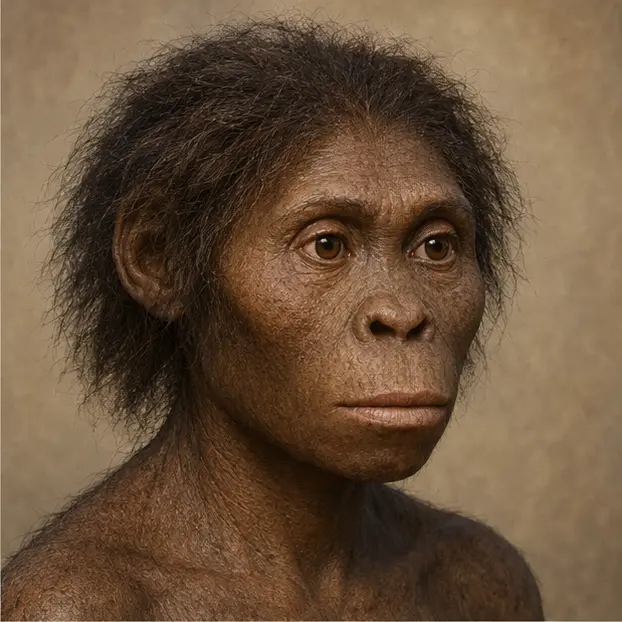
Meet the human family through fossils, archaeology and genetics. Follow how different humans evolved, moved, adapted, met and sometimes had children together, and see what the evidence can tell us today.
Explore the Human Saga
New here? Start the story for a chronological introduction. Then explore Atlas to connect time and place, or open Reports for a human-family profile and its sources. Evidence labels distinguish established findings, interpretation and active debate.
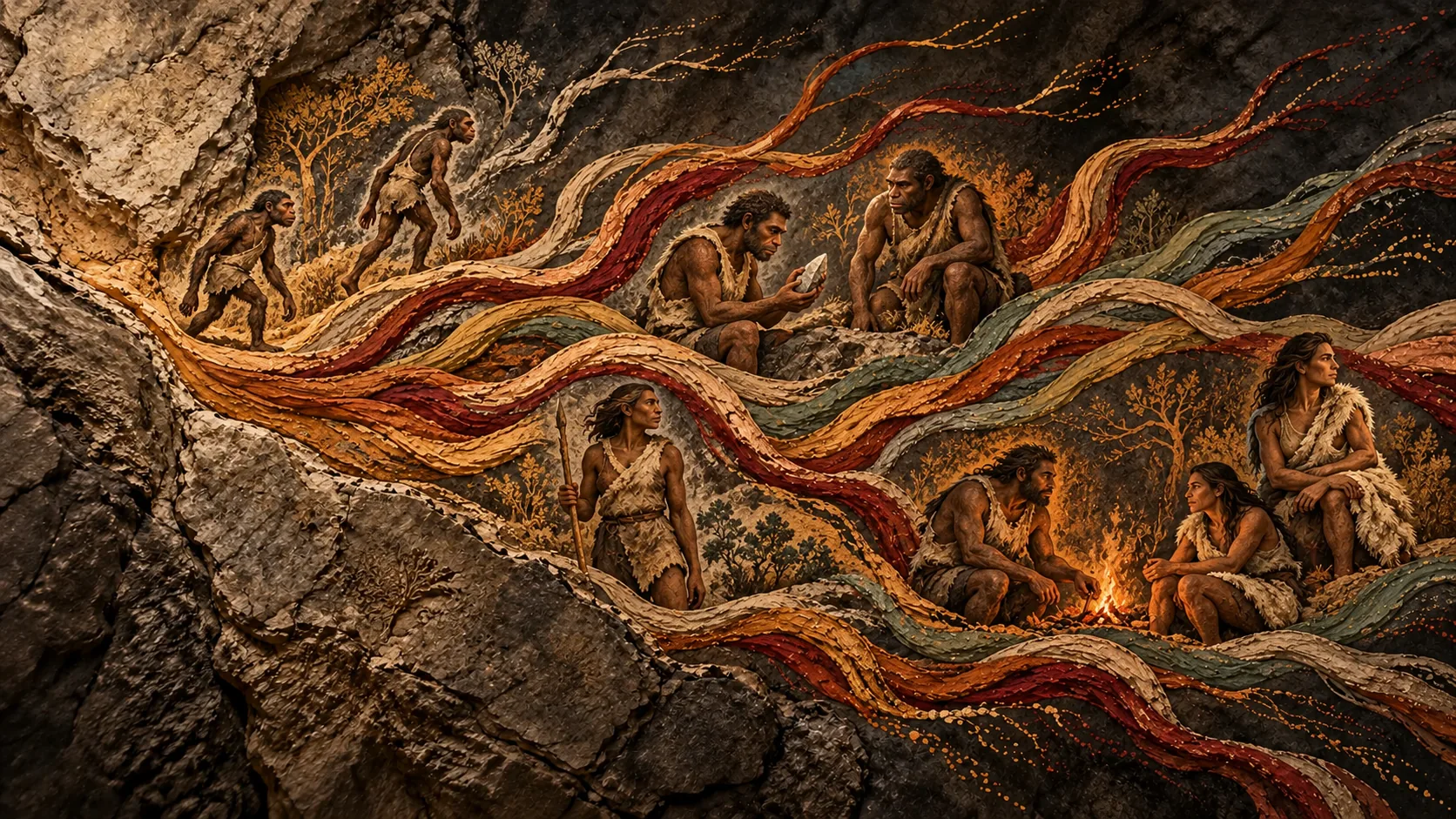
Braided evolution · AI-generated conceptual artwork · not a lineage diagramAI concept · not a lineage diagram
Ten ranked findings from 2026, with the evidence behind them and an explanation of their significance.Swipe through the ranked findings →
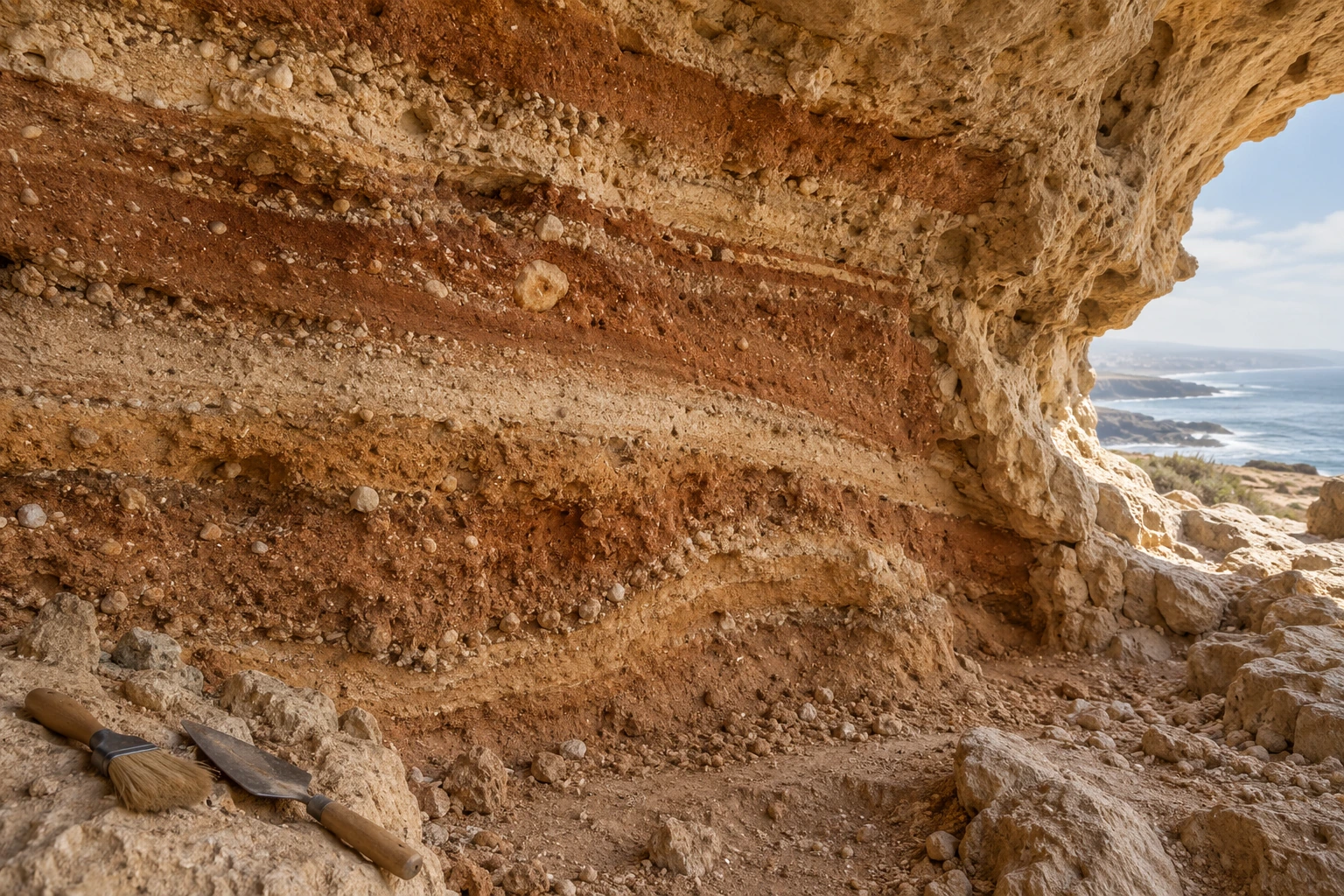
01Interpretive illustration of a Moroccan cave-deposit excavation context. The Thomas Quarry fossils date to about 773 ka; the scene does not reproduce the exact excavation or identify a proven last common ancestor.
Fossils · 773 ± 4 KA
Thomas Quarry closes an African gap
Moroccan fossils constrain African population history near the divergence of later lineages; they do not identify a proven common ancestor.
Tests the geographic and anatomical context of early sapiens ancestry.
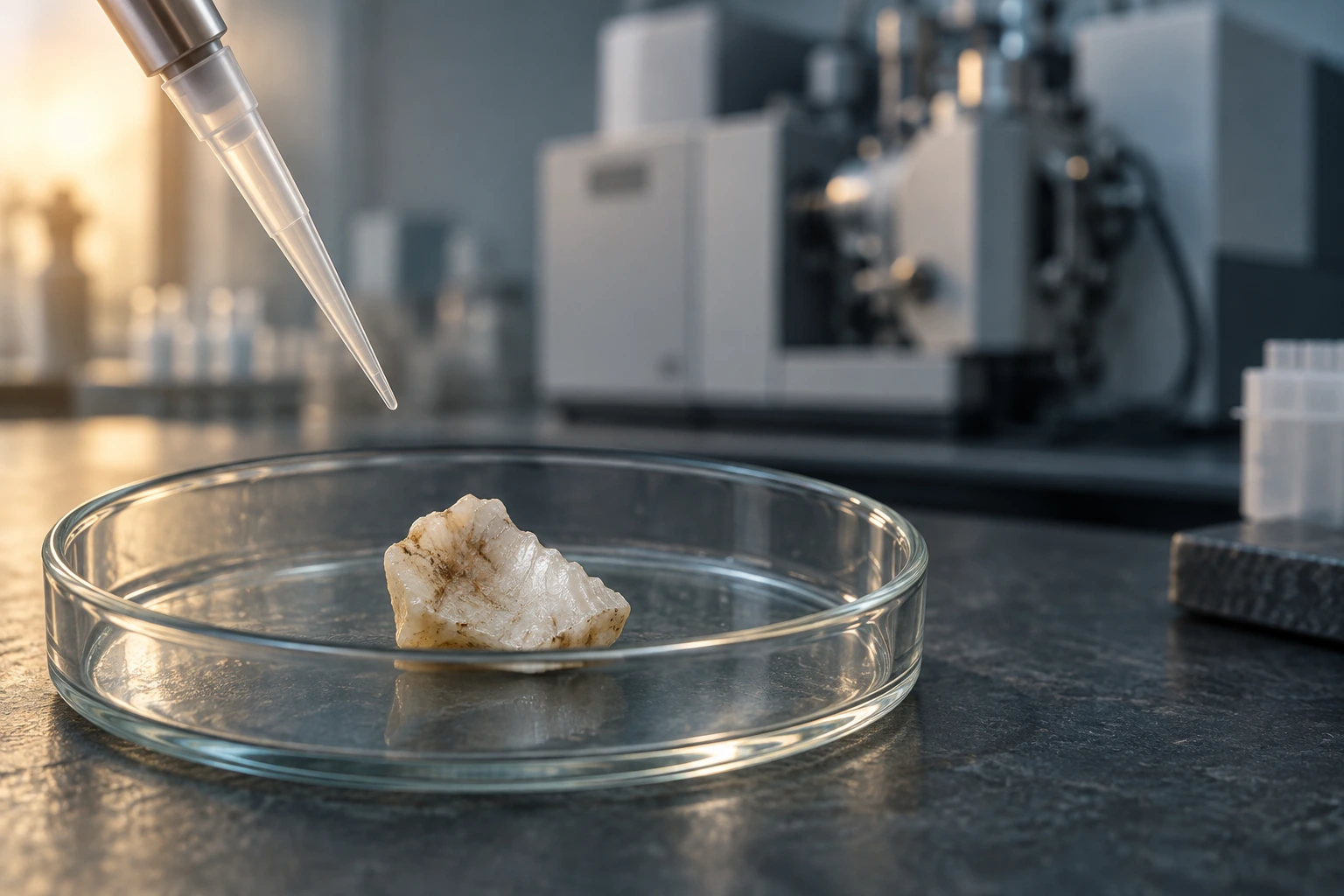
02Conceptual material study of enamel-protein sampling. The study examined six Chinese fossils; this generic fragment is not a depiction of one of those specimens, and protein evidence is not a complete genome.
Molecules · ~400 KA
Chinese Homo erectus gains proteins
Enamel proteomes connect six East Asian fossils through shared variants and a possible Denisovan-related signal.
Allows comparisons between molecular and morphological classifications in East Asia.
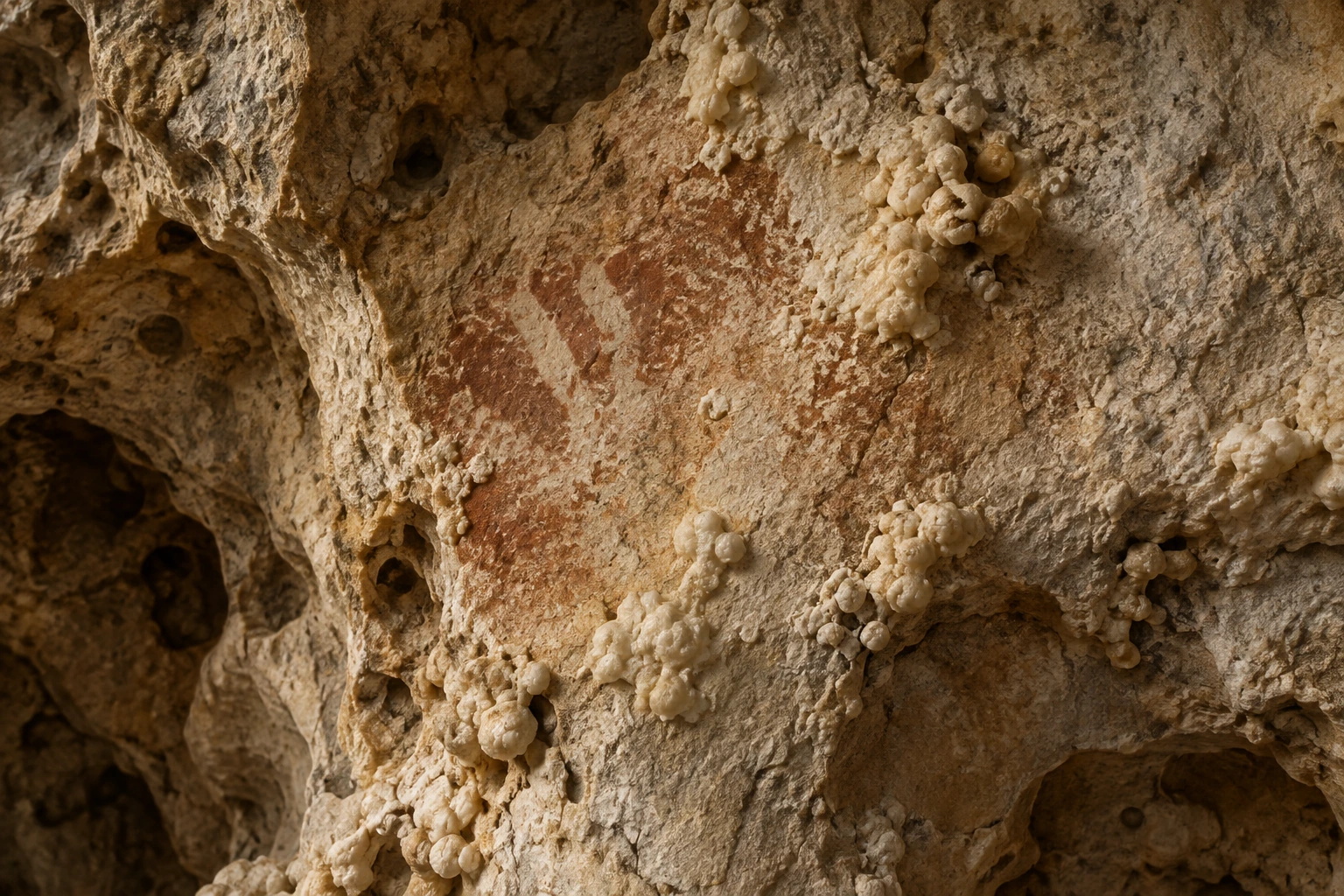
03Interpretive study of pigment and overlying calcite, inspired by the fragmentary hand-stencil evidence from Liang Metanduno. It is not a tracing; the 67.8 ka minimum age does not prove the maker’s identity or a migration route.
Art · ≥67.8 KA
Wallacean rock art moves earlier
A Sulawesi hand stencil supplies the minimum age of 67.8 thousand years for a hand stencil; the individual maker is unknown.
Constrains regional activity without independently proving a route into Sahul.
04Conceptual illustration of ancestry inferred from genetic relationships. The interwoven strands are a visual metaphor, not a genealogy, measured result, or reconstruction of an unknown hominin’s appearance.
Genomes · Living people
Ghost lineages become visible
TRACE infers archaic ancestry from present-day genomes without a sequenced archaic reference or outgroup. Inferred lineages are not named fossil species.
Shows inferred admixture as probability bands rather than precise arrows.
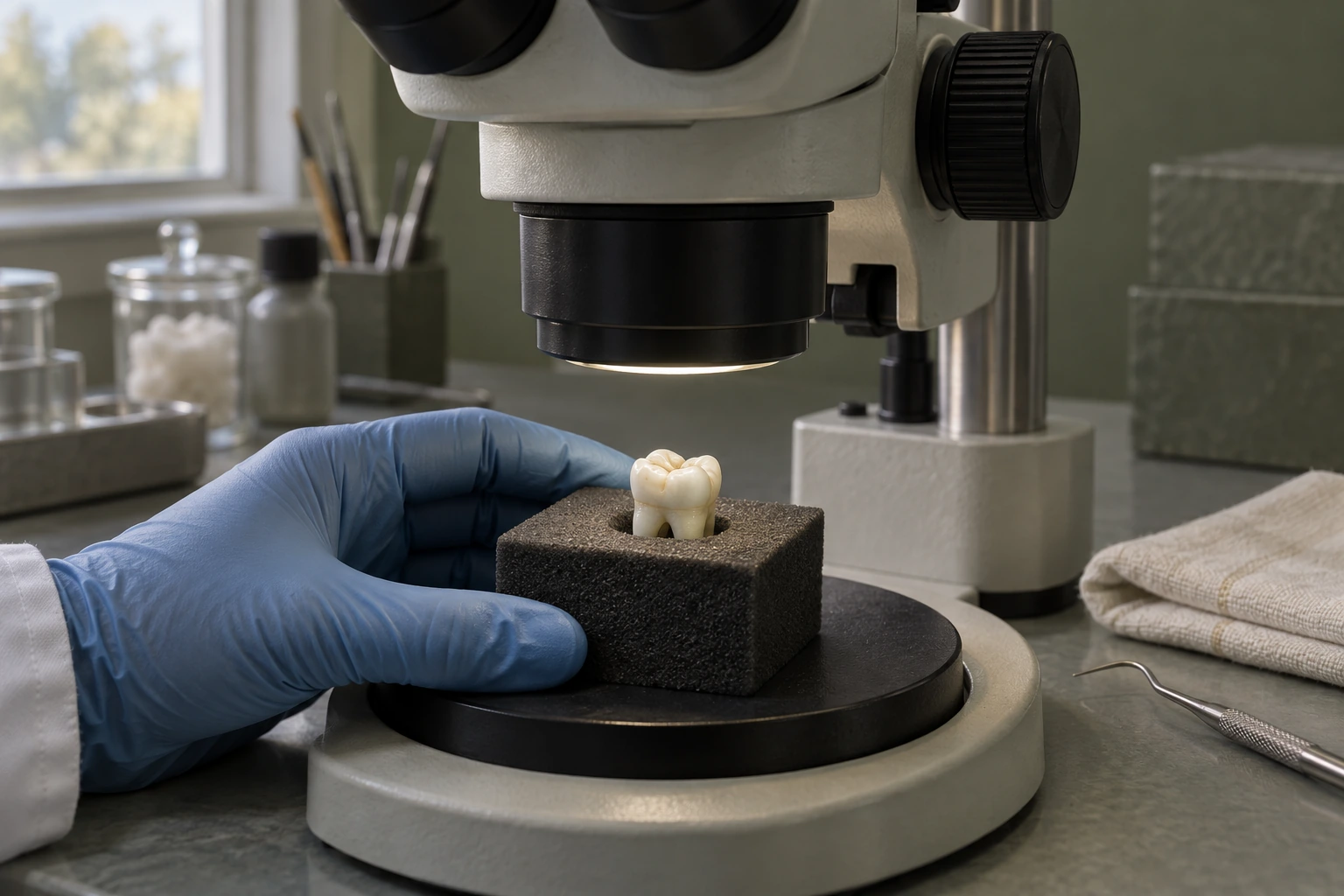
05Laboratory-context illustration for the Stajnia tooth study. The small tooth form is a generic teaching surrogate, not a studied fossil; mitochondrial relationships do not by themselves establish a complete family genealogy.
Neanderthals · ~100 KA
A connected Central European population
Eight new mitogenomes from nine teeth represent at least seven, possibly eight individuals at Stajnia. Mitochondrial ancestry is only one part of population history.
Helps compare connections among populations across the region.
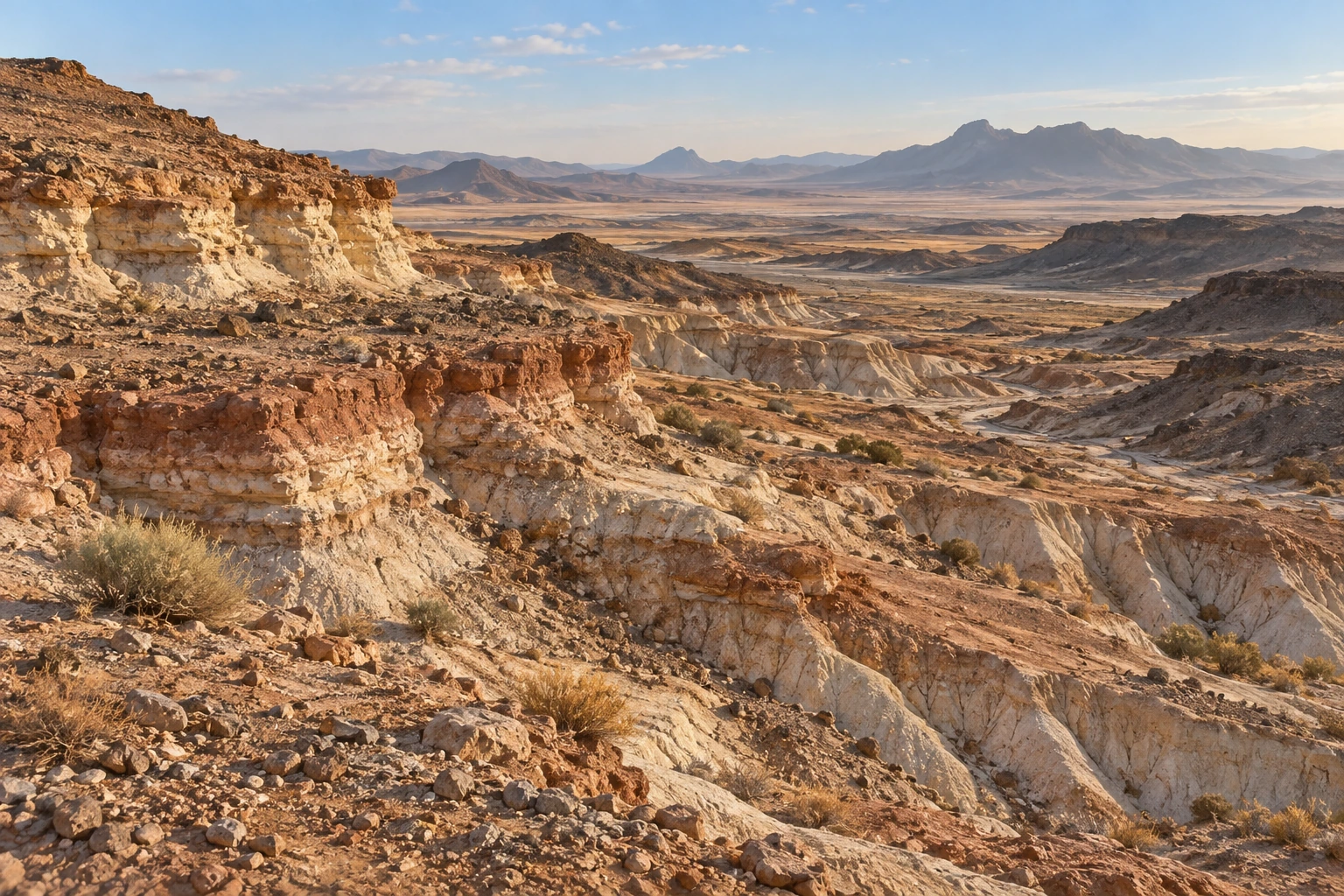
06Interpretive landscape of the Afar fossil-bearing region. MLP-3000 extends evidence for Paranthropus in eastern Africa; the illustration does not reproduce the fossil or identify it specifically as P. boisei.
Paranthropus · ~2.9–2.5 MA
MLP-3000 extends the known Paranthropus range
Afar specimens extend the genus Paranthropus northward and earlier; they do not extend the confirmed range of P. boisei.
Shows how absence may reflect sampling, not ecology.
07Conceptual close-up of micro-destructive enamel sampling. The naledi study found no convincing male markers in its sampled individuals; this does not establish an all-female assemblage or a burial practice.
Proteomics · Homo naledi
Protein complicates fossil sex estimates
A study of 23 specimens representing at least 20 individuals recovered no convincing male-specific amelogenin signal. This does not prove all were female.
Prompts a closer look at how fossil sex is inferred.
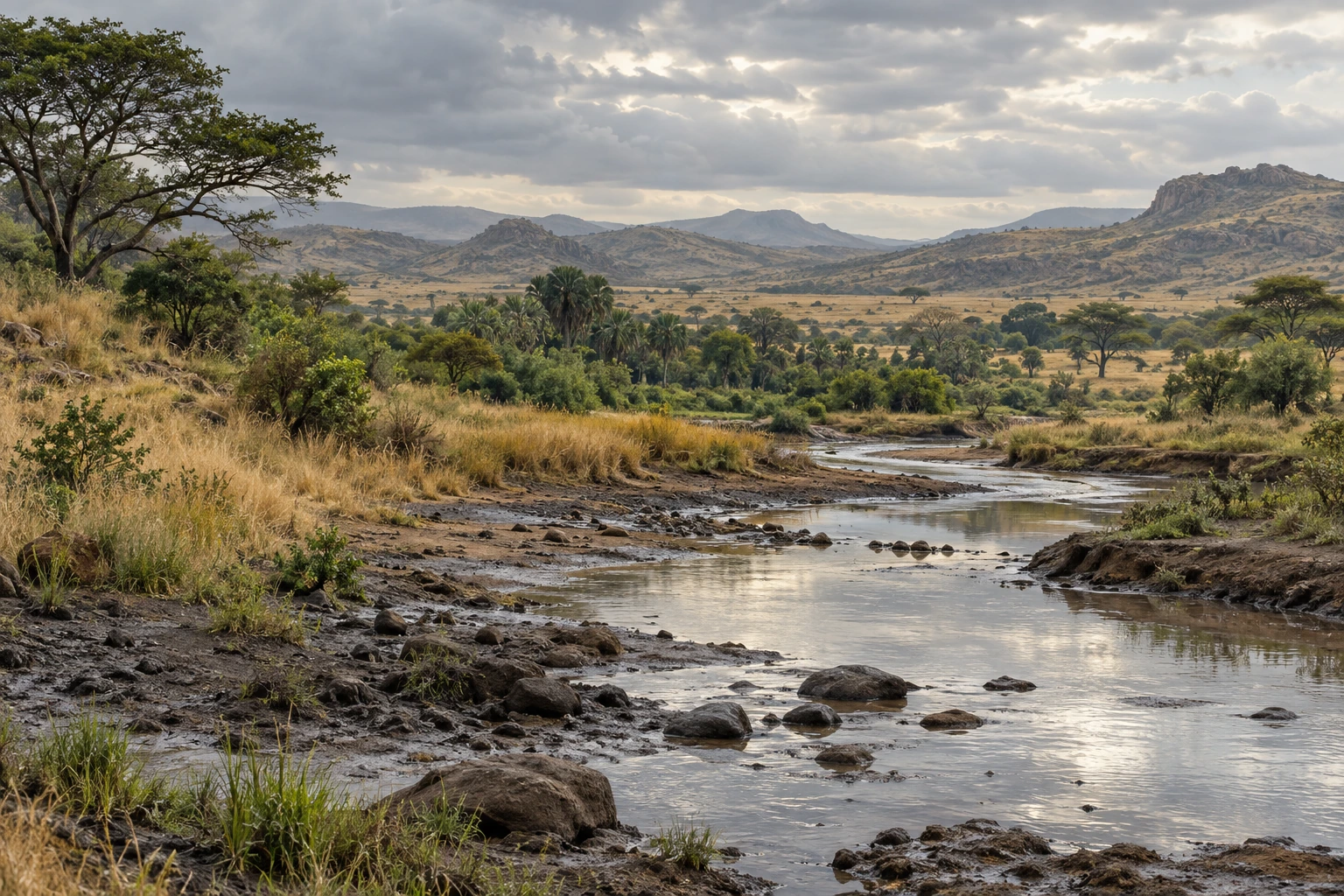
08Interpretive environmental study for eastern African hominin diversity. The evidence concerns regional overlap over time; the scene does not place four named taxa together at one site or in a single layer.
Early hominins · 3–2.5 MA
Several lineages overlapped in eastern Africa
Ledi-Geraru documents early Homo and Australopithecus. Wider regional comparisons add other taxa; this is not four species established together at one site.
Shows that early hominin lineages overlapped in time.
09Ancient-DNA laboratory illustration for genomic work on late Neanderthals from Belgium and France. It depicts a generic workflow, not the study’s staff or a genome result; conclusions remain regional and sample-bounded.
Genomes · Late Neanderthals
Twenty-seven genomes widen the record
Genome data from 27 individuals in Belgium and France broaden late Neanderthal diversity; uneven sampling still limits population-wide conclusions.
Adds evidence for late Neanderthal population history.
10Conceptual enlargement inspired by enamel’s bundled hydroxyapatite crystals. It is not microscopy data, a measured crystal map, or a specimen-specific account of diet.
Methods · Tooth nanostructure
Enamel becomes a dietary archive
Twelve teeth from nine primate species spanning 17.8 million years test enamel nanocrystal structure. It is a small comparative sample, not a universal dietary classifier.
Adds material structure to shape and wear evidence.
Explore the timeline, species and discoveries together. Follow their sources and see how new findings can change the wider picture.
RELATED EXPLAINERS
Watch, question, verify.
YouTube previews link to the original video. If a preview is unavailable, a clearly labeled archive illustration appears. Verify scientific claims against primary sources.
Expert discussion of a fast-changing identification.Open on YouTube ↗
START WITH THE EVIDENCE
Source desk
Audit status · 8 August 2026
Discovery records cite individual articles. Card-level Verify links provide authoritative starting points, but sentence-by-sentence claim IDs and source links remain an editorial requirement. Video links open curated searches of established educational and institutional channels; popularity alone is not an endorsement.
Editorial standard: primary research, community sources and museum-grade syntheses; dates shown as ranges; disputed claims labeled. Last reviewed 8 August 2026.

 01
 02
 03
 04
 05
 06
 07
 08
 09
 10
 WATCH ON YOUTUBE ↗
 WATCH ON YOUTUBE ↗
 WATCH ON YOUTUBE ↗