A first-stage Neanderthal prototype linking claims, sources, reconstruction choices and the pages that present them. Each layer distinguishes what was observed, what was inferred, what was reconstructed and what remains unknown.
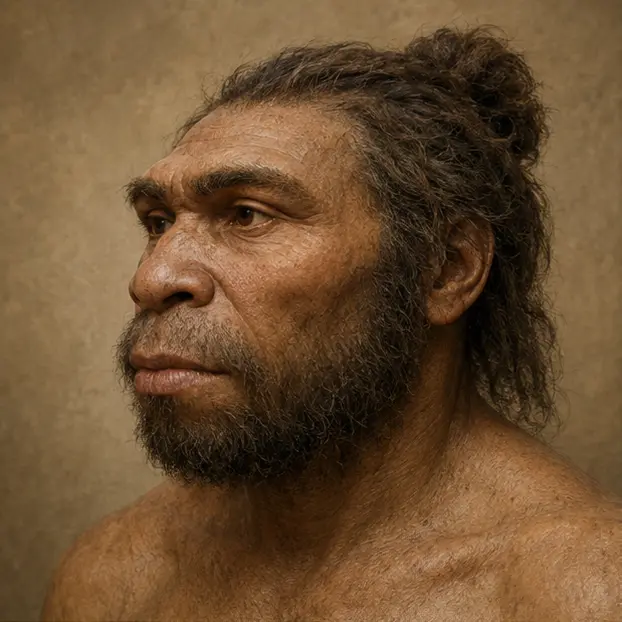
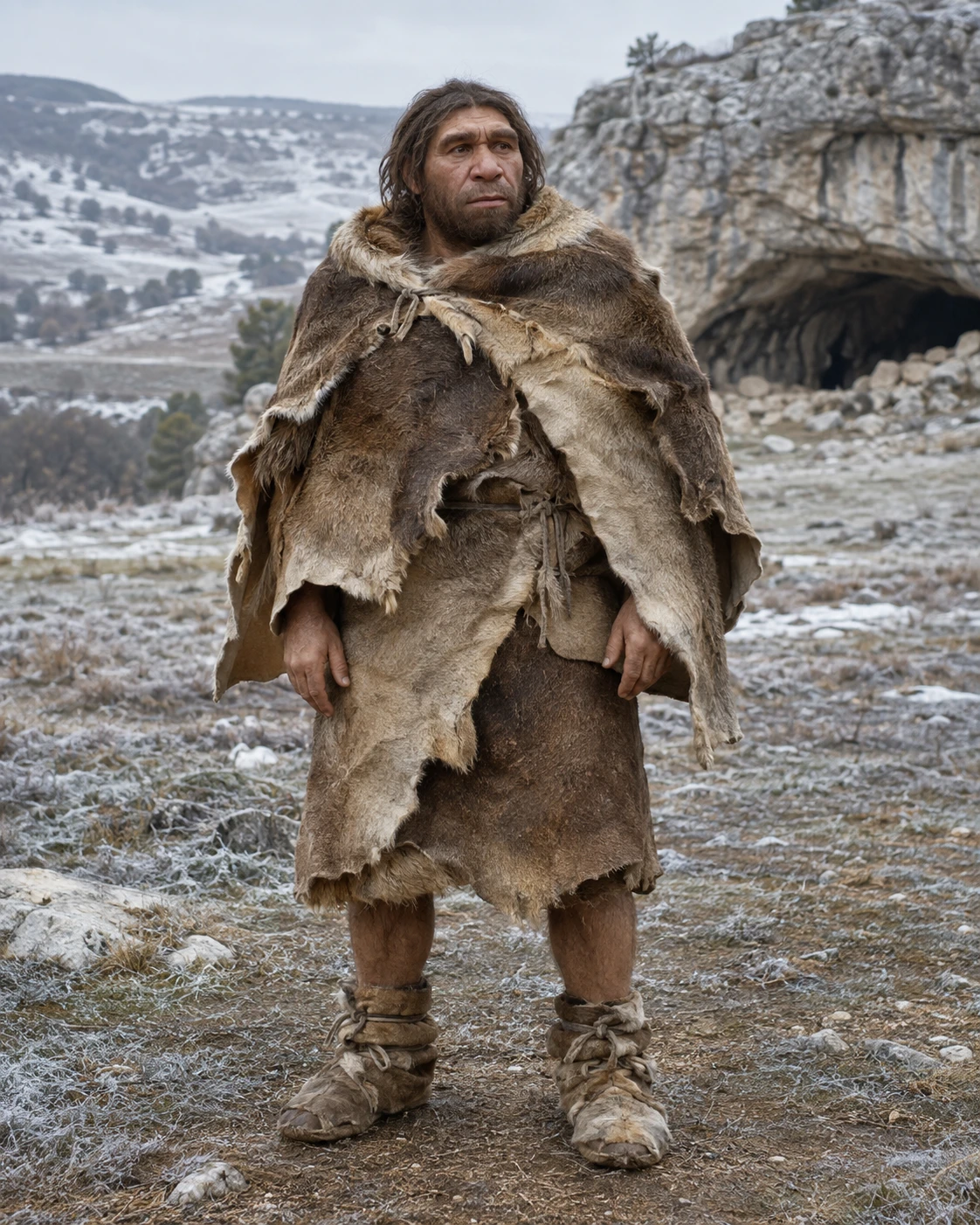
Portrait is interpretive. Fossils and other evidence constrain particular features; hair, soft tissue and expression are not an observed individual.
Probable reconstruction · moderate confidence
Body and face
Fossils constrain robust proportions and craniofacial anatomy; skin, hair, scars and individual appearance remain interpretive.
What is known
Robust skeleton, characteristic cranial anatomy and substantial regional and individual variation.
What is inferred
Soft-tissue depth and musculature can be reconstructed within ranges.
What remains unknown
A specific individual's pigmentation, hairstyle, expression and surface details.
Evidence in context.
Explore six parts of life. Photographs and illustrations show context; the linked research supports the claims.
01
Flaked stone and toolmaking context. AI-generated contextual illustration, not a specimen photograph or proof of a species-specific activity.Illustrative wooden spear technology. AI-generated contextual illustration, not a specimen photograph or proof of a species-specific activity.
Technology
Direct evidence · high confidence
Stone tools, hafted systems, fire, hide working and adhesives are directly represented. Organic tools are undercounted because preservation is uneven.
What remains uncertain Production methods differed and some may be simpler than earlier experimental reconstructions assumed.
Explore technology →02
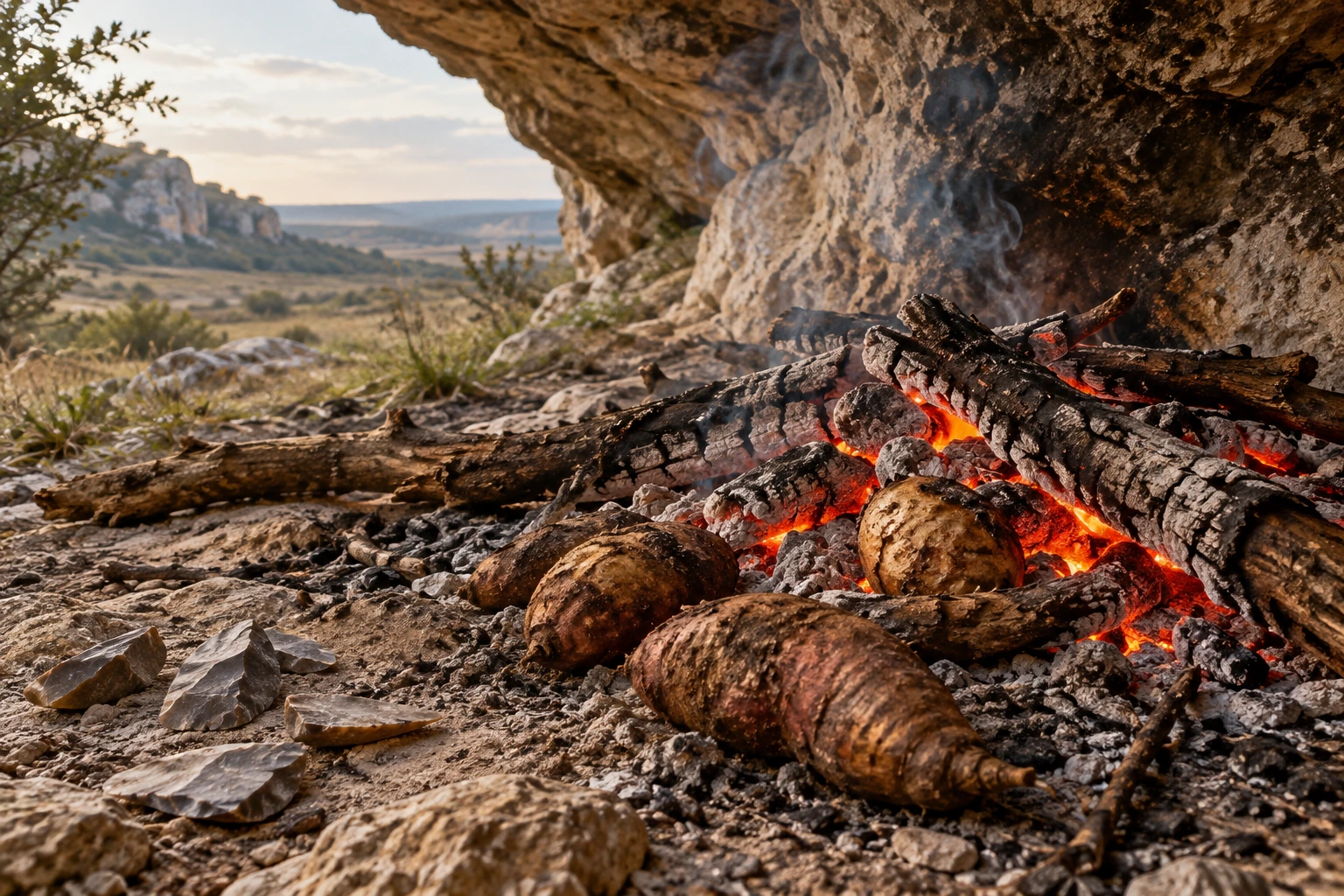
Foods and residues as evidence. AI-generated contextual illustration, not a specimen photograph or proof of a species-specific activity.Illustrative fire and food processing. AI-generated contextual illustration, not a specimen photograph or proof of a species-specific activity.
Food
Direct evidence · high confidence
Diet varied by ecology. Animal foods, cooked plants, fungi, seeds, legumes and shellfish are documented unevenly by site.
What remains uncertain Dental calculus samples are few and do not measure everything eaten or the proportion of each food.
Explore food →03
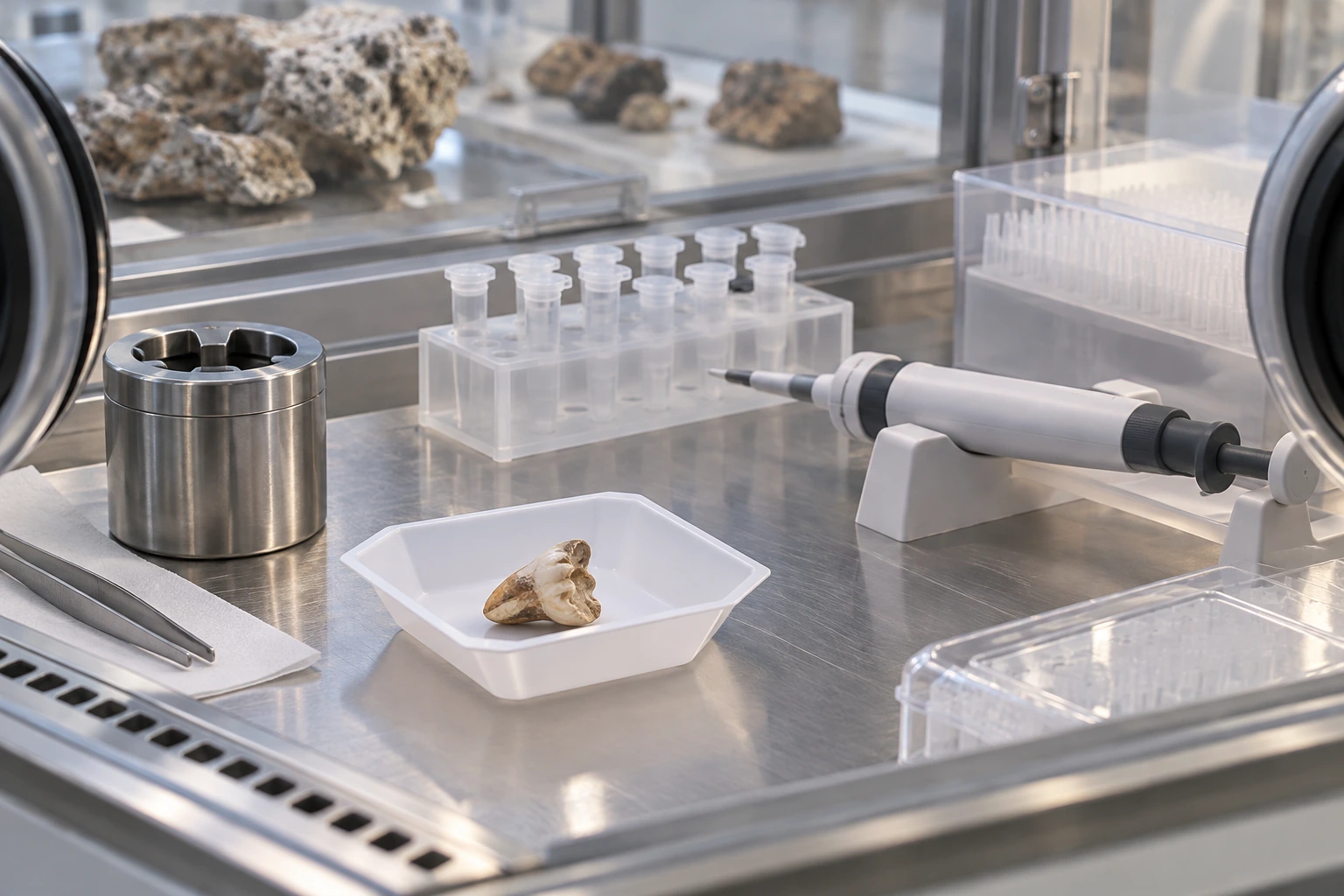
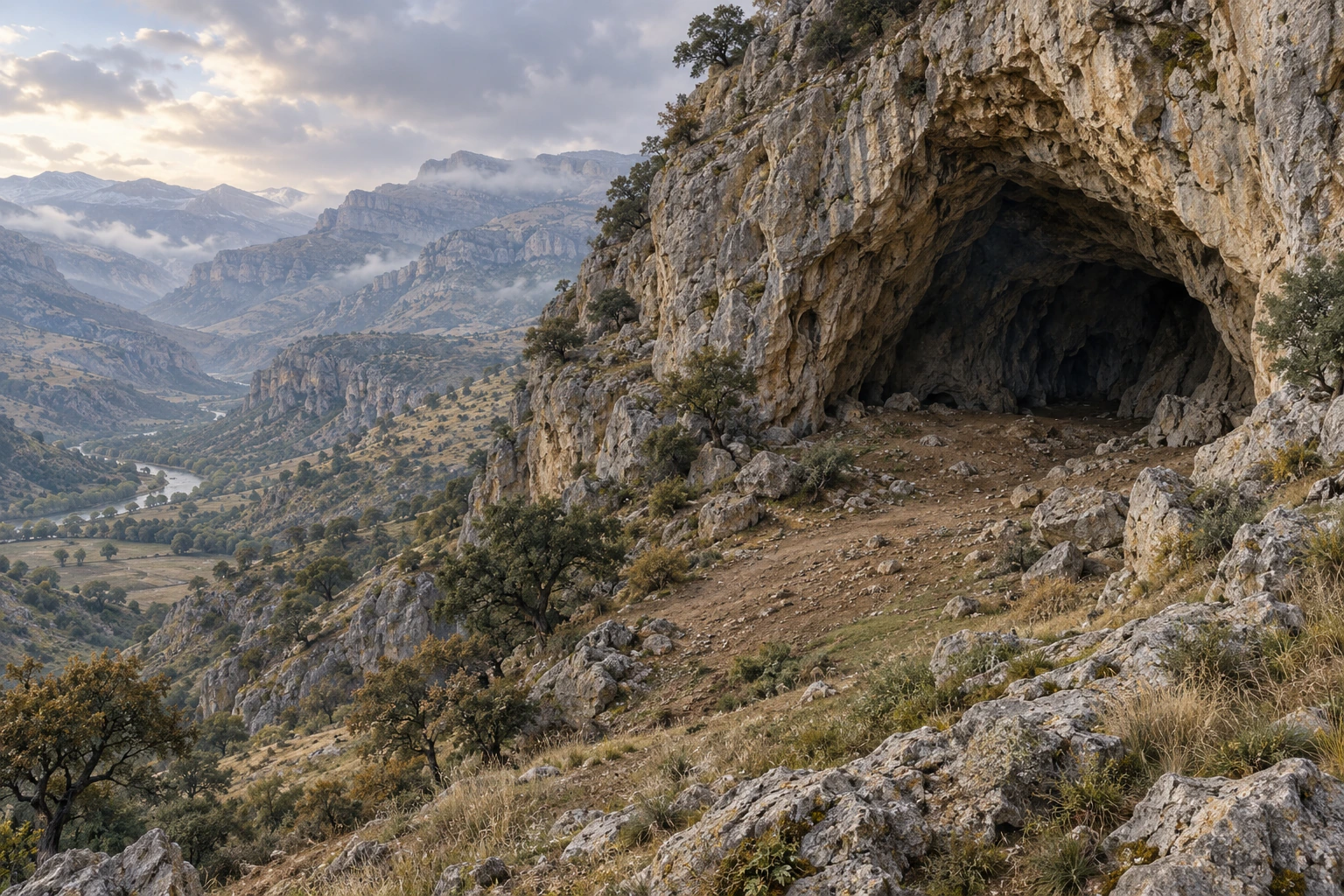
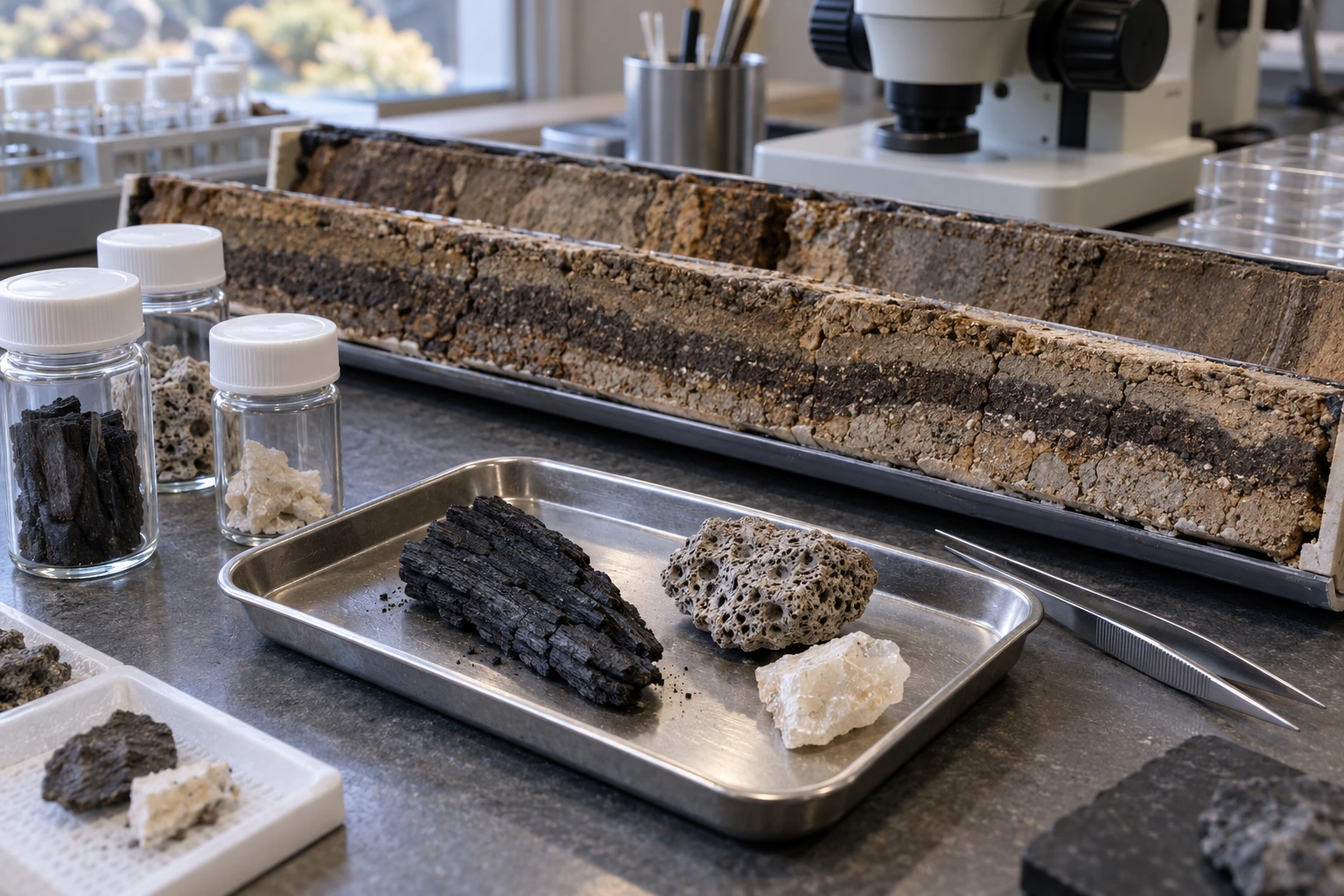
Laboratory study of ancient biological material. AI-generated contextual illustration, not a specimen photograph or proof of a species-specific activity.Cave archaeology and shared places. AI-generated contextual illustration, not a specimen photograph or proof of a species-specific activity.
Community
Strong inference · high confidence
Genomes reveal biological relatives in one cave context, but cannot supply names, roles or a universal kinship system.
What remains uncertain One regional community cannot define Neanderthal social organization across their full range and history.
Explore community →04
Field photograph of Bruniquel. The people are modern cavers. The structures survive; their original purpose remains unknown. Whole image resized; no content crop.Luc-Henri Fage/SSAC ↗ · CC BY-SA 4.0
Methods used to investigate chronology. AI-generated contextual illustration, not a specimen photograph or proof of a species-specific activity.
Construction
Direct evidence · high confidence
Bruniquel proves organized construction deep inside a cave. Its practical, social or ritual purpose remains unknown.
What remains uncertain The structures' specific purpose is unknown; ritual, shelter and other functions cannot be distinguished securely.
Explore construction →05
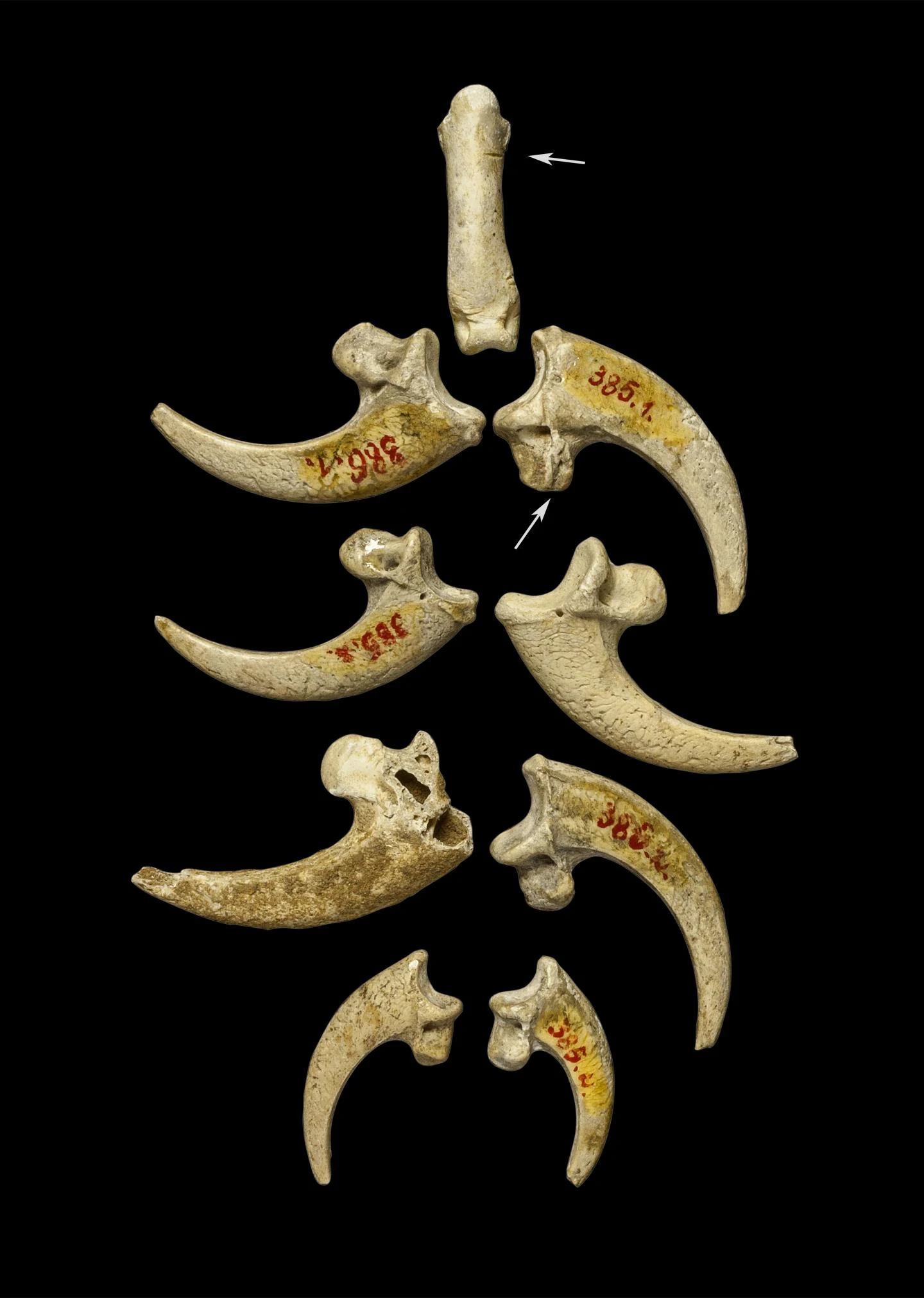
Specimen photograph. Worked talons from Krapina; their original arrangement and meaning remain inferred. This is not a surviving assembled necklace. Whole image resized; no content crop.Luka Mjeda, Zagreb ↗ · CC BY 4.0
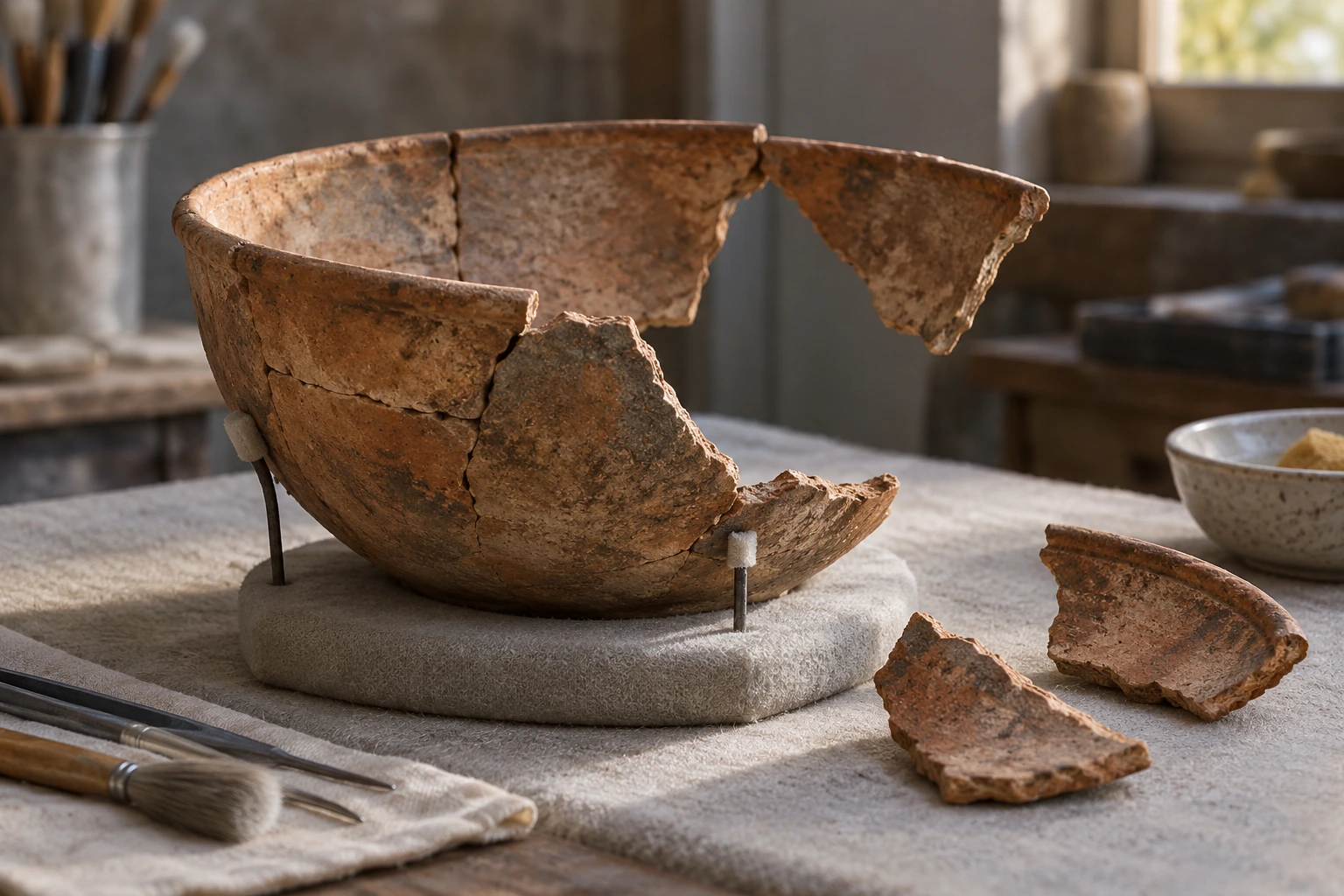
Studying an incomplete material record. AI-generated contextual illustration, not a specimen photograph or proof of a species-specific activity.
Adornment
Probable reconstruction · moderate confidence
Modified eagle talons support display or symbolic use in some contexts; exact meanings are unrecoverable.
What remains uncertain No cord or complete assembled object survives, so the final arrangement and meaning are inferred.
Explore adornment →06
Protective hide clothing concept. AI-generated contextual illustration, not a specimen photograph or proof of a species-specific activity.Comparative study of fragmentary remains. AI-generated contextual illustration, not a specimen photograph or proof of a species-specific activity.
Clothing
Strong inference · moderate confidence
Cold exposure and hide working support protective clothing. Cut, closures and social meaning remain reconstructed.
What remains uncertain Clothing need, hide processing and preserved garments are different evidence categories; regional variation was likely.
Explore clothing →
REPRESENTATIVE SOURCE CHAIN
Check the sources behind the reconstruction.
ChronologyNeanderthals persisted across major climatic shifts and vanished near 40,000 years ago.Direct evidence · high
The beginning of the lineage depends on which fossils are classified as Neanderthal or ancestral Neanderthal.
ClothingThey almost certainly protected their bodies with worked hides in cold regions; the outfits shown in art are interpretations.Strong inference · moderate
Clothing need, hide processing and preserved garments are different evidence categories; regional variation was likely.