
Time and place
North America
2026 is the reference year for the public governance account. The 1776 neutrality episode is a separate historical lens, not a founding date.
Connected worlds · Living heritage · North America
Contemporary public description (2026); founding date not asserted
Who should explain a living political tradition?
The Haudenosaunee Confederacy describes its national councils, Clan Mothers, chiefs and Grand Council in its own public account. This case begins with that living governance, then reads historical documents alongside it.
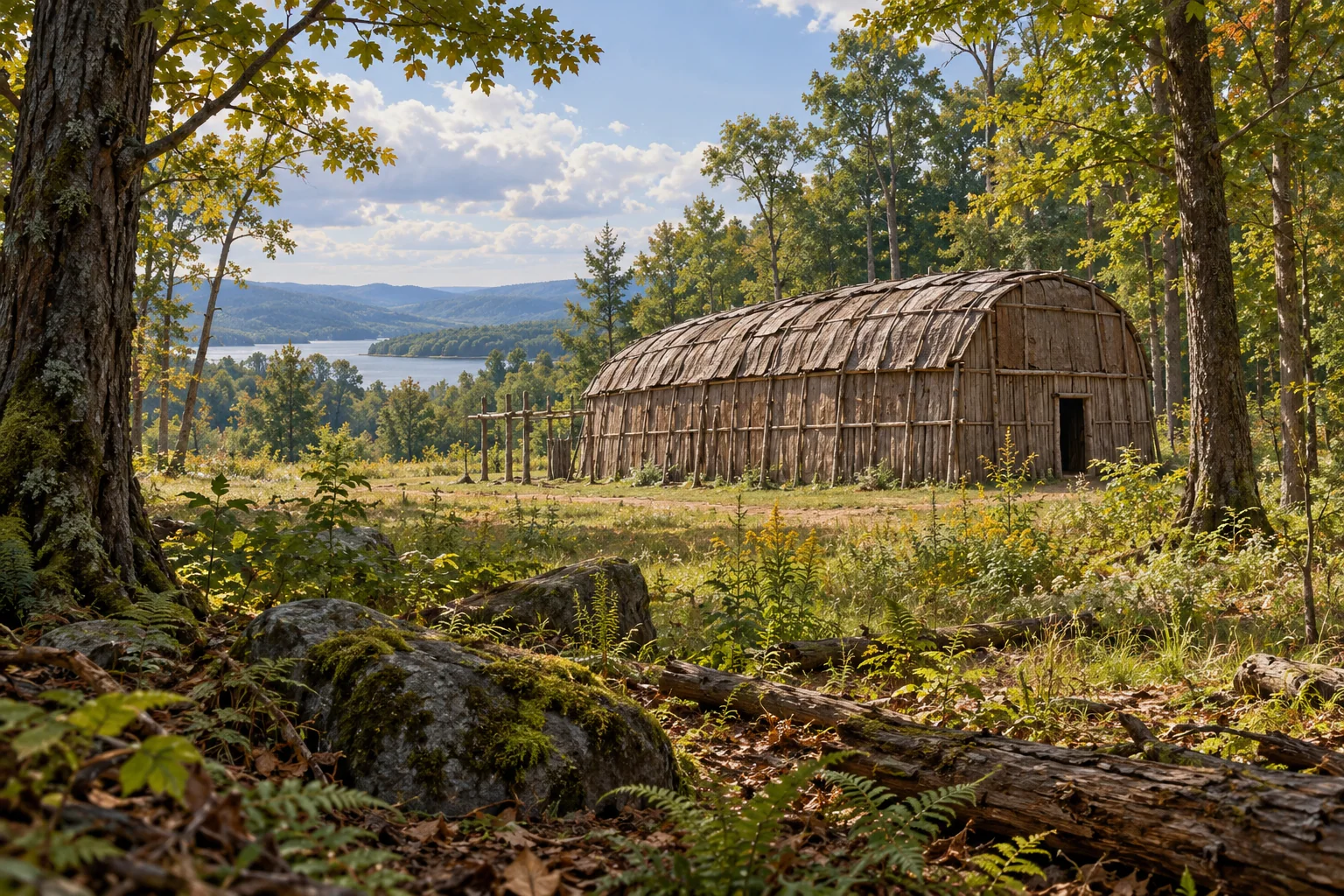
North America · Contemporary public description (2026); founding date not asserted
This case concerns a living Confederacy and its public governance account. No single-site point or territorial boundary is asserted.
North America
2026 is the reference year for the public governance account. The 1776 neutrality episode is a separate historical lens, not a founding date.
The Confederacy’s own account describes national councils, Clan Mothers, chiefs and the Grand Council.
The contemporary account and the historical documents answer different questions. Neither supplies a founding date merely by appearing on this page.
Here, 2026 dates the public account, not the Confederacy’s founding. Reading that account does not imply consultation with or endorsement of WAWL.
The Confederacy, the Oneida Nation and the Smithsonian speak from different positions. Their public accounts and historical documents are not interchangeable scientific replications. They do not imply consultation with or endorsement of WAWL.
Source links apply to specific claims. Several links can lead back to the same study. Read what each source supports.
What remains uncertain
Here, 2026 dates the public account, not the Confederacy’s founding. Reading that account does not imply consultation with or endorsement of WAWL.
Institutional primary description; introductory synthesis
National councils, chiefs, Clan Mothers and Grand Council
What remains uncertain
A shared Confederacy does not mean everyone took one side during the Revolution.
Primary research/institutional source, bounded finding
Introduction
What remains uncertain
This is a Nation’s own public account; it is not consultation or permission to generalize every tradition.
Primary research/institutional source, bounded finding
The Clans of the Oneida Indian Nation
The contemporary account and the historical documents answer different questions. Neither supplies a founding date merely by appearing on this page.
Limit: Here, 2026 dates the public account, not the Confederacy’s founding. Reading that account does not imply consultation with or endorsement of WAWL.
Haudenosaunee Confederacy: Who We Are ↓Collective institutions and local agency can appear together in a political history.
Limit: Historical documents are situated accounts, not neutral transcripts of all participants.
Smithsonian NMAI, Haudenosaunee Perseverance: Chapter3 ↓A member Nation’s public account provides specific context instead of treating archaeological categories as modern identity cards.
Limit: No external source confers custodial endorsement.
Oneida Indian Nation: Origins, clans and living traditions ↓The Confederacy’s own account describes national councils, Clan Mothers, chiefs and the Grand Council.
Institutional primary web account inspected 27 October 2026; no fieldwork or independent peer review claimed
Several links may describe the same research. Shared authors or data can limit how much independent confirmation they provide.
Grand Council context and differing community/individual choices during the American Revolution.
Museum educational account and displayed historical document context inspected
Several links may describe the same research. Shared authors or data can limit how much independent confirmation they provide.
Living Oneida self-description and matrilineal clan membership.
Sovereign Nation’s public institutional account inspected
Several links may describe the same research. Shared authors or data can limit how much independent confirmation they provide.