Behavior or information learned socially and transmitted within or between groups.
02Cumulative culture
Knowledge modified and built upon so later forms exceed what one learner readily invents alone.
03Symbolic behavior
Marks, objects or acts carrying shared meaning—a subset of culture, not its synonym.
04Association ≠ authorship
A tool near a fossil raises a hypothesis. It does not identify its maker.
A technique across places
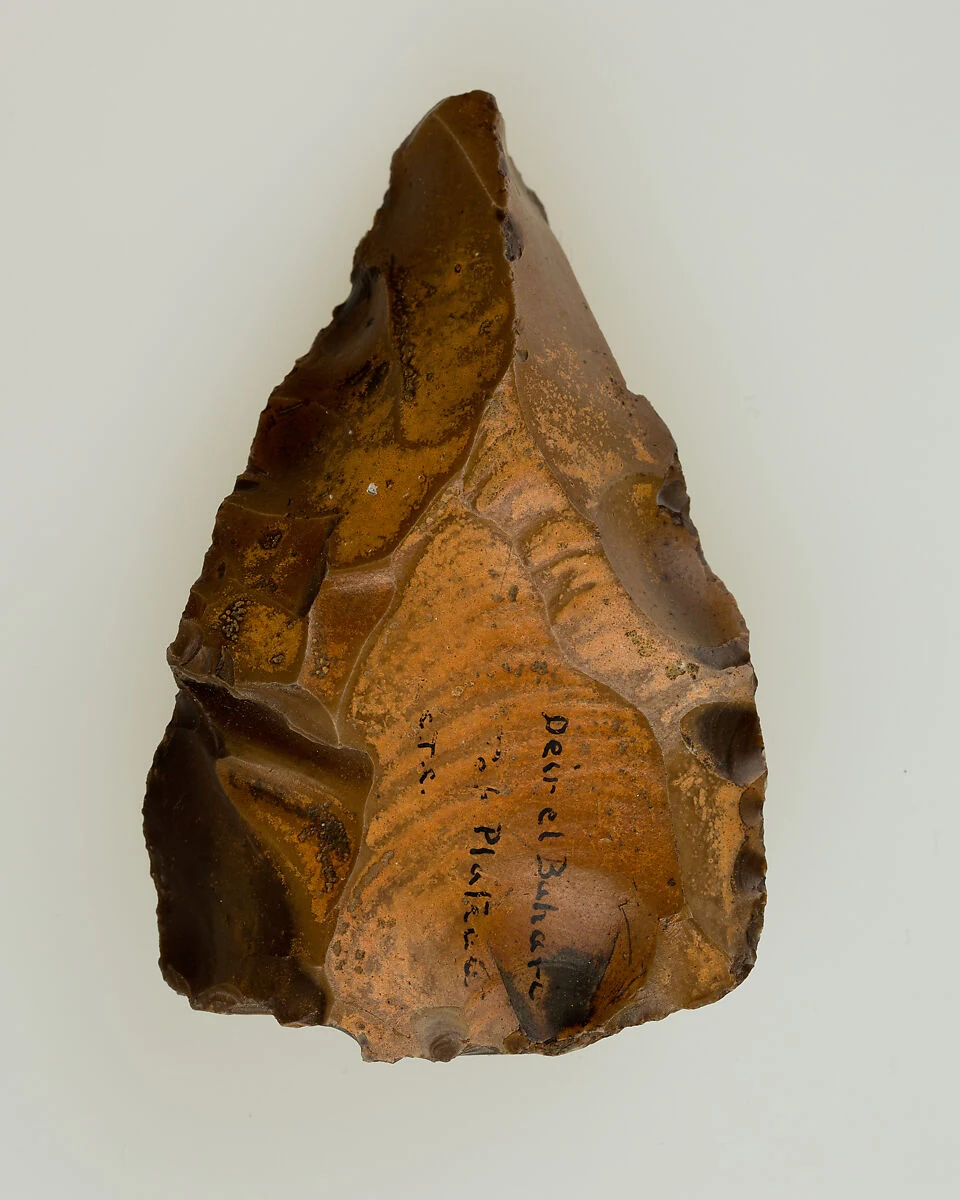
This Egyptian Nubian-type Levallois core shows prepared-core technology. It is a geographic comparison, not a European Neanderthal specimen or an identification of its maker.
Object photograph: Egyptian Nubian-type Levallois core, The Met 06.322.42, Deir el-Bahri. A technique comparison, not a European Neanderthal specimen or evidence of its biological maker. Whole image resized; no content crop.The Met, Gift of C. T. Currelly, 1906 ↗ · CC0 1.0
FILTERABLE CULTURE DATABASE
23 records · 11 groups
23 matching records
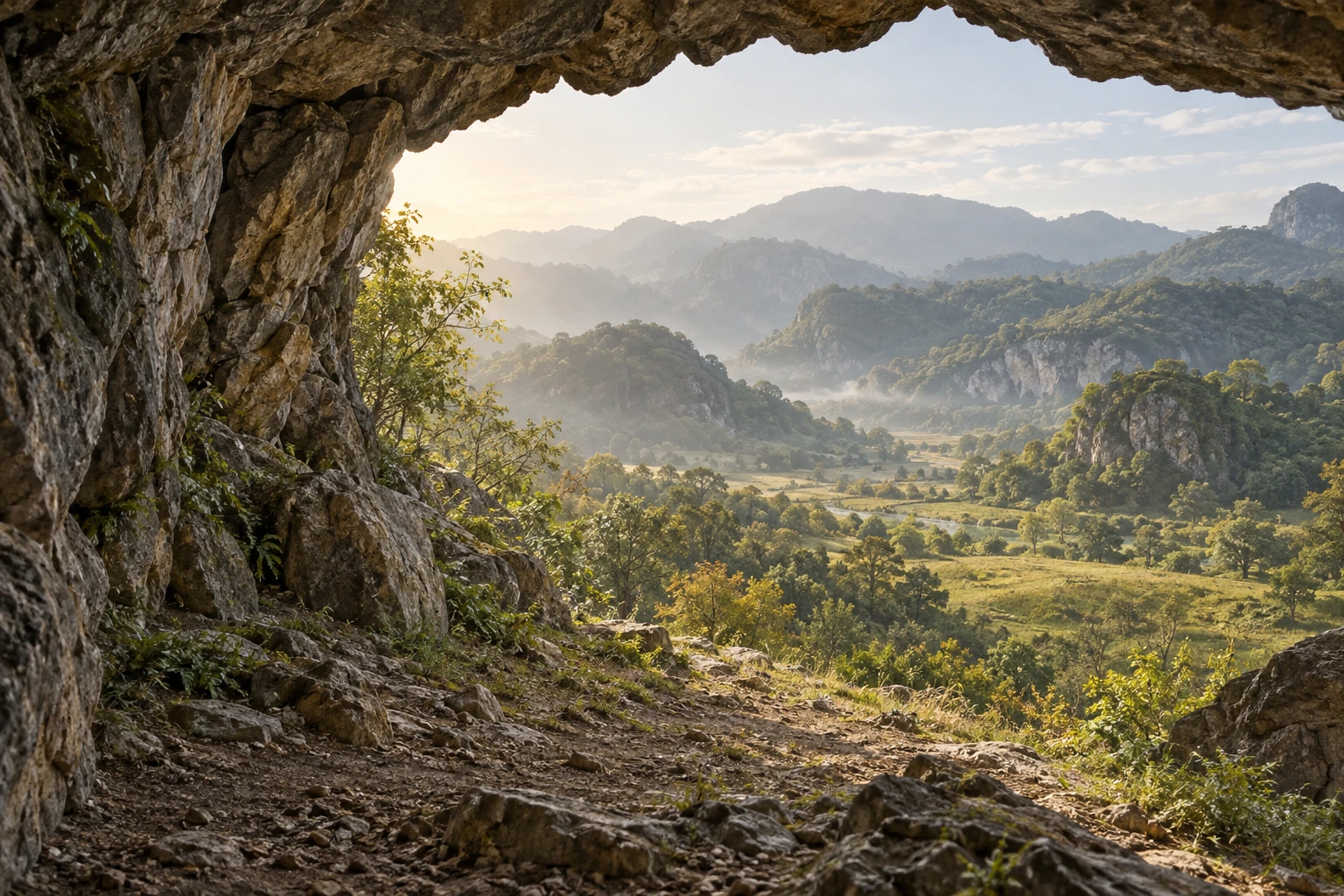
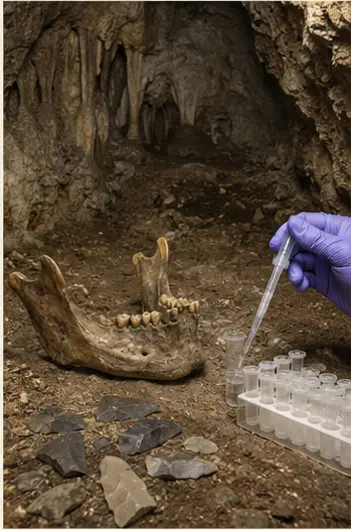
Interpretive setting for Bianfu Cave in southwestern China. Denisovan fossil ages and the wider cultural sequence are distinct; the image claims no known appearance, clothing, shelter plan, or artifact attribution.
167–134 ka
Bianfu Denisovan context
Denisovans · Yunnan, China
Comparative generated illustration, not a photograph or measured drawing of the named site or excavated objects. Inspect the linked primary evidence.
3,300 ka
Lomekwi 3 stone technology
Australopithecus and earlier hominins · West Turkana, Kenya
Comparative generated illustration, not a photograph or measured drawing of the named site or excavated objects. Inspect the linked primary evidence.
3,030–2,580 ka
Nyayanga Oldowan and butchery
Paranthropus · Homa Peninsula, Kenya
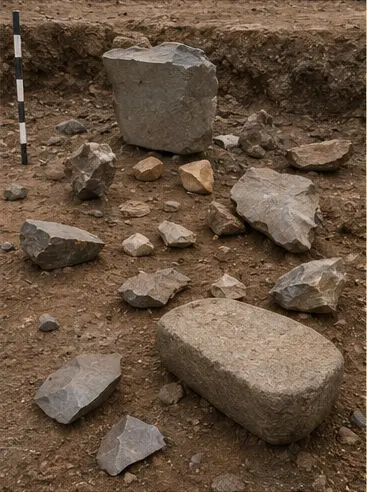
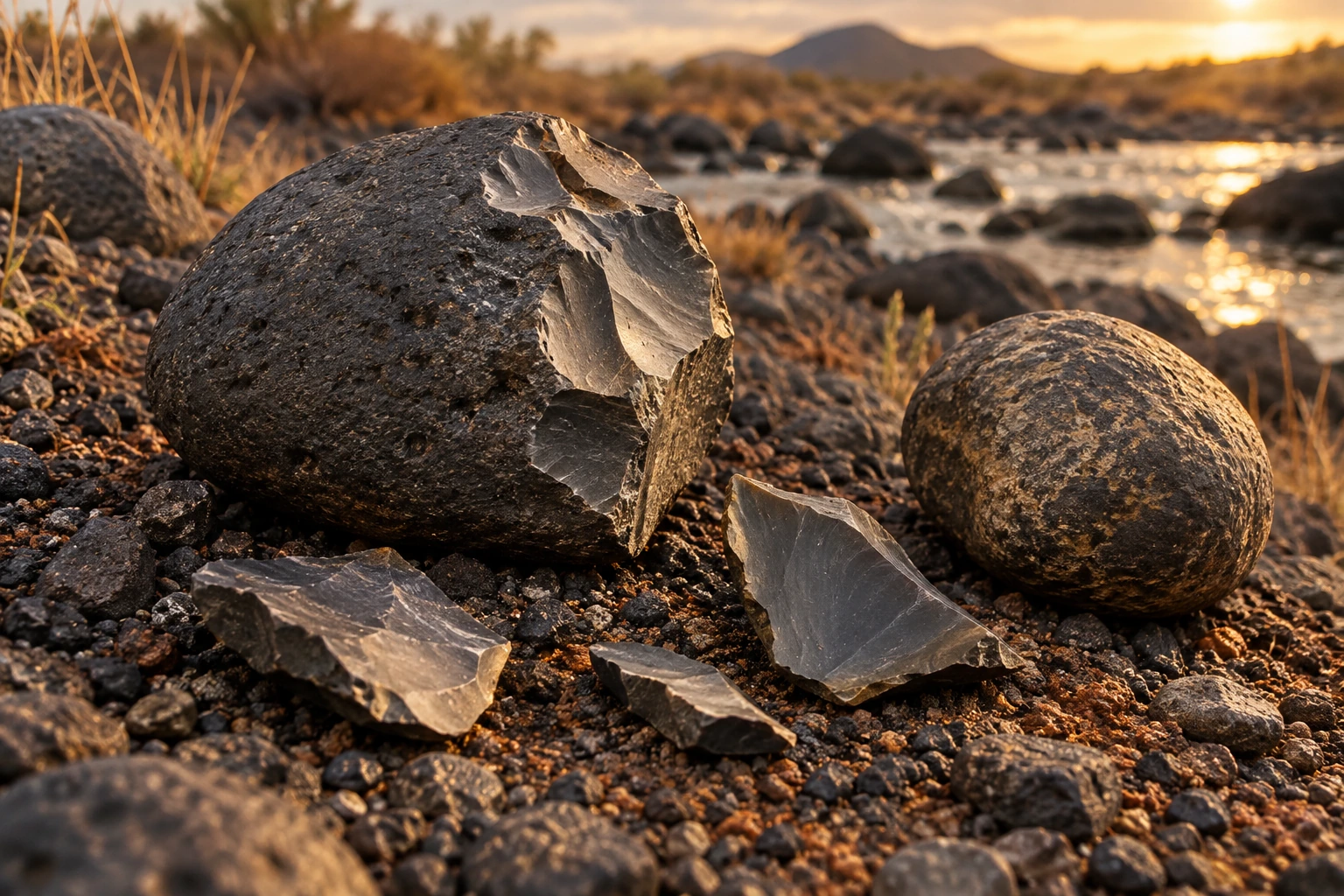
Comparative editorial reconstruction of Oldowan core-and-flake technology; it illustrates general material forms and is not an excavated assemblage or demonstrated refit.
2,600–1,700 ka
Oldowan technological tradition
Homo habilis / early Homo · Eastern and southern Africa
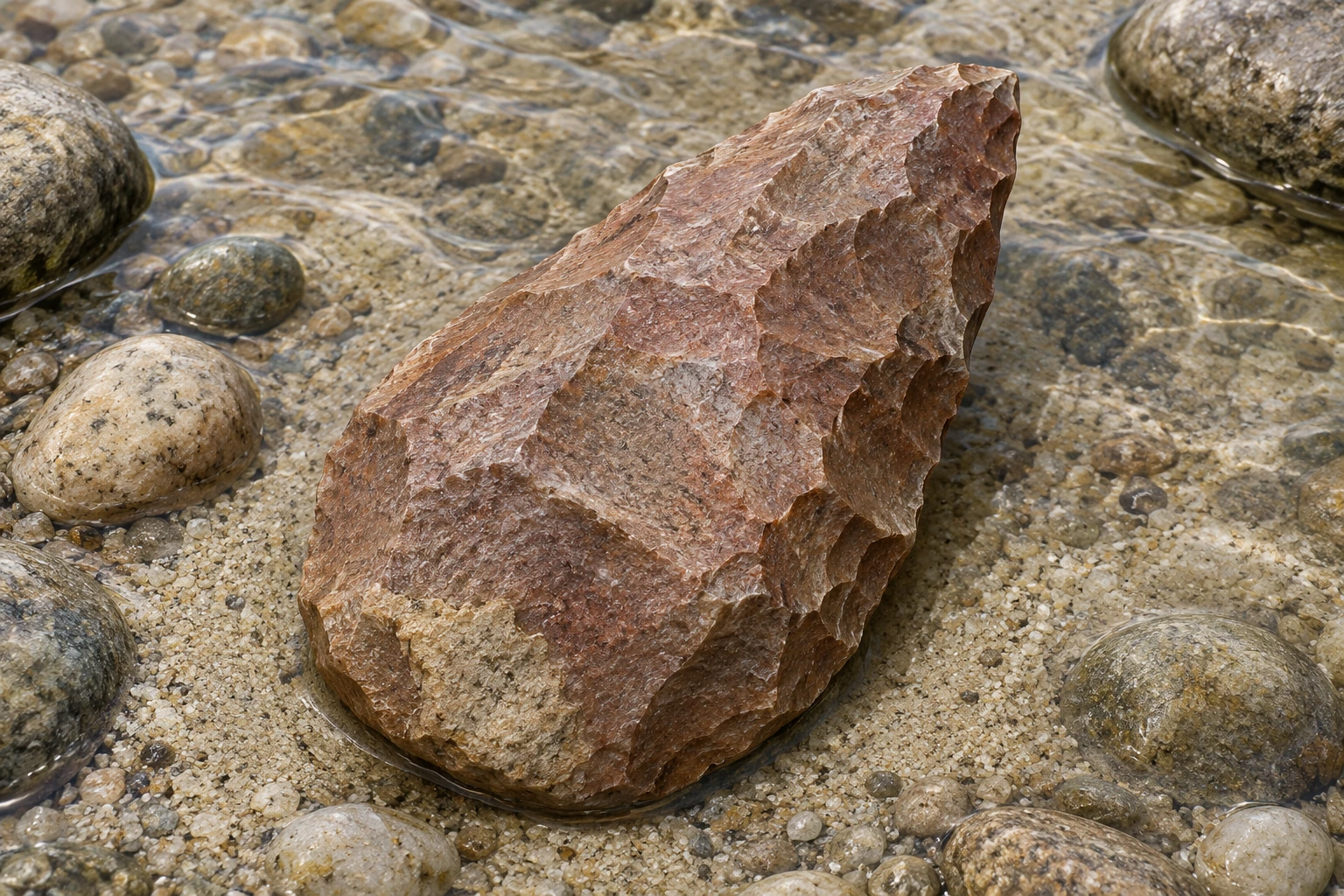
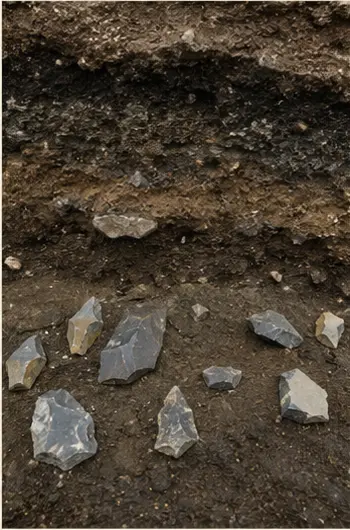
Comparative reconstruction of an Acheulean bifacial handaxe, showing one possible form within a long and regionally varied tradition; not a recovered specimen photograph.
1,760–130 ka
Acheulean handaxe traditions
Homo erectus / ergaster · Africa and Eurasia
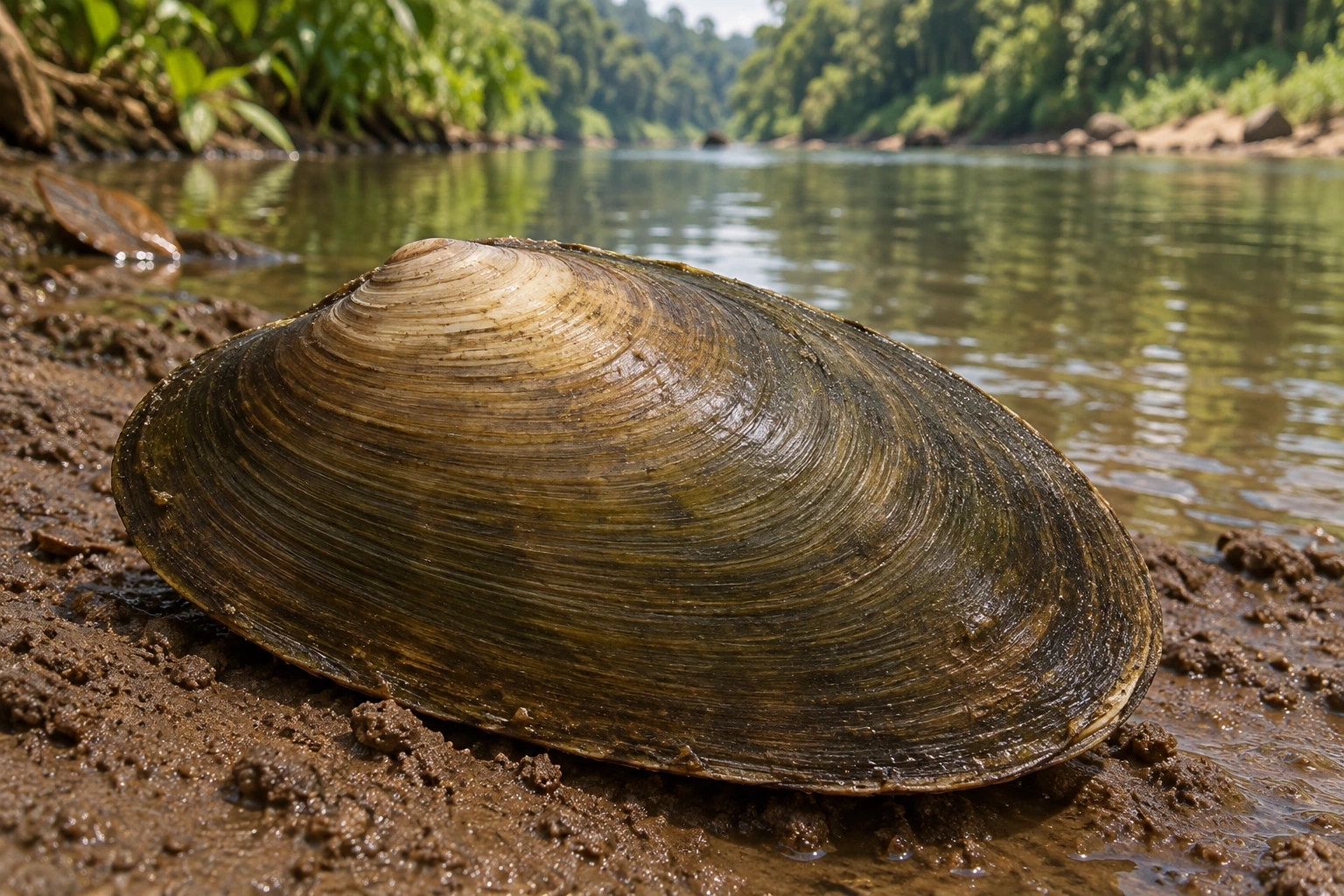
Unmarked comparative freshwater shell inspired by the Trinil assemblage; the actual engraving is documented in the primary study and is deliberately not invented here.
540–430 ka
Trinil shell tools and engraving
Homo erectus / ergaster · Java, Indonesia
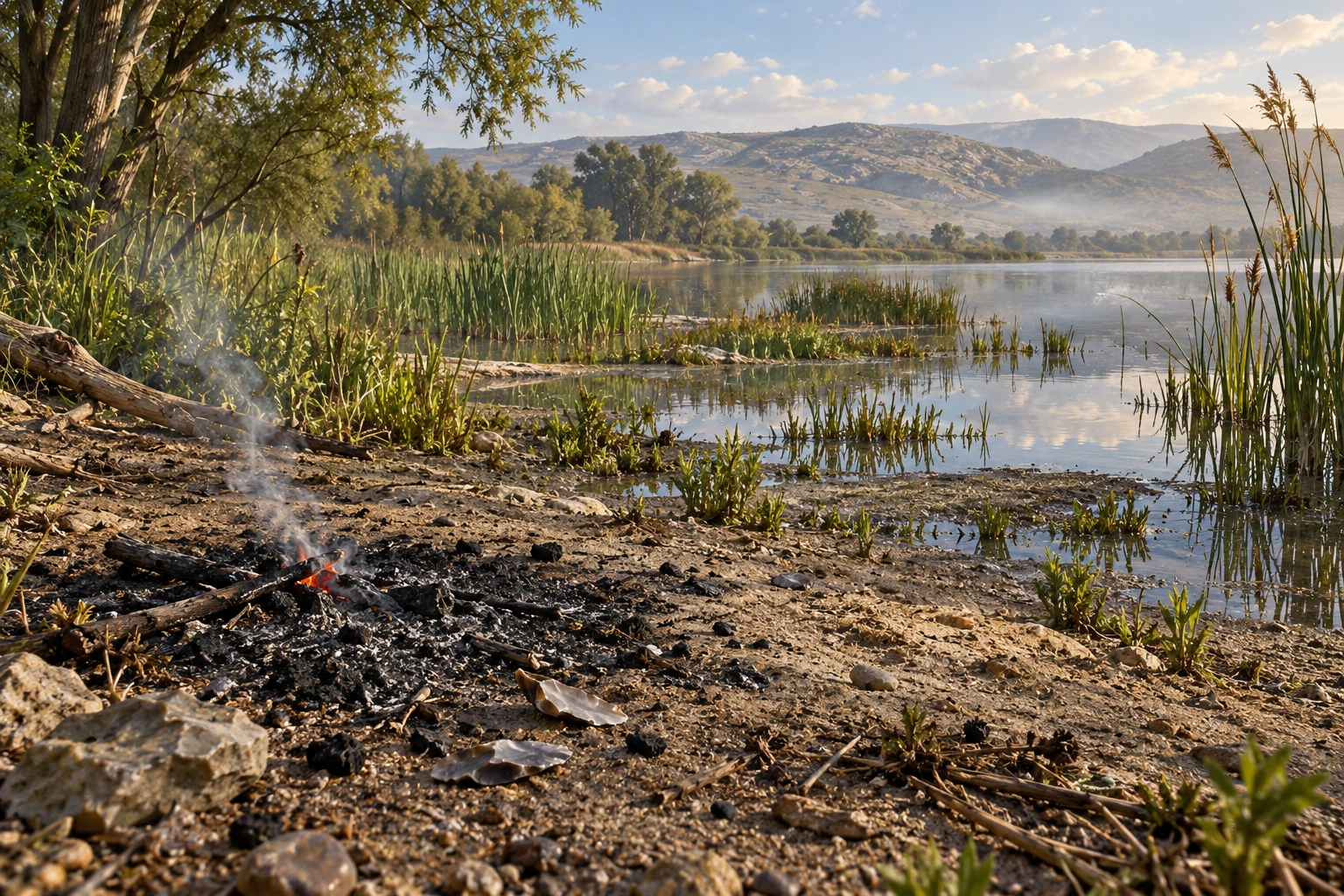
Editorial reconstruction of localized fire activity in a lakeshore environment inspired by Gesher Benot Ya’aqov; the scene is not a photograph or measured plan of the site.
790 ka
Gesher Benot Ya'aqov fire and spatial patterning
Homo erectus / ergaster · Israel
Comparative reconstruction of a shaped wooden spear in a lakeshore setting inspired by Schöningen; neither the object nor its placement reproduces a recovered specimen.
~300 ka / ~200 ka models
Schöningen wooden weapons
Middle Pleistocene Homo · Germany
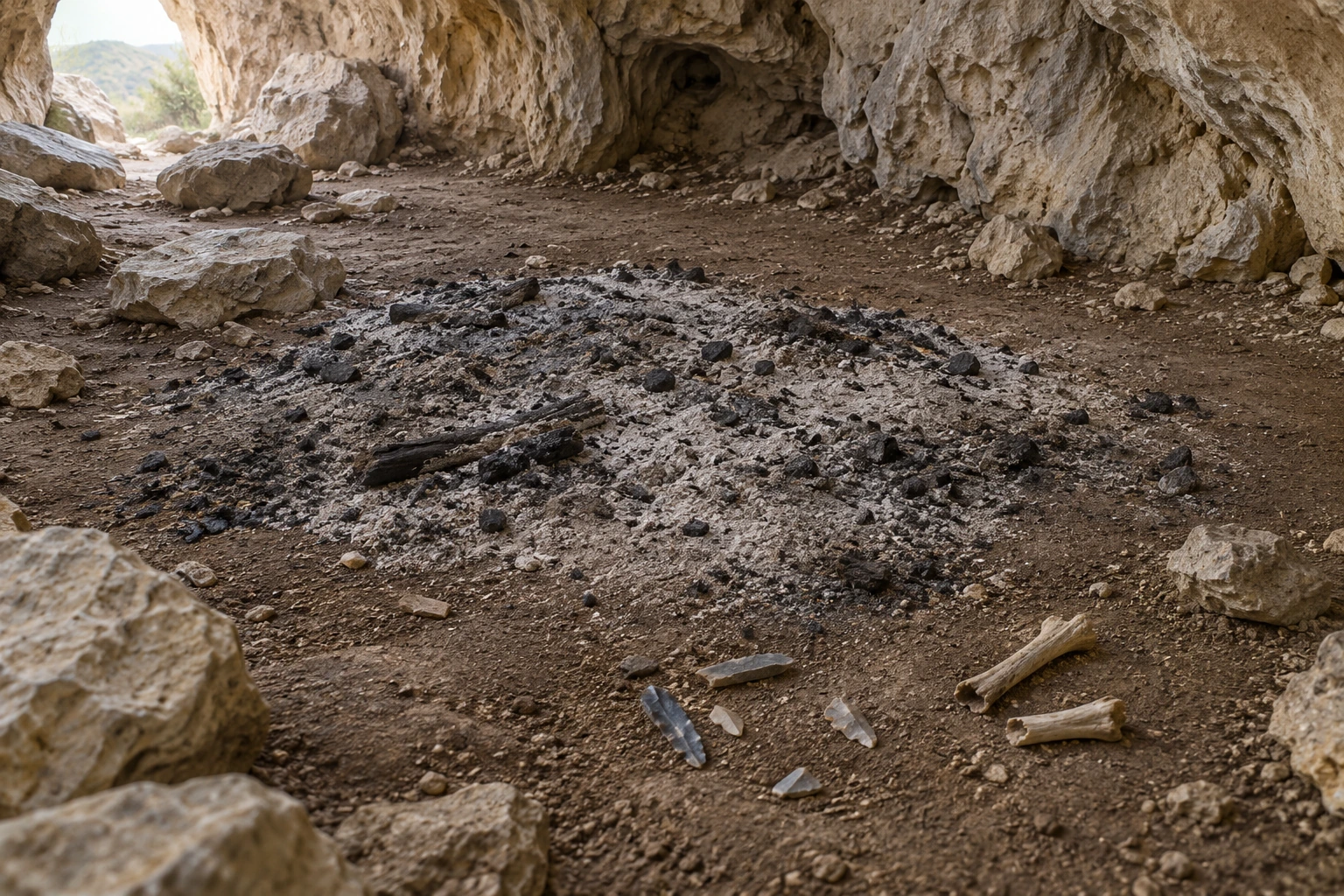
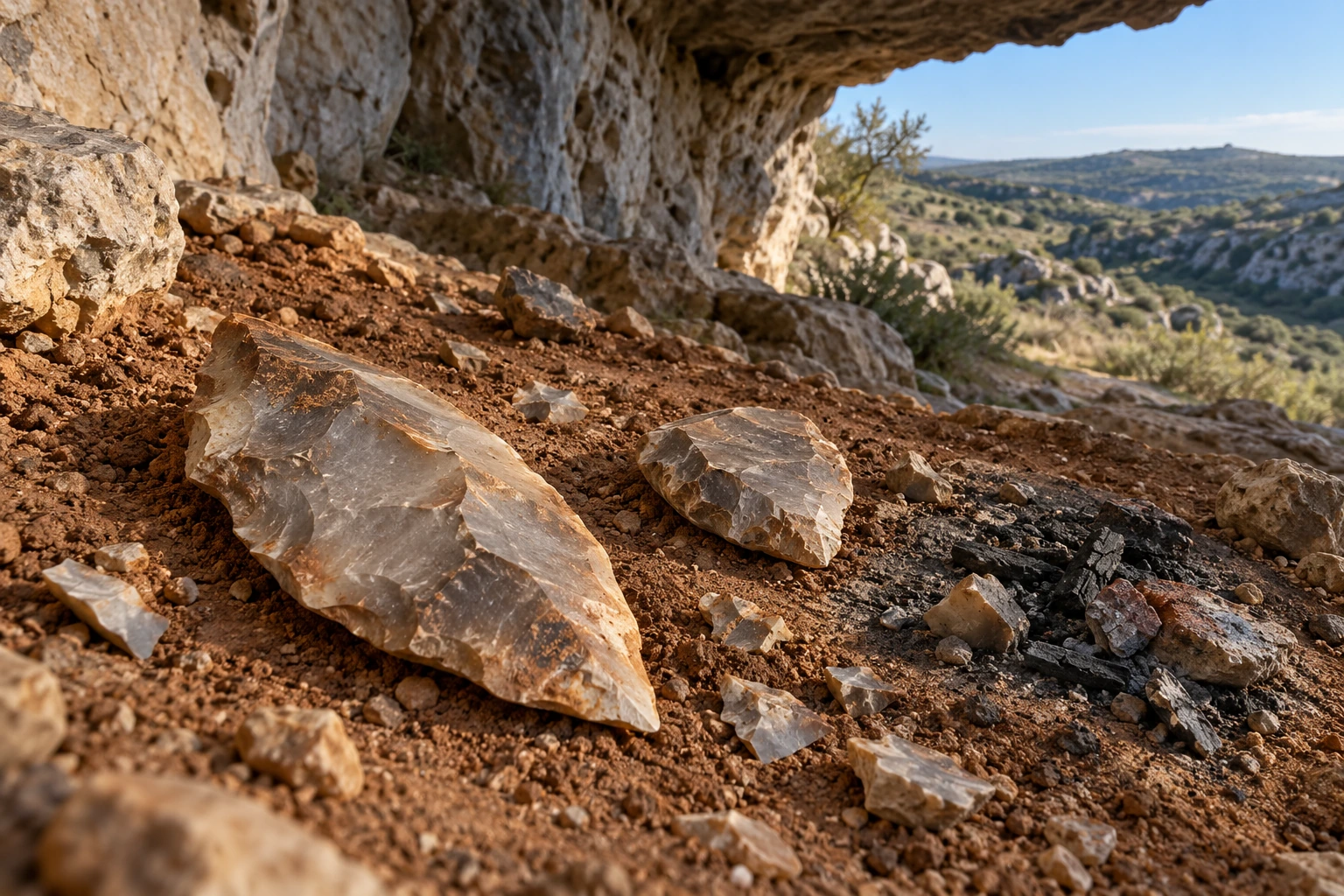
Editorial reconstruction of a repeatedly used hearth context inspired by Qesem Cave; placement and appearance are interpretive, not a photograph or measured excavation record.
420–200 ka
Qesem Cave habitual fire and food sharing
Middle Pleistocene Homo · Israel
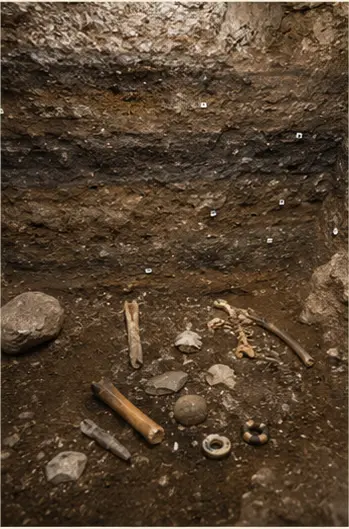
Comparative generated illustration, not a photograph or measured drawing of the named site or excavated objects. Inspect the linked primary evidence.
400–350 ka
Bilzingsleben activity landscape
Middle Pleistocene Homo · Germany
Comparative generated illustration, not a photograph or measured drawing of the named site or excavated objects. Inspect the linked primary evidence.
1,000–50 ka
Mata Menge–Liang Bua tool continuity
Homo floresiensis · Flores, Indonesia
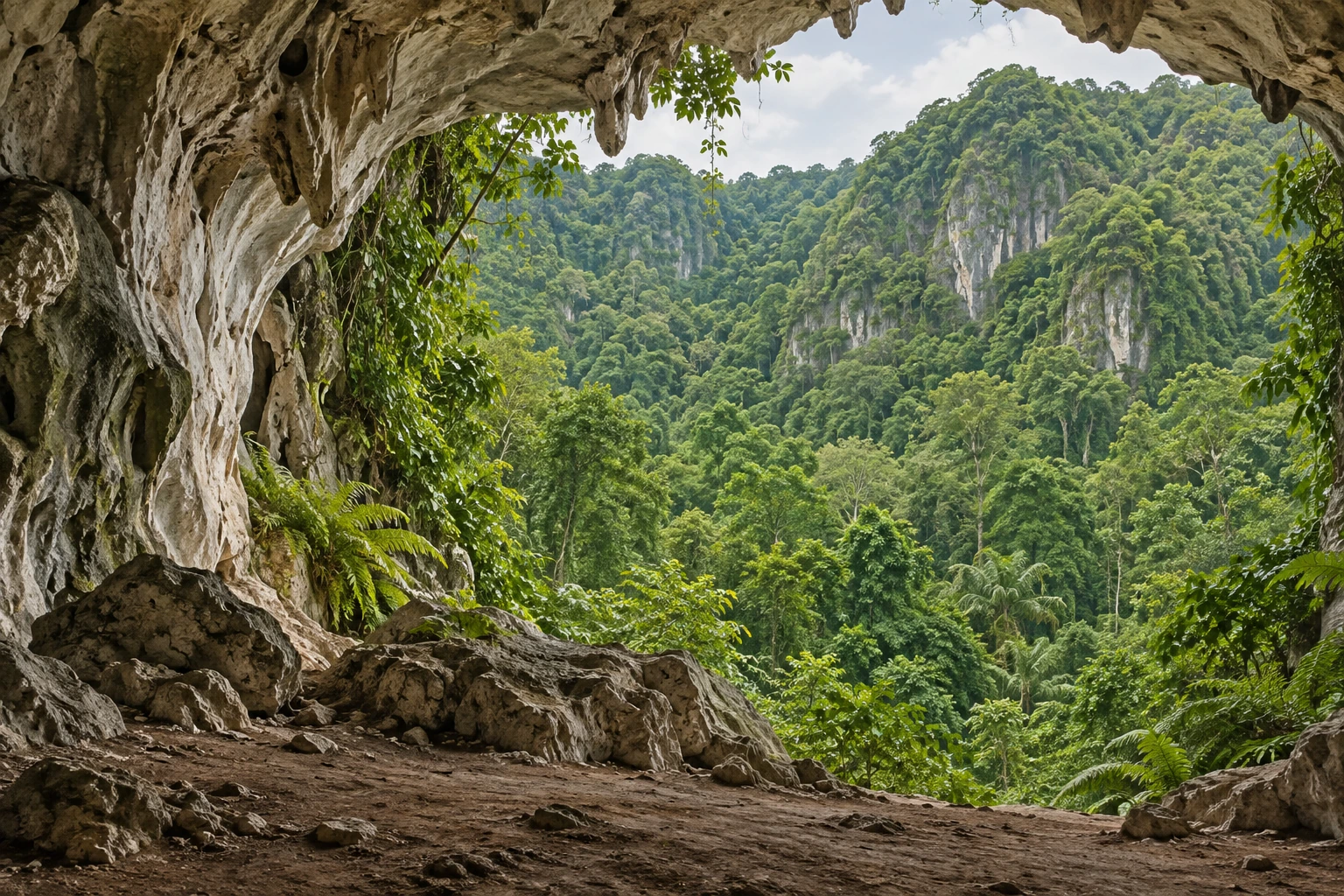
AI-generated interpretive context for an inland northern Luzon limestone cave and forest, not an actual photograph of Callao Cave.
67–50 ka
Callao Cave island occupation
Homo luzonensis · Luzon, Philippines
Comparative generated illustration, not a photograph or measured drawing of the named site or excavated objects. Inspect the linked primary evidence.
160–40 ka
Tibetan Plateau adaptation
Denisovans · Baishiya Karst Cave, Tibet
Comparative generated illustration, not a photograph or measured drawing of the named site or excavated objects. Inspect the linked primary evidence.
300–45 ka
Denisova Cave technologies and ornaments
Denisovans · Altai, Siberia
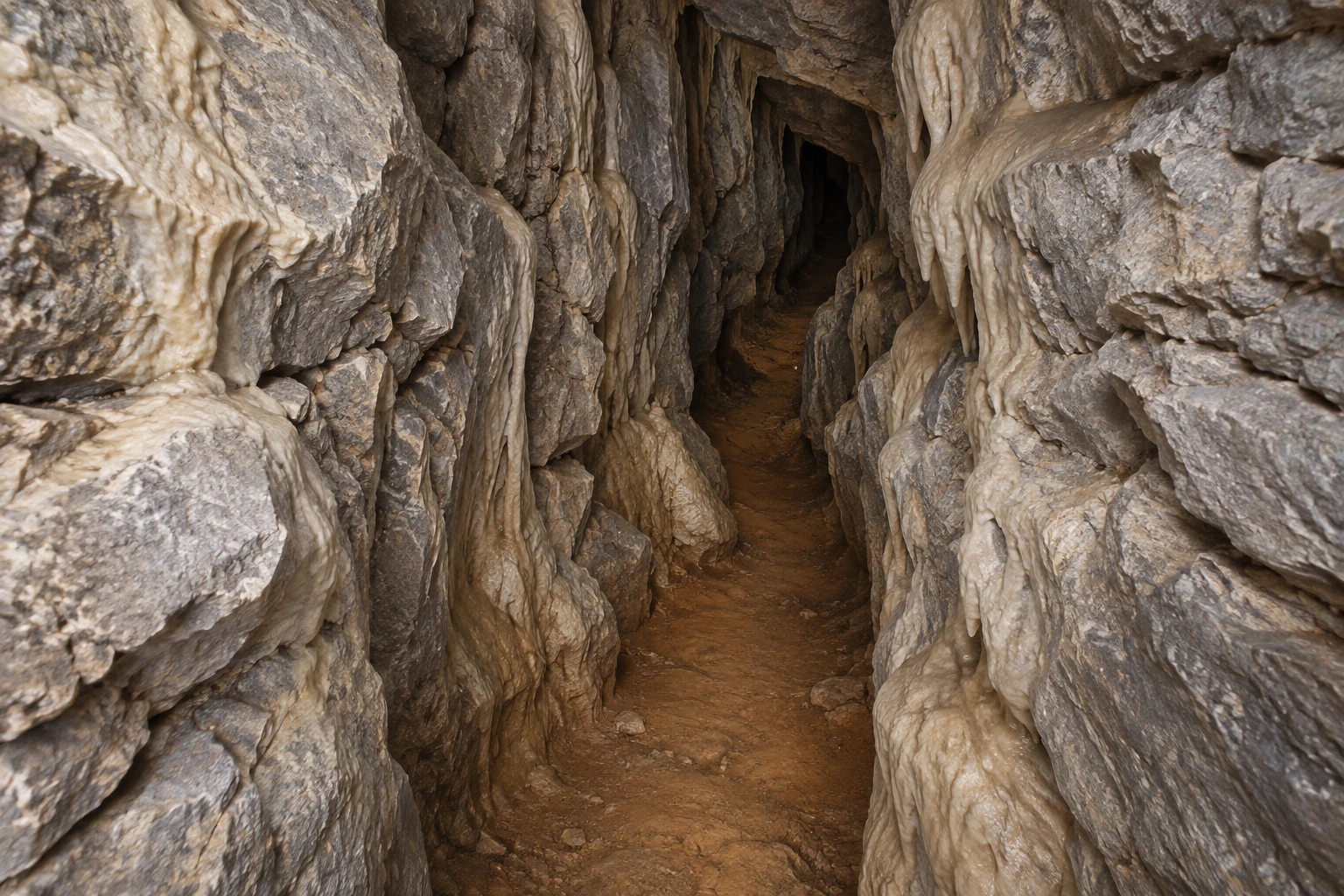
AI-generated interpretive view of a narrow dolomite passage in the Rising Star context, not an actual site photograph or a reconstruction of burial.
335–236 ka
Deep-cave body deposition
Homo naledi · Rising Star, South Africa
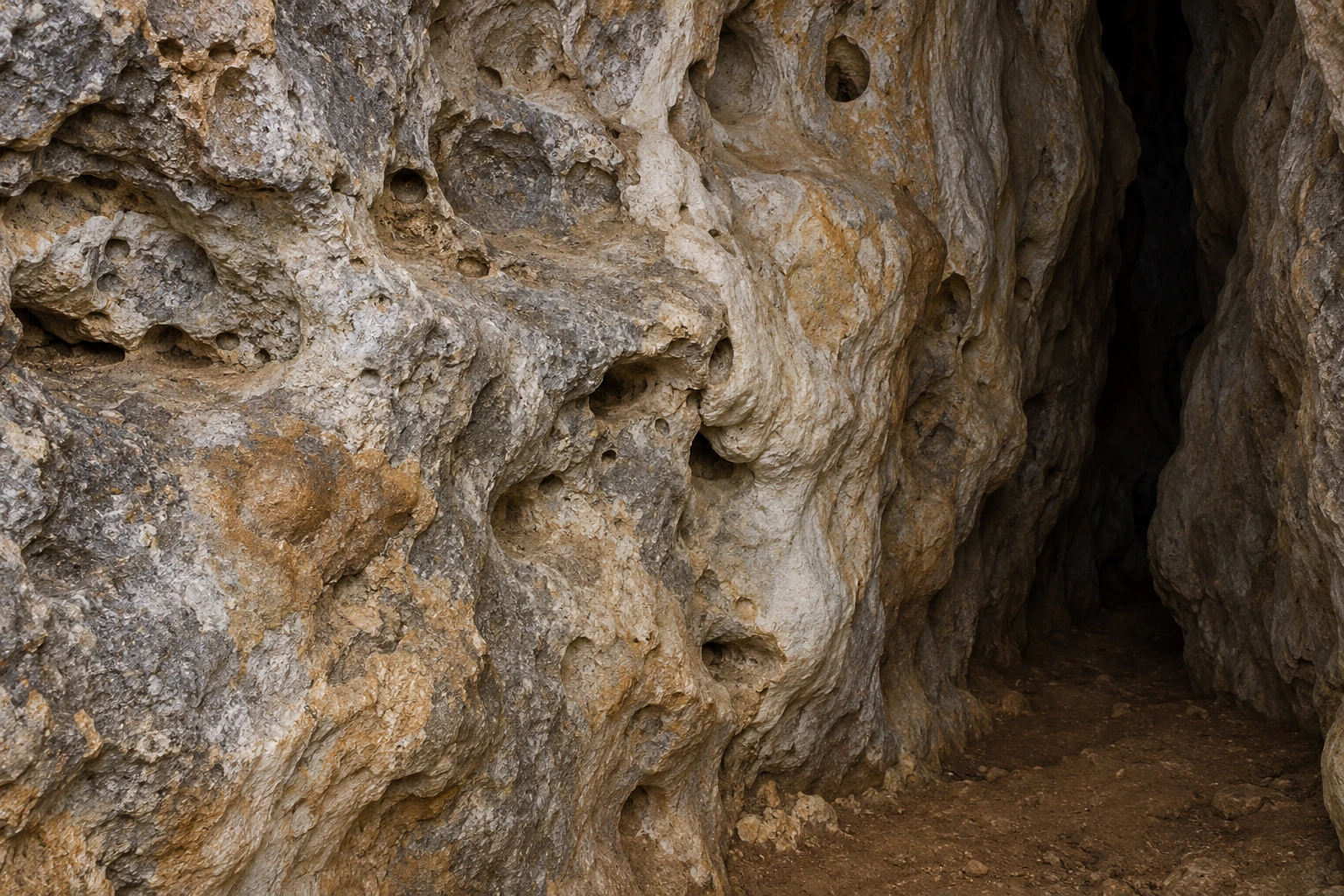
AI-generated interpretive context for Rising Star's dolomite caves, not an actual site photograph. This unmarked wall does not recreate or substantiate proposed engravings.
335–236 ka
Rising Star wall markings
Homo naledi · Rising Star, South Africa
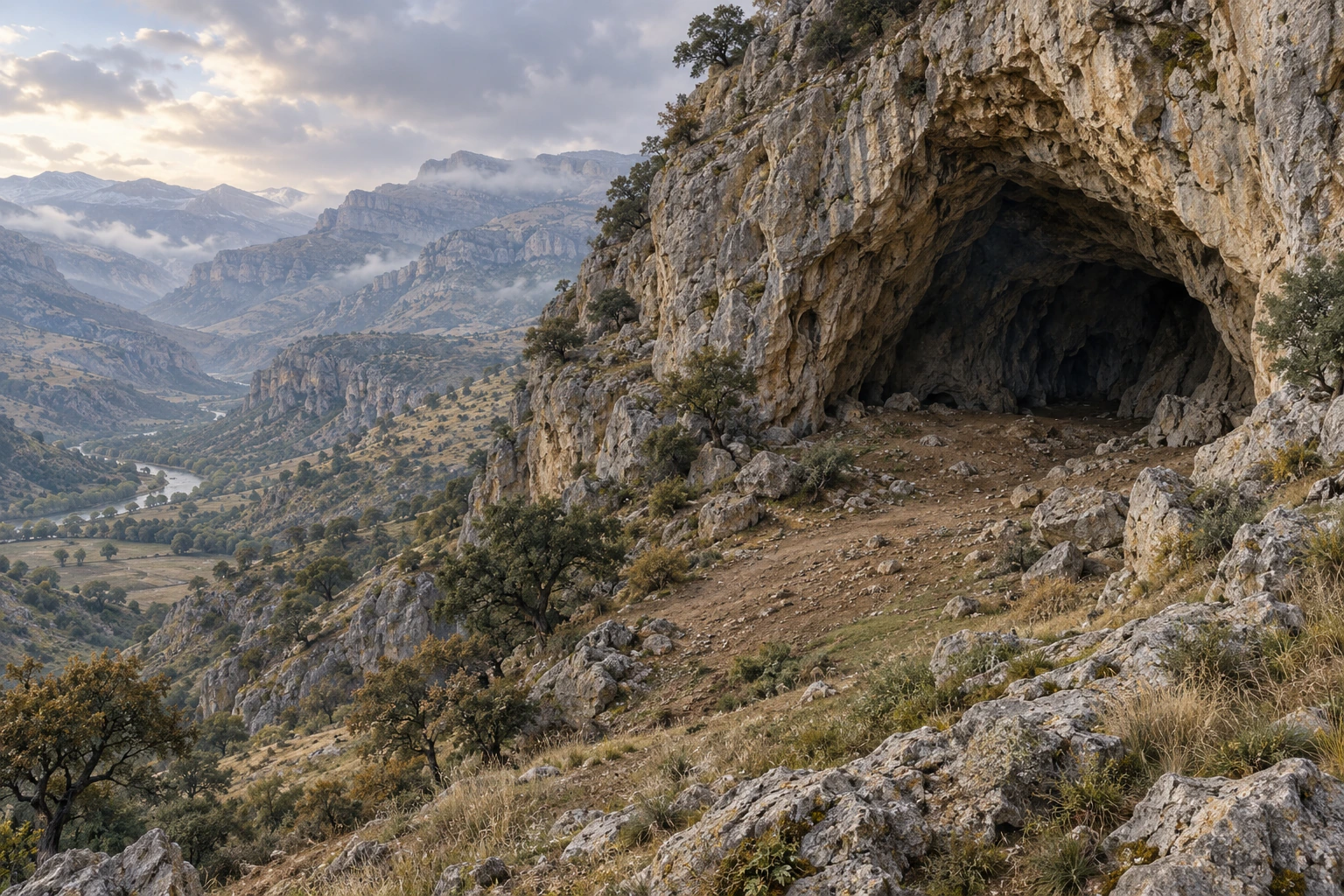
Interpretive landscape study inspired by Shanidar Cave and its Zagros setting; it is not a site photograph or a reconstruction of a funeral or flower burial.
70–45 ka
Shanidar care and mortuary context
Homo neanderthalensis · Iraqi Kurdistan
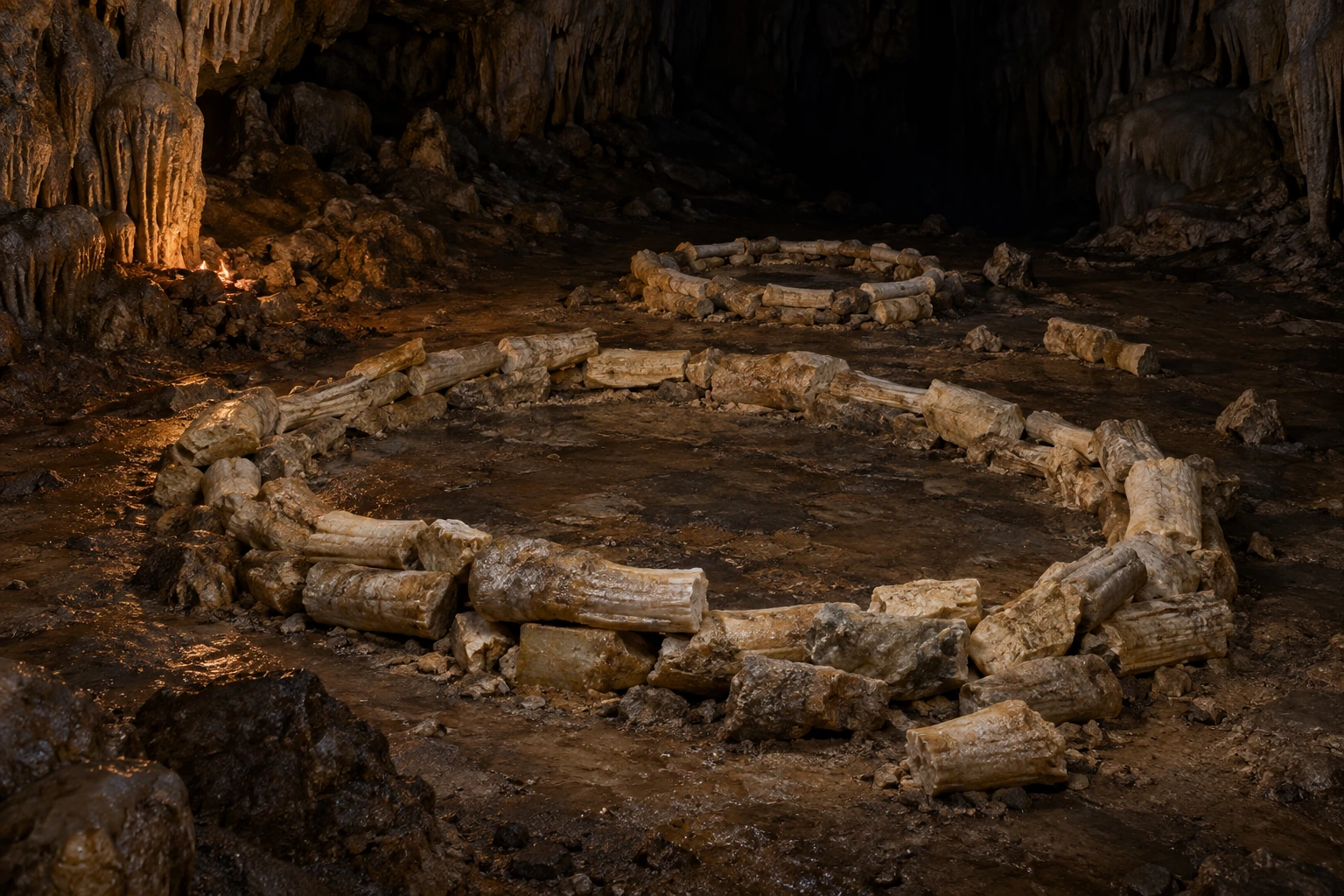
Editorial reconstruction of low broken-stalagmite arrangements deep in Bruniquel Cave; this is not an excavation photograph or a measured reconstruction of the site.
176 ka
Bruniquel Cave constructions
Homo neanderthalensis · France
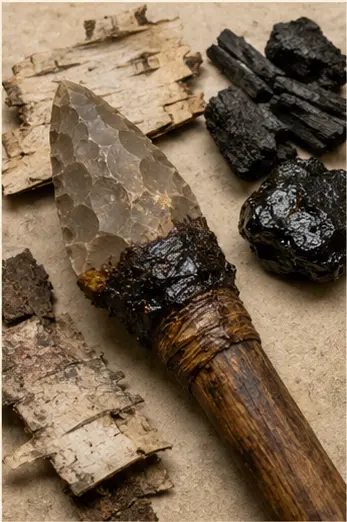
Comparative generated illustration, not a photograph or measured drawing of the named site or excavated objects. Inspect the linked primary evidence.
200–40 ka
Birch-tar adhesive production
Homo neanderthalensis · Europe
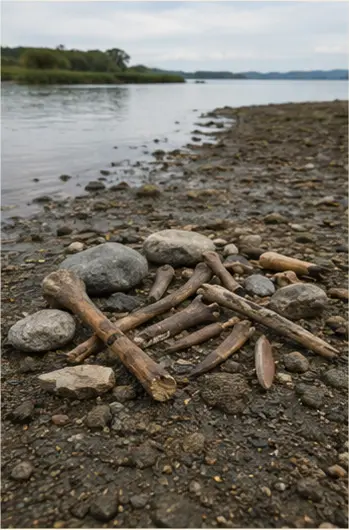
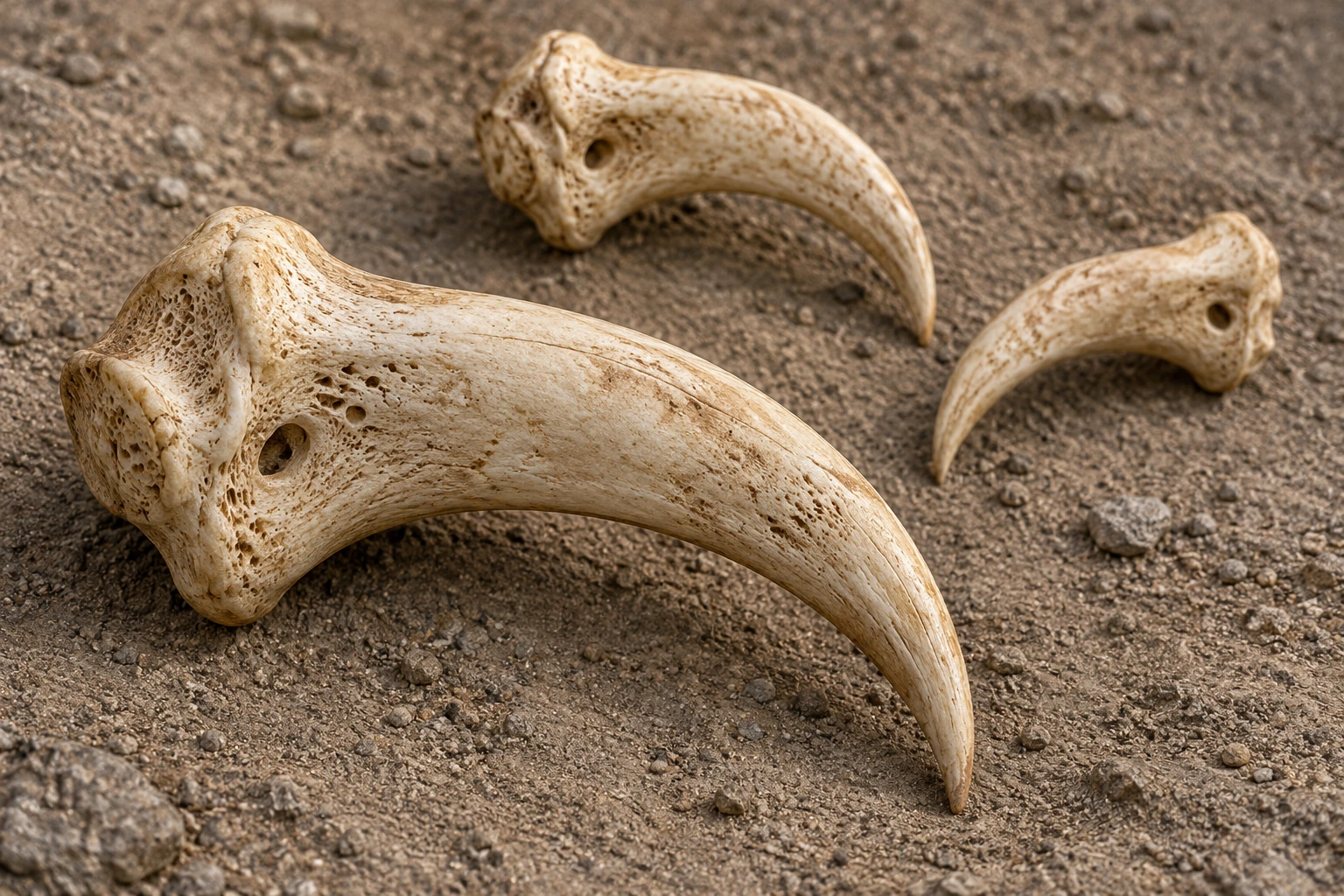
Comparative editorial study of eagle talon bones inspired by Krapina; it does not reproduce the original specimens or claim a known necklace arrangement.
130–120 ka
Krapina eagle talons
Homo neanderthalensis · Croatia
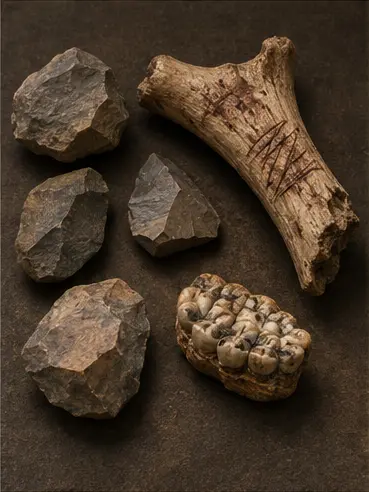
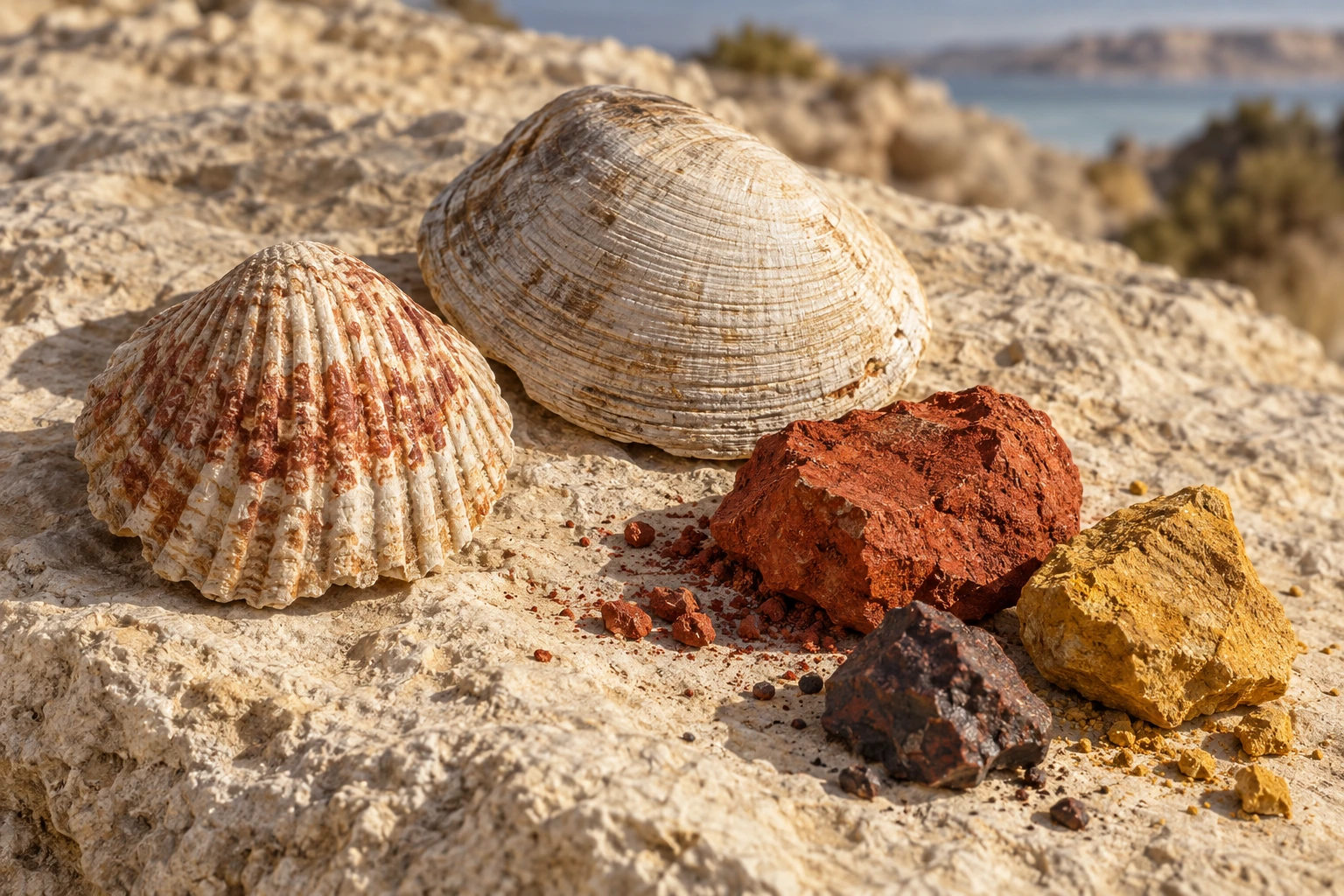
Comparative editorial study of natural shells and pigment minerals relevant to Iberian Middle Paleolithic finds; it shows no pottery, documented recipe or reconstructed ornament.
115–40 ka
Pigments, shells and feathers
Homo neanderthalensis · Europe
Editorial reconstruction of Middle Stone Age tools and fire context inspired by Jebel Irhoud; the objects and setting are comparative, not actual excavated specimens.
315 ka
Jebel Irhoud technological behavior
Homo sapiens · Morocco
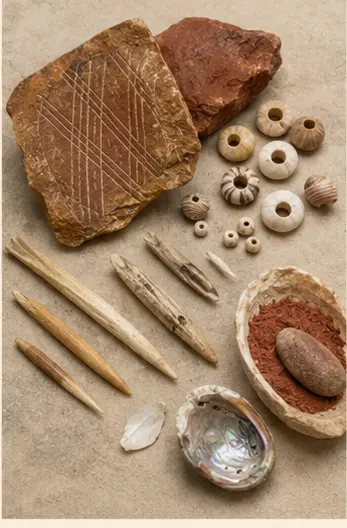
Comparative generated illustration, not a photograph or measured drawing of the named site or excavated objects. Inspect the linked primary evidence.
100–70 ka
Blombos engravings and bead tradition
Homo sapiens · South Africa
Comparative reconstruction of an Acheulean bifacial handaxe, showing one possible form within a long and regionally varied tradition; not a recovered specimen photograph.
Stone technology · secure
Acheulean handaxe traditions
Homo erectus / ergaster · Africa and Eurasia
What was found
Bifacial handaxes and cleavers followed shared production concepts while varying regionally.
Why it matters
Long-term transmission maintained complex skills.
Age
1,760–130 thousand years ago
Maker association
probable
Group standing
Culture securely supported
SPECIES + POPULATION INDEX
Who carries the evidence?
Taxonomic categories are working hypotheses. “Middle Pleistocene Homo” is used where a narrower label would overstate the fossils.
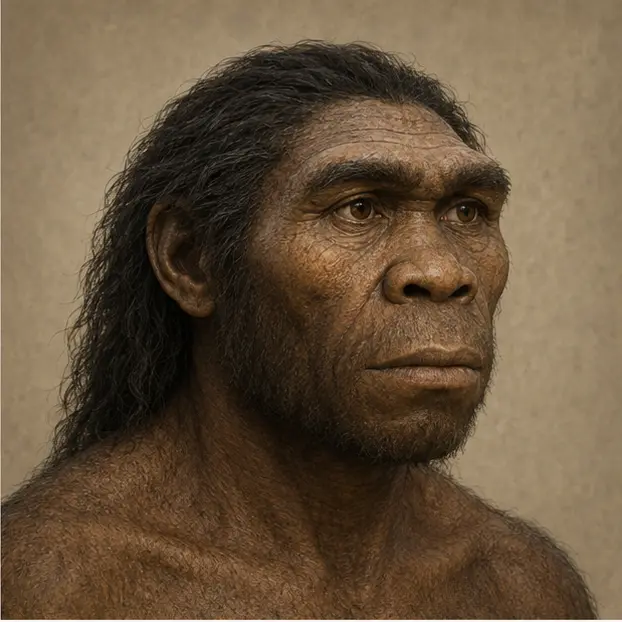
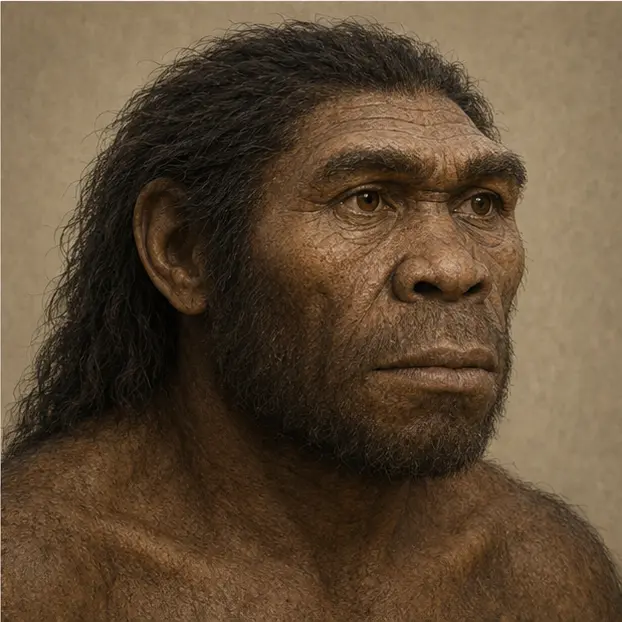
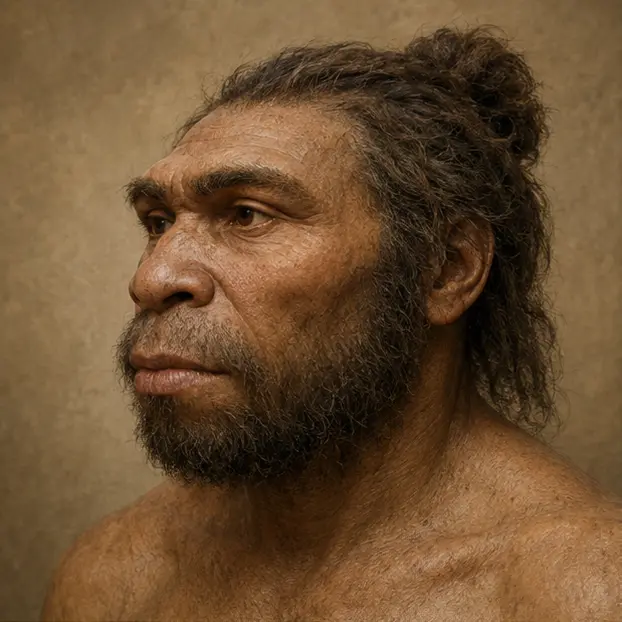
Generated anatomical interpretation. Soft tissues, hair, pigmentation and individual appearance are uncertain; this is not a preserved likeness.secure
Homo erectus / ergaster
Long-lived travelers
Long-lasting stone traditions, landscape knowledge, shell working and probable fire use show learned practices maintained across generations and regions.
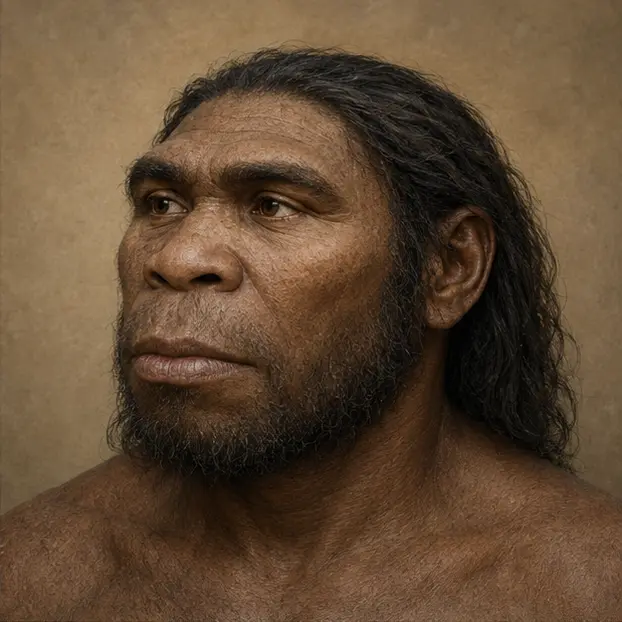
Generated anatomical interpretation. Soft tissues, hair, pigmentation and individual appearance are uncertain; this is not a preserved likeness.secure
Middle Pleistocene Homo
Including heidelbergensis-like populations
Composite technologies, wooden weapons, organized hunting, fire and structured sites required shared technical knowledge and coordination.
Generated anatomical interpretation. Soft tissues, hair, pigmentation and individual appearance are uncertain; this is not a preserved likeness.strong
Denisovans
DNA-revealed Asian populations
They survived radically different Asian environments. Sparse fossils and mixed cave occupations make assigning specific industries difficult.
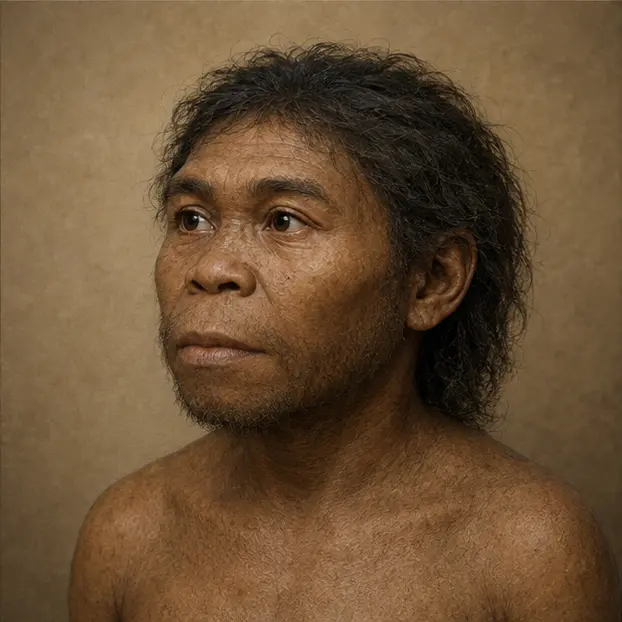
Generated anatomical interpretation. Soft tissues, hair, pigmentation and individual appearance are uncertain; this is not a preserved likeness.strong
Homo floresiensis
Flores island humans
Stone-tool continuity and island survival support social transmission. Water crossing by an ancestral population is likely; intentional seafaring is unproven.
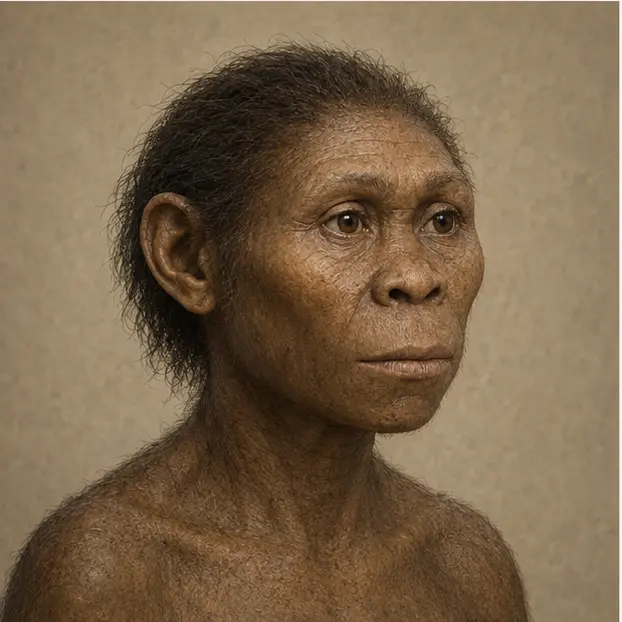
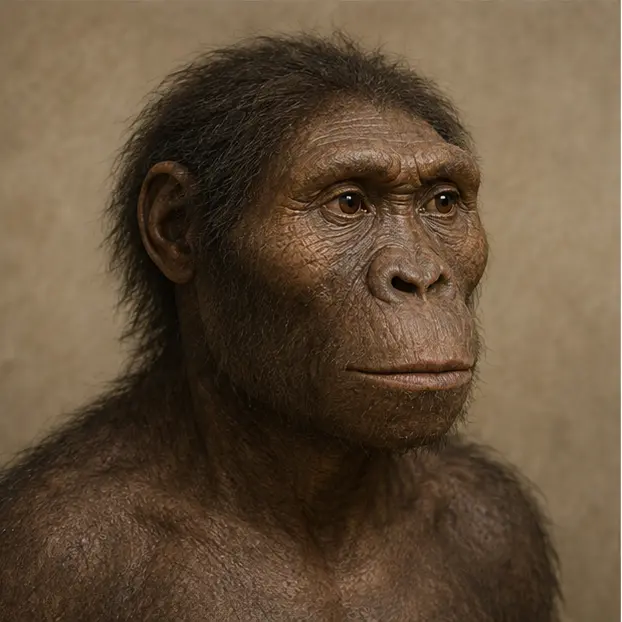
Generated anatomical interpretation. Soft tissues, hair, pigmentation and individual appearance are uncertain; this is not a preserved likeness.developing
Homo habilis / early Homo
Early tool-associated humans
Oldowan traditions imply learning, but multiple hominins overlapped and the tools cannot usually be assigned to habilis alone.
Generated anatomical interpretation. Soft tissues, hair, pigmentation and individual appearance are uncertain; this is not a preserved likeness.contested
Homo naledi
Rising Star humans
Repeated body placement is real. Claims of deliberate burial, fire-lit cave use and engraving authorship remain disputed.
Generated anatomical interpretation. Soft tissues, hair, pigmentation and individual appearance are uncertain; this is not a preserved likeness.secure
Homo neanderthalensis
Neanderthals
Technologies, fire, adhesives, clothing, care, pigments, ornaments, structures and mortuary practices document varied regional cultures.
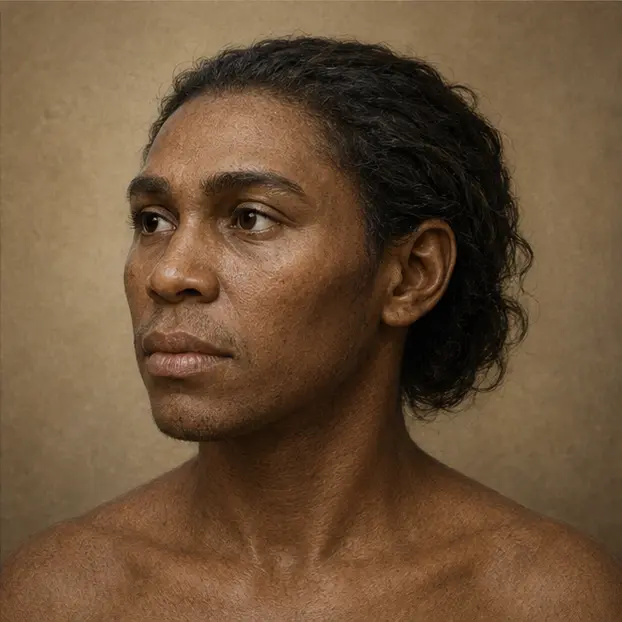
Generated anatomical interpretation. Soft tissues, hair, pigmentation and individual appearance are uncertain; this is not a preserved likeness.secure
Homo sapiens
Our species
Extensive evidence documents diversifying technologies, exchange networks, symbolic systems and cumulative cultural change.
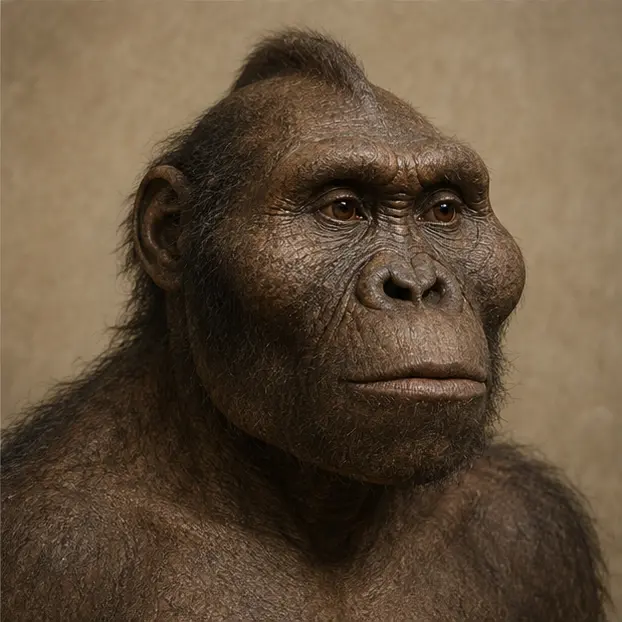
Generated anatomical interpretation. Soft tissues, hair, pigmentation and individual appearance are uncertain; this is not a preserved likeness.developing
Paranthropus
Robust-jawed relatives
Tools occur near Paranthropus remains and its hand could manipulate objects, but proximity does not establish authorship.
Generated anatomical interpretation. Soft tissues, hair, pigmentation and individual appearance are uncertain; this is not a preserved likeness.developing
Australopithecus and earlier hominins
Pre-Homo candidates
Lomekwian tools predate secure Homo fossils. Species-level attribution remains unresolved.
AI-generated interpretive context for an inland northern Luzon limestone cave and forest, not an actual photograph of Callao Cave.developing
Homo luzonensis
Callao Cave humans
Presence across a deep-water barrier implies dispersal, but no tradition is securely attributable to this species.
READING THE DEEP PAST
What this database will not pretend to know.
Culture rarely fossilizes evenly.
Stone survives. Fiber, wood, language, gesture, teaching and social rules usually disappear.
A species was not one culture.
Long-lived, dispersed lineages almost certainly contained changing regional traditions.
Complexity is not a ladder.
A “simple” tool can be effective and embedded in sophisticated knowledge.
Absence is not incapacity.
No recovered ornament or burial does not prove a population lacked symbolism, grief or imagination.