Events affect people unevenly. Explore how they unfolded, what remains uncertain, how people survived, and the pressures they placed on evolution and societies. Climate or disease alone cannot explain every outcome.01 · PRESSURE
Mortality, fertility, movement and exposure can change population structure and selection.
02 · MEDIATION
Institutions, inequality, technology and networks determine who absorbs the shock.
03 · AFTERLIFE
Collapse can end a state without erasing its people, language, knowledge or descendants.
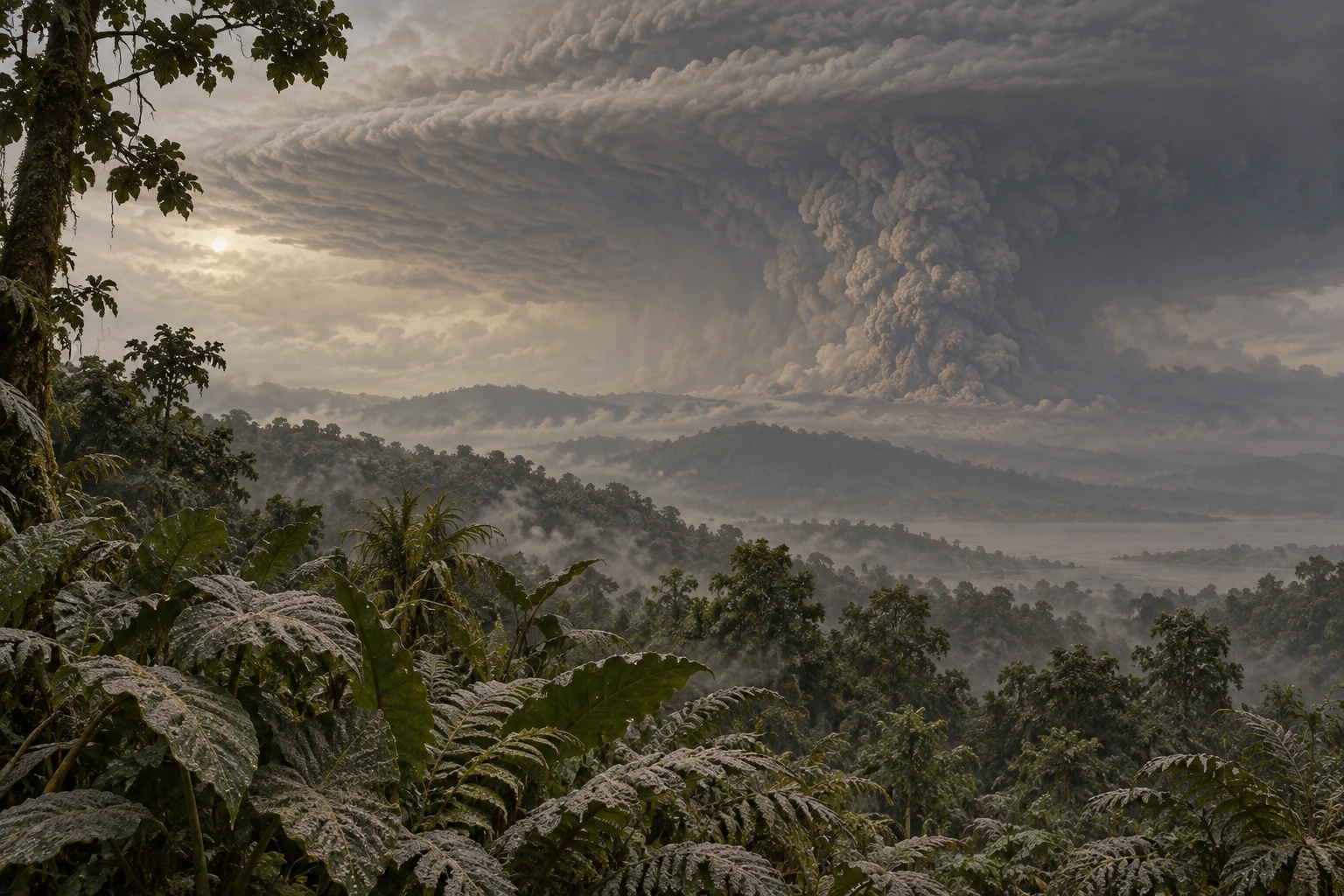
01Interpretive scene of ashfall near the Toba eruption around 74 ka. It does not reconstruct the exact eruption plume or imply a worldwide human near-extinction event.
~74,000 years ago · Climate shock · debated bottleneck
Toba supereruption
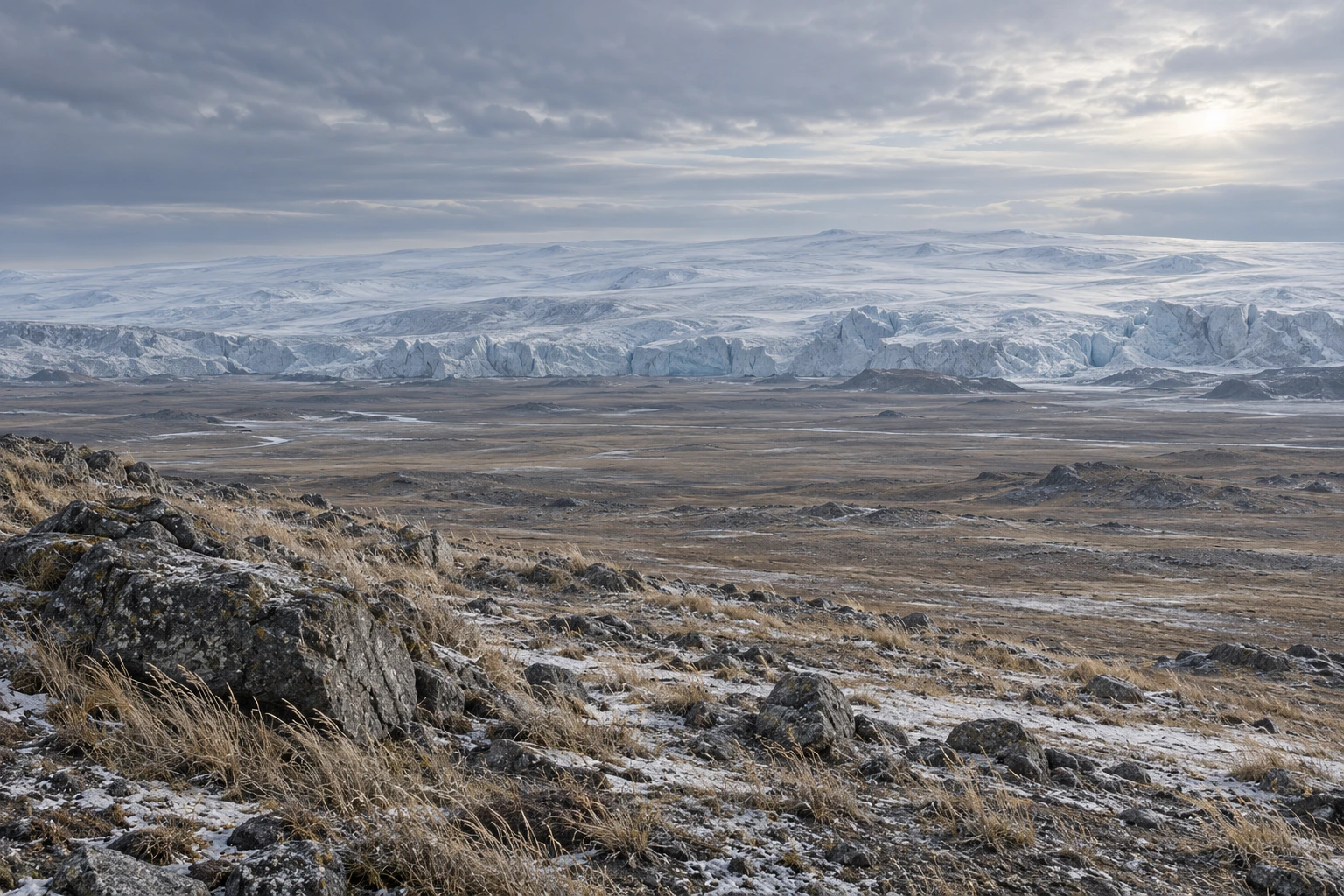
A massive eruption injected aerosols into the atmosphere. Population effects were regionally uneven; a near-extinction story is not established.02Interpretive ice-margin landscape for the Last Glacial Maximum. It conveys cold, dry conditions and altered habitat without mapping a specific ice boundary, migration route, or population decline.
~26,500–19,000 years ago · Climate · range compression
Last Glacial Maximum
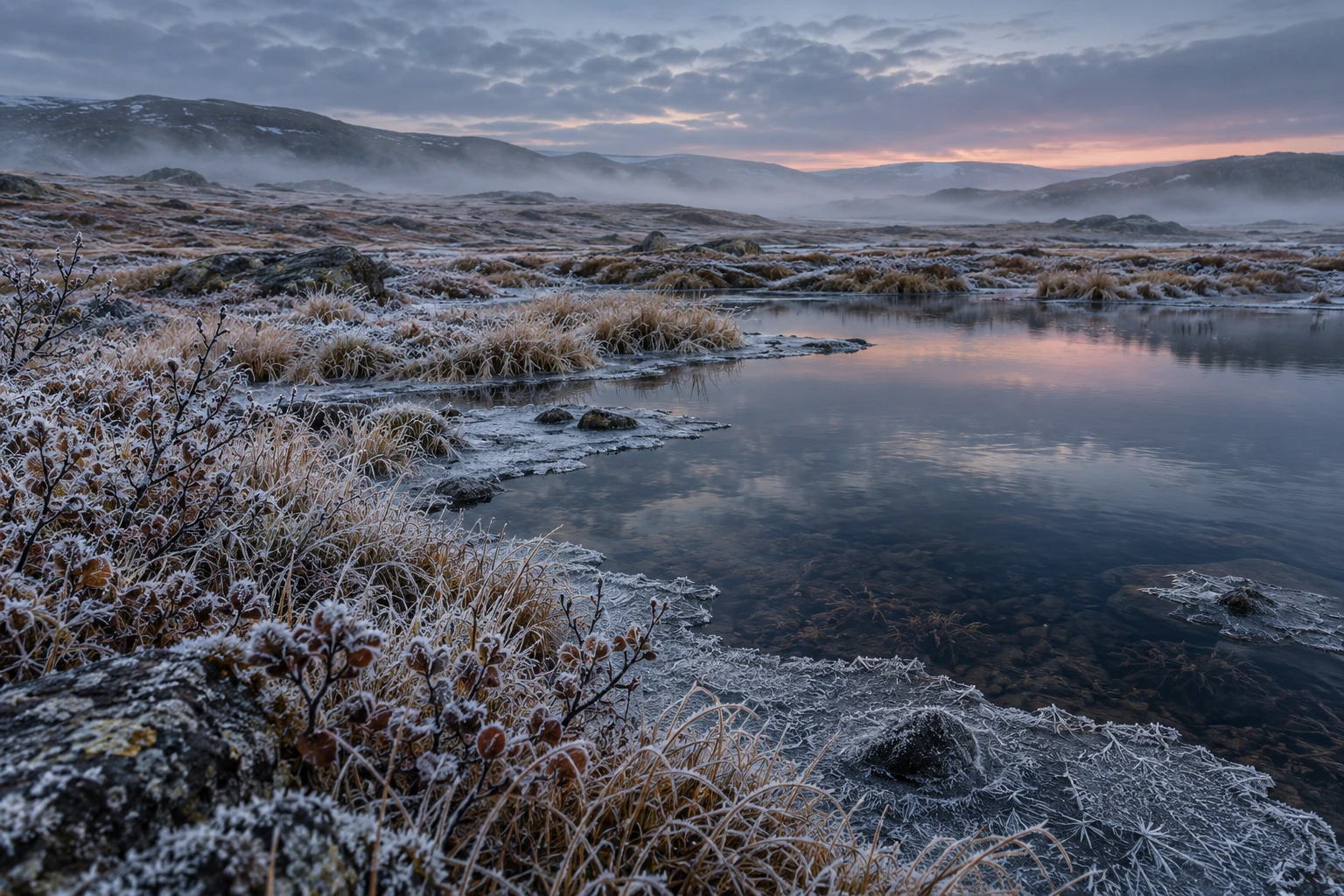
Ice sheets and cold–dry climates reorganized habitable zones, coasts and migration corridors.03Interpretive northern landscape for the Younger Dryas cooling interval. The scene is environmental context, not a local temperature record or a universal explanation for the origins of agriculture.
12,900–11,700 years ago · Abrupt cooling
Younger Dryas
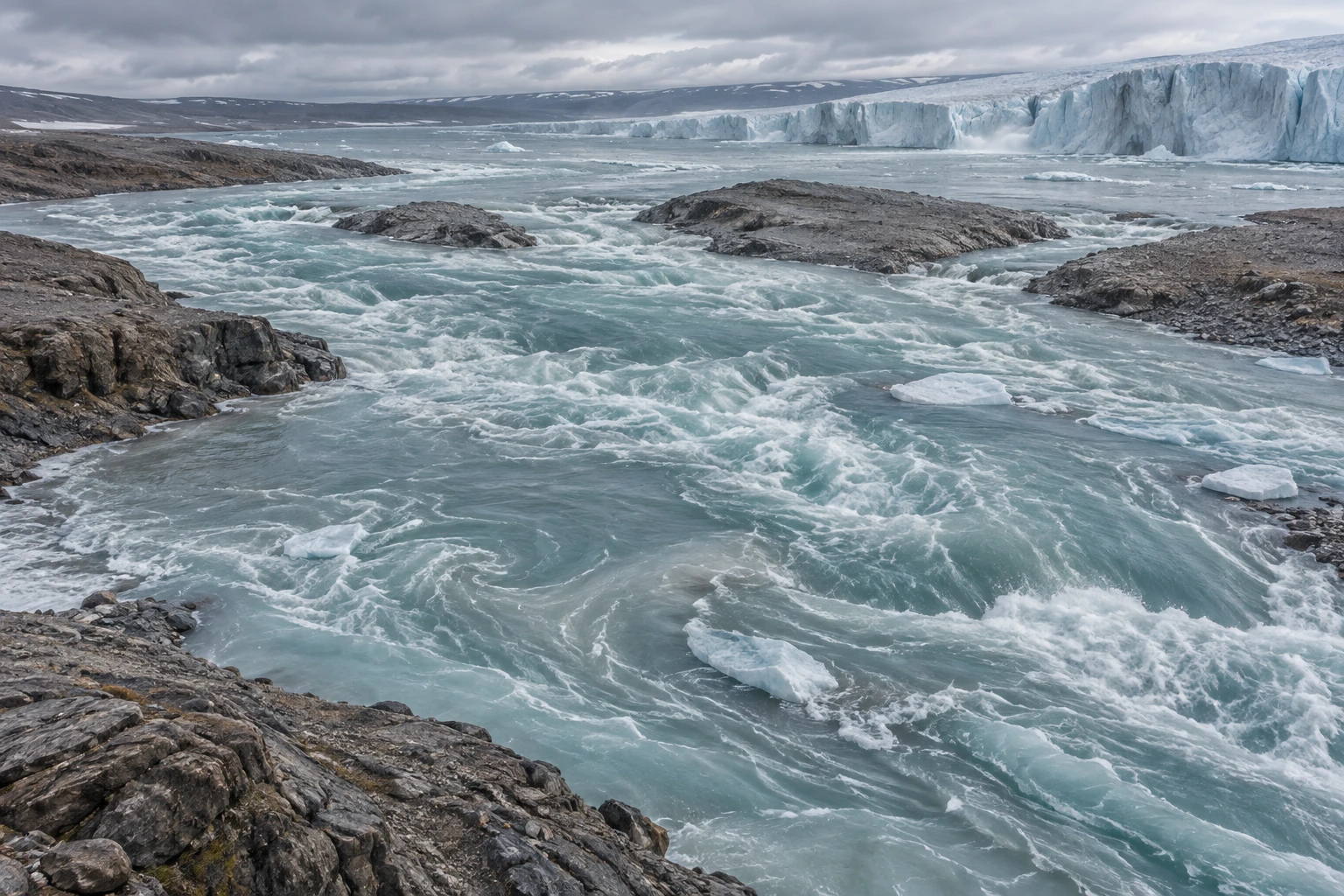
Rapid Northern Hemisphere cooling interrupted postglacial warming; causes and regional social consequences vary.04Interpretive study of glacial-lake drainage, a mechanism linked to the 8.2 ka climate event. Channel geometry and discharge are illustrative; the scene makes no claim of a uniform regional social collapse.
~6200 BCE · Abrupt climate event
8.2-kiloyear event
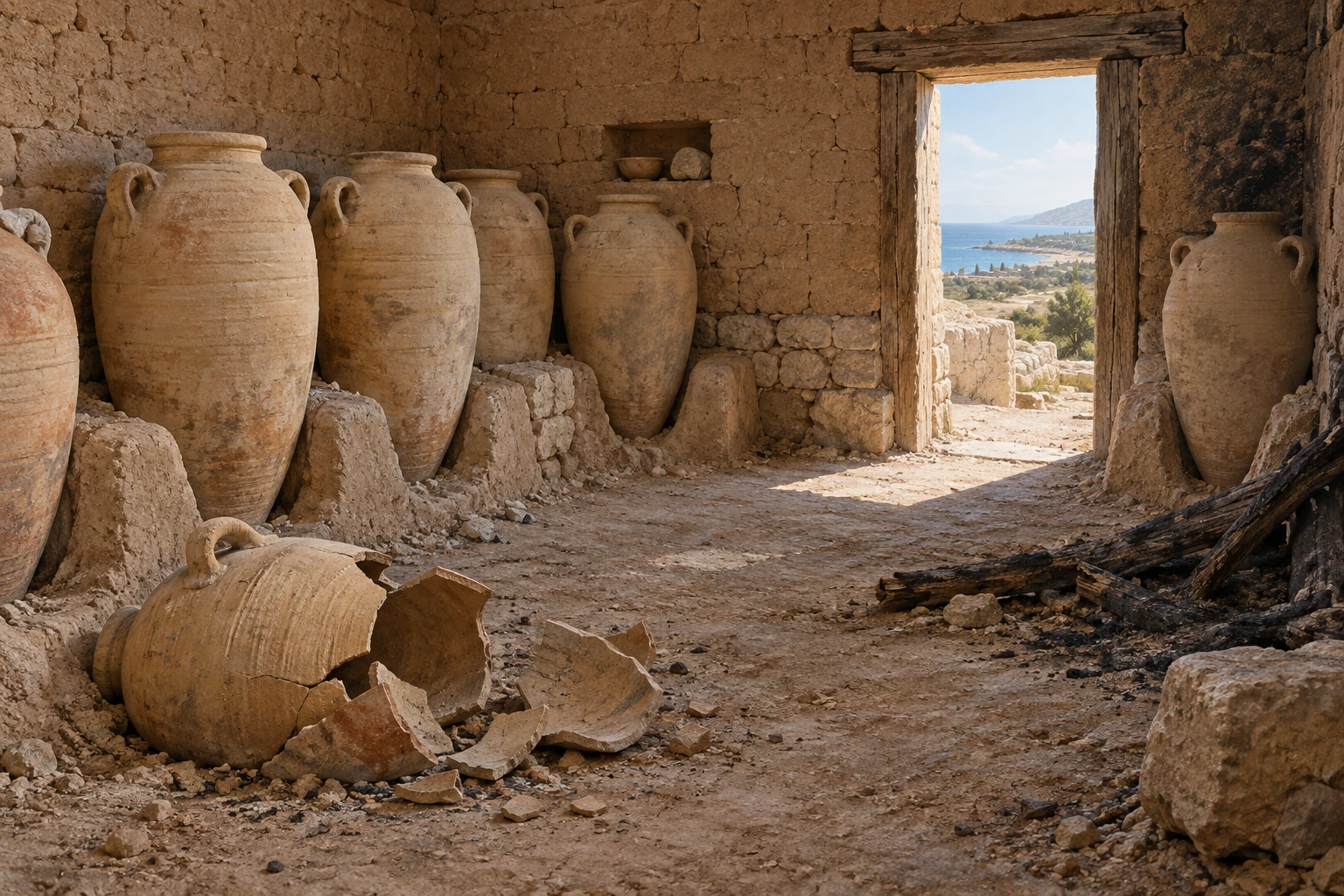
A major cooling and drying pulse affected rainfall and water systems across multiple regions.05Interpretive eastern Mediterranean storage scene around the end of the Bronze Age. It evokes disrupted exchange without assigning one destruction episode to a named site or reducing change to a single cause.
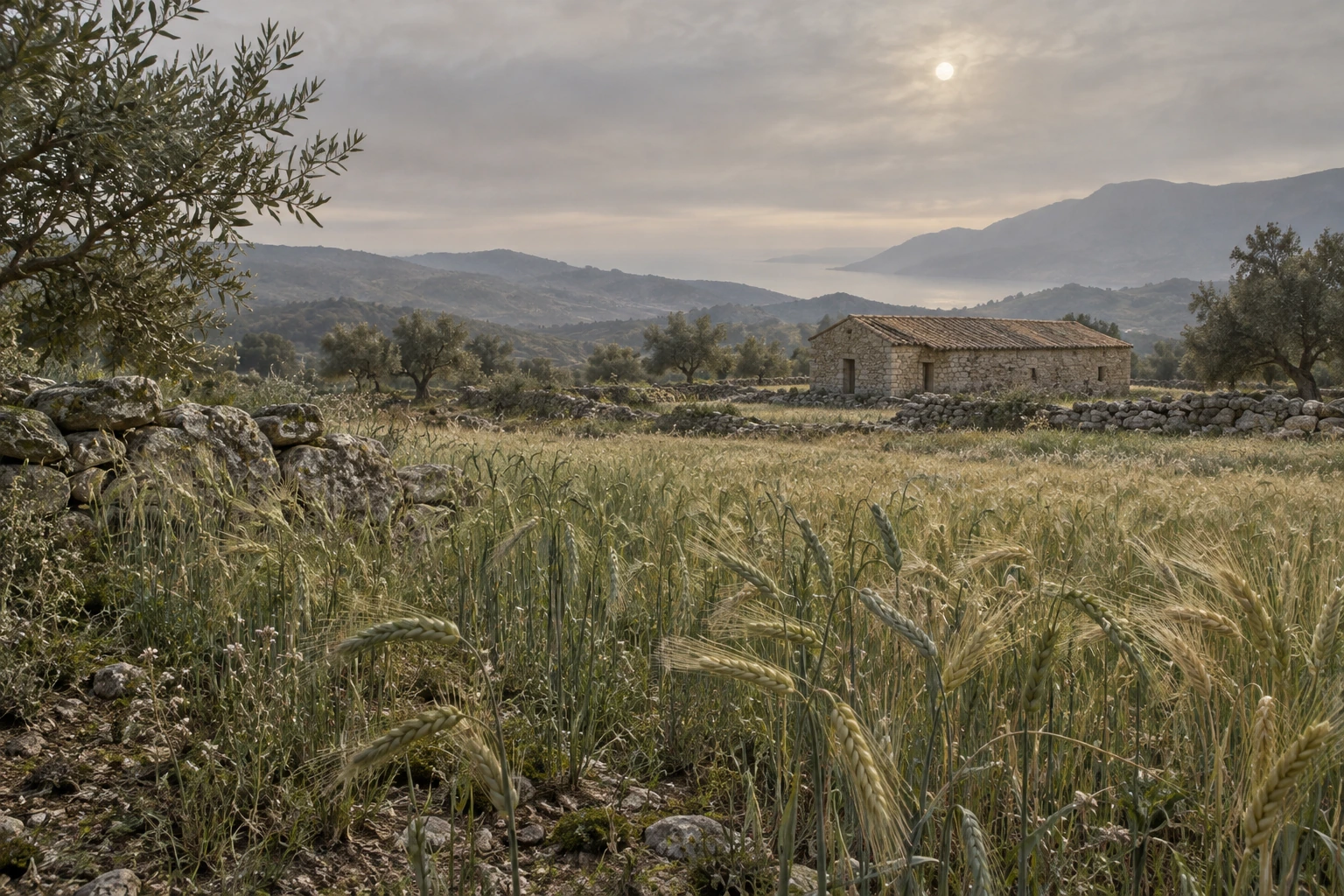
Eastern Mediterranean palace systems fractured through interacting political, environmental and military pressures.06Interpretive rural scene for Late Antique cooling and harvest pressure. It is not a reconstruction of a particular year or village, and climate is one influence among political, biological, and social conditions.
536–660 CE · Volcanism · cooling · disease ecology
Late Antique Little Ice Age
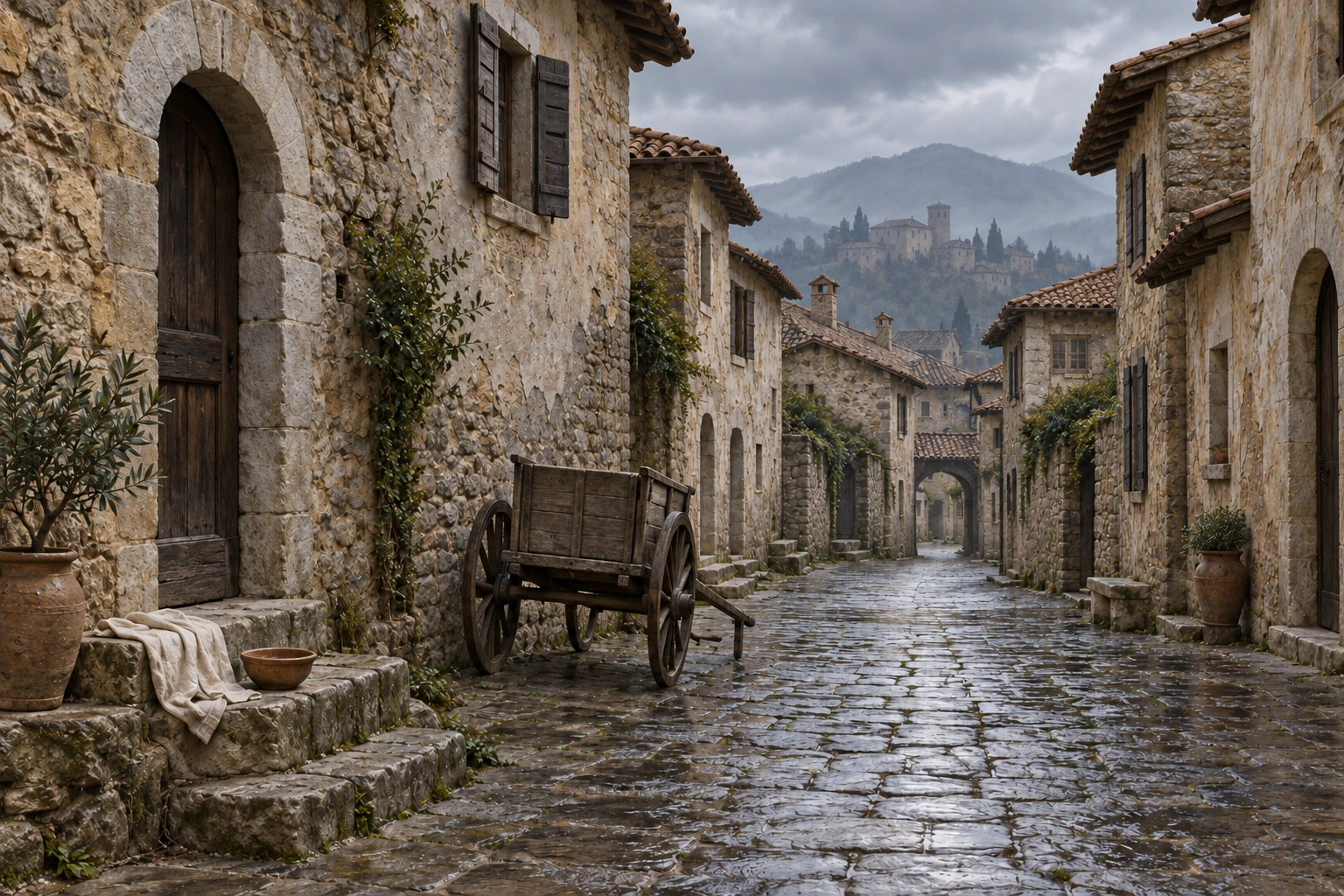
Multiple eruptions reduced temperatures during an era already marked by war, migration and plague.07Interpretive fourteenth-century urban scene evoking disruption during the Black Death. The street is fictional; absence is an editorial device, not a record of a particular town’s mortality.
1346–1353 CE · Pandemic · Yersinia pestis
Black Death
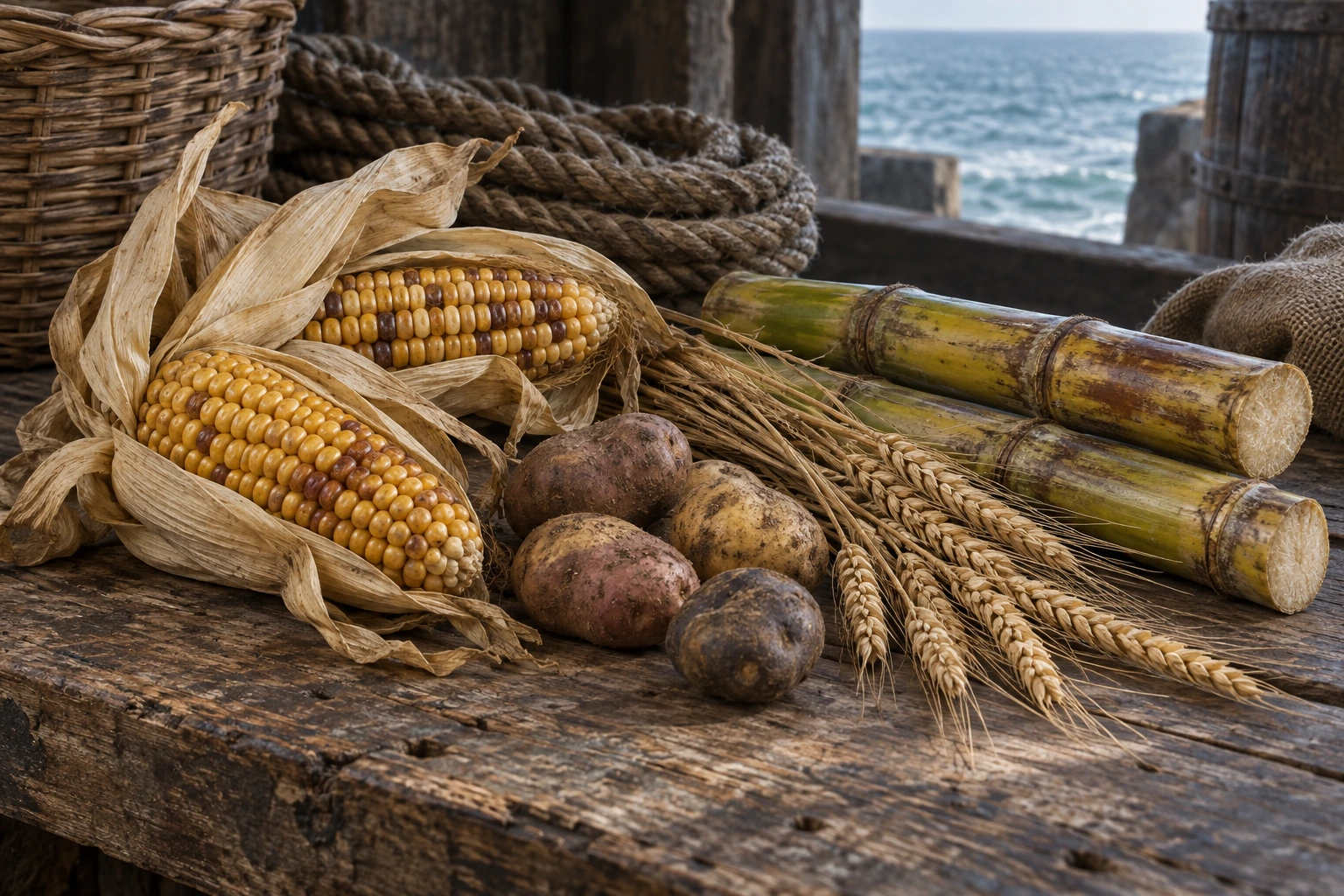
A plague pandemic killed an extraordinary share of people across Eurasia and North Africa.08Botanical material study of organisms moved through the Columbian Exchange. These foods represent only one part of a history also shaped by epidemics, conquest, forced movement and colonial exploitation.
after 1492 · Contact · pathogens · forced movement
Columbian Exchange
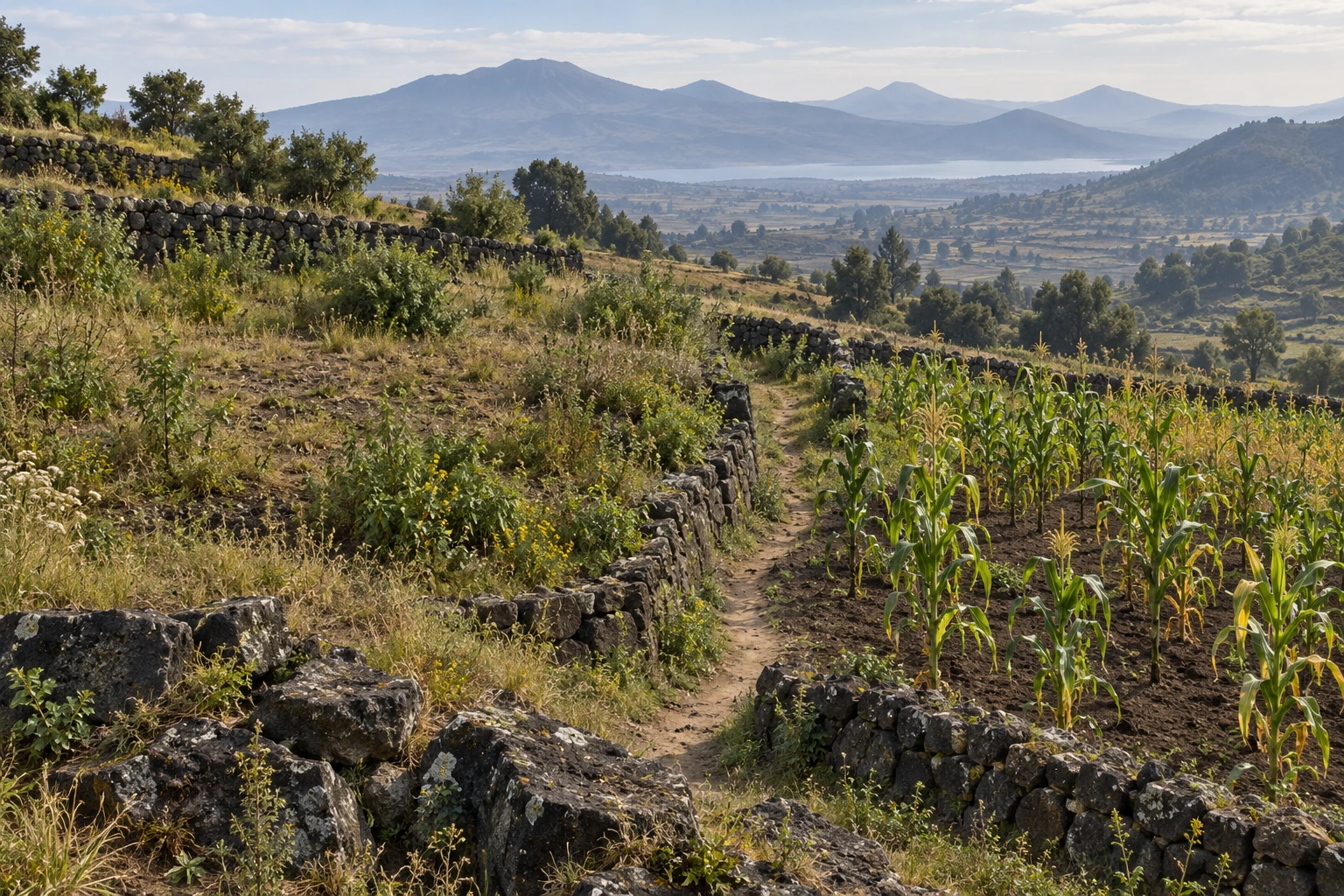
Oceanic reconnection moved organisms, diseases, people and empires at unprecedented scale under conquest.09Interpretive central Mexican agricultural landscape evoking disruption and persistence after European invasion. Epidemics interacted with violence, displacement and exploitation; Indigenous communities survived and continue.
16th century · Demographic collapse
Great Dying in the Americas
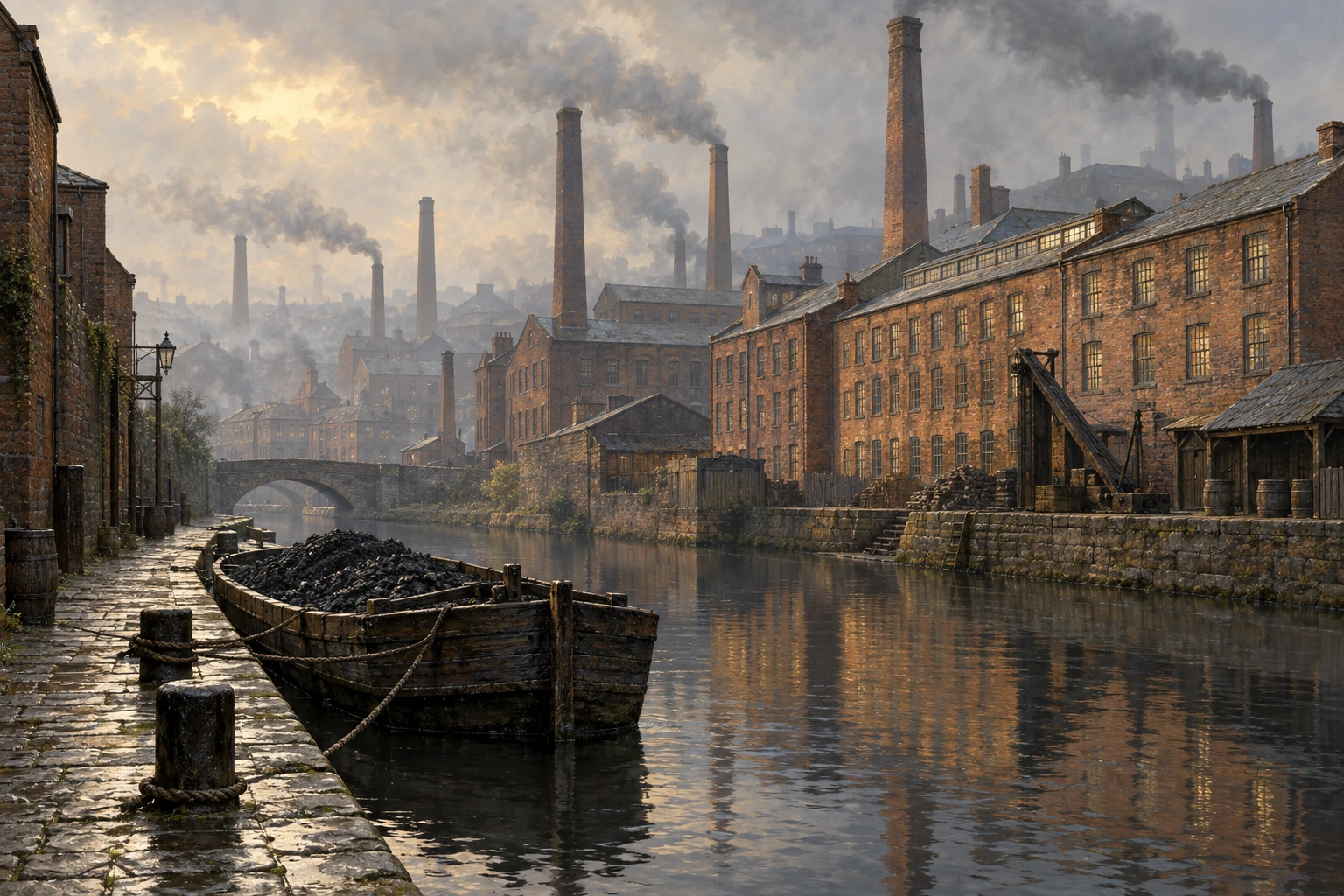
Repeated epidemics combined with warfare, displacement, famine and colonial exploitation.10Interpretive nineteenth-century industrial scene showing the fossil-energy foundations of later planetary change. The Great Acceleration usually refers to the marked rise in many indicators after about 1950; this is not a data visualization.
~1750–present · Energy · population · planetary change
Industrial Great Acceleration
Fossil energy and industrial systems expand production while altering climate and biogeochemical cycles.11Interpretive material study evoking civilian destruction and the nuclear threshold of 1945. These are invented generic damaged objects, not museum artifacts or a particular victim’s possessions, and do not measure blast or heat effects.
1914–1945 · Industrial conflict
World Wars and nuclear threshold
Total war, genocide and nuclear weapons reorganized states, technologies, borders and international institutions.12Interpretive portrait of a healthcare worker during the COVID-19 pandemic. The person and setting are fictional; it represents one aspect of a global event experienced unequally and does not portray a specific patient or institution.
2019–present · Pandemic · networked world
COVID-19 pandemic
A novel coronavirus exposed global interdependence and unequal health, labor and information systems.