
What this record covers
Regional Middle Paleolithic evidence from Europe and western Asia. A technology label does not identify its maker everywhere; association with fossils, DNA and stratigraphy matters.
EARLY CULTURAL WORLDS · DEEP TIME
Neanderthal lives cannot be reduced to one diet or one tool kit. Different kinds of evidence answer different questions: residues can identify consumed materials, while genomes can reveal population relationships. Neither is a complete account of a household or community.
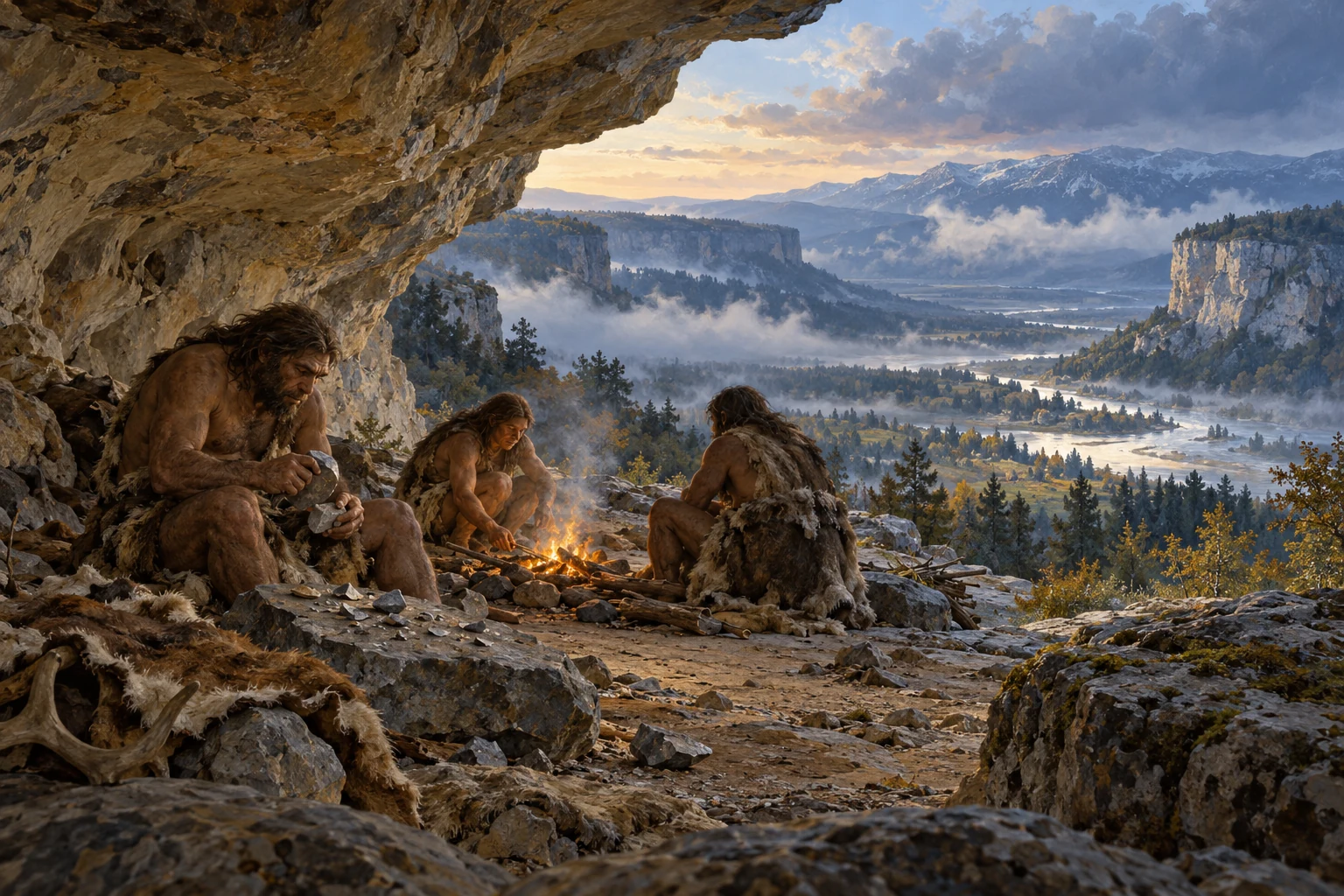
Europe · West Asia · c. 160,000–40,000 years ago
This reading frame spans several archaeological contexts. No single point represents the whole case.
Place the observations in context before drawing a wider conclusion.
Regional Middle Paleolithic evidence from Europe and western Asia. A technology label does not identify its maker everywhere; association with fossils, DNA and stratigraphy matters.
Mousterian technologies span wide regions and times; they cannot be assigned to one population everywhere without associated fossils or biomolecules.
These selected studies support the examples below. This is not an exhaustive review or a claim that later research cannot change the interpretation.
Each case pairs a reported finding with the limit of the inference.
Microfossils recovered from Neanderthal dental calculus at sites in Iraq and Belgium include plant starches and phytoliths. Some starch damage was interpreted as cooking. These observations counter a uniformly meat-only portrayal of Neanderthal diets.
The 2010 draft genome compared DNA from Neanderthal remains with present-day human genomes and provided evidence of gene flow into ancestors of non-African populations.
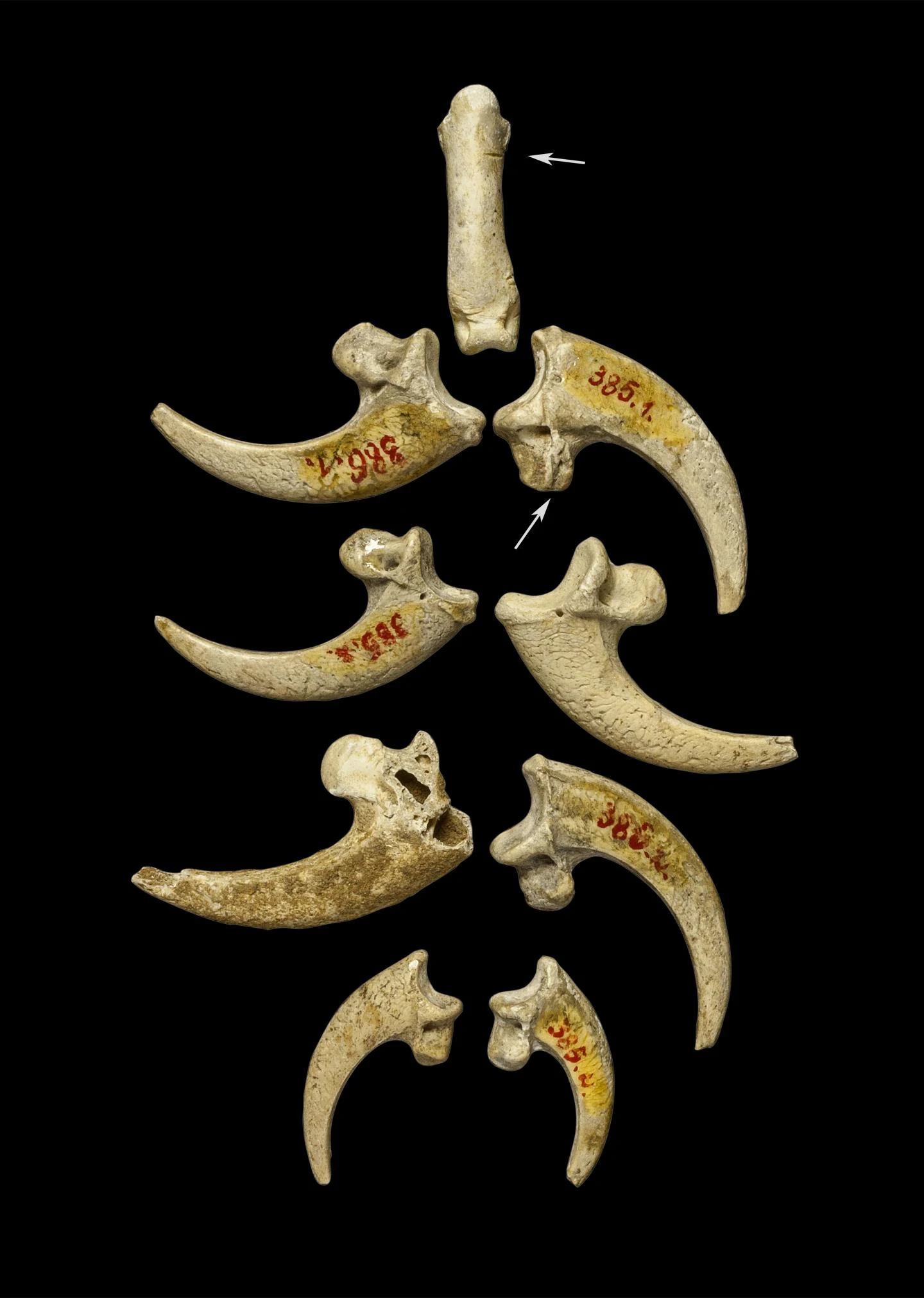
These photographs show surviving cave structures and worked animal remains. They offer additional material context; they do not document the calculus samples or genomes discussed above.

Use these prompts to separate a material observation from an interpretation.
Inspect the original research. Multiple links do not automatically mean independent corroboration.
Plant microfossils and cooking interpretation at Shanidar and Spy; not a universal dietary estimate.
Genetic relationships and evidence of admixture; not direct evidence of cultural transmission.