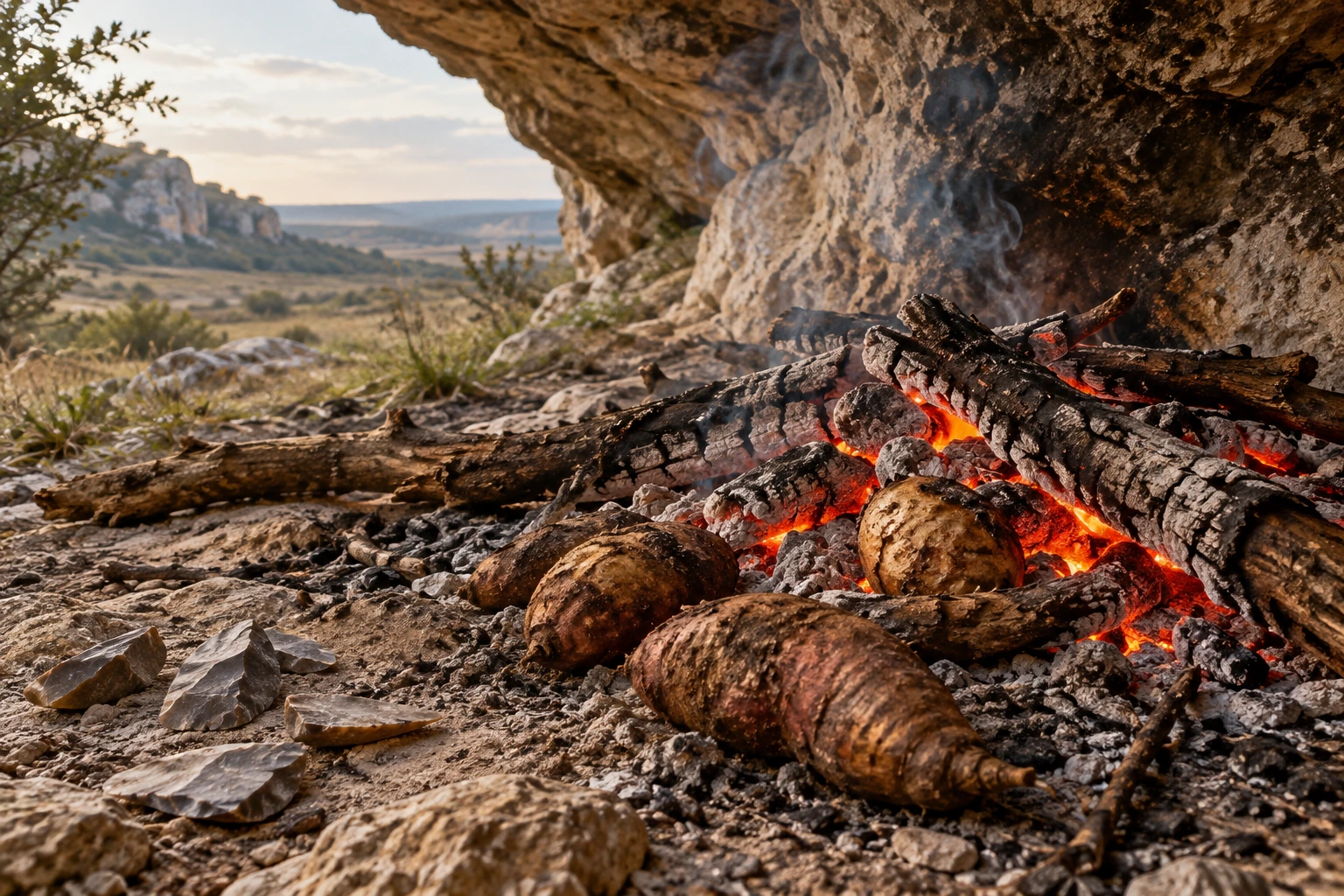
Food connects biology with everyday life: energy, microbes, tools, trade, labor, identity, pleasure and inequality.Interpretive study of fire, tubers and stone tools; it does not identify the first cooking event or a particular archaeological site.01 · Deep time
Fire and cooking
Heat changes digestibility, safety, flavor and social time; the chronology of habitual cooking remains debated.
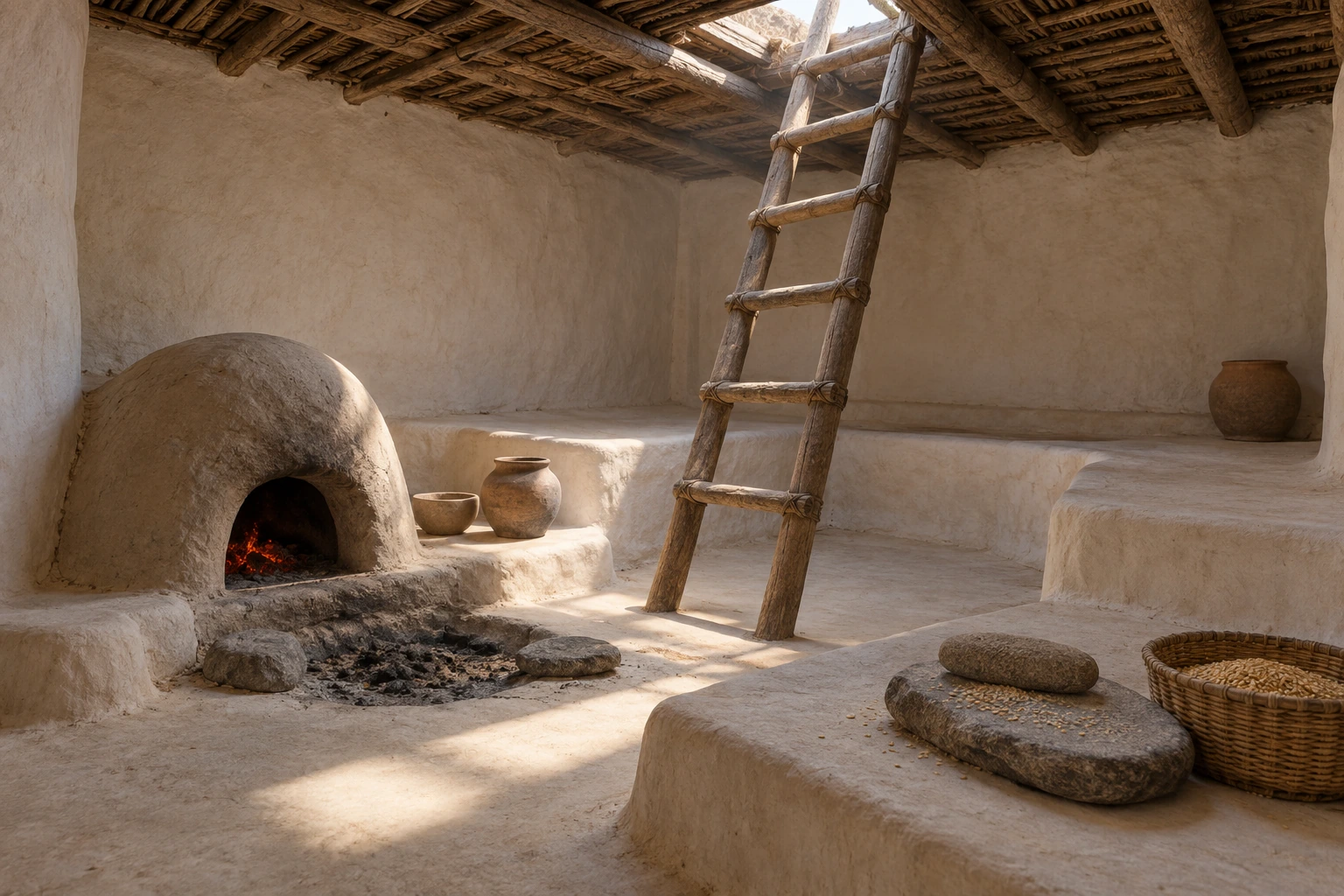
Open food dossier →An interpretive Çatalhöyük household interior, showing a roof-access cooking area and plaster platforms around 6500 BCE.02 · Social life
Hearths and households
Cooking creates places where labor, care, teaching, status and memory become visible.
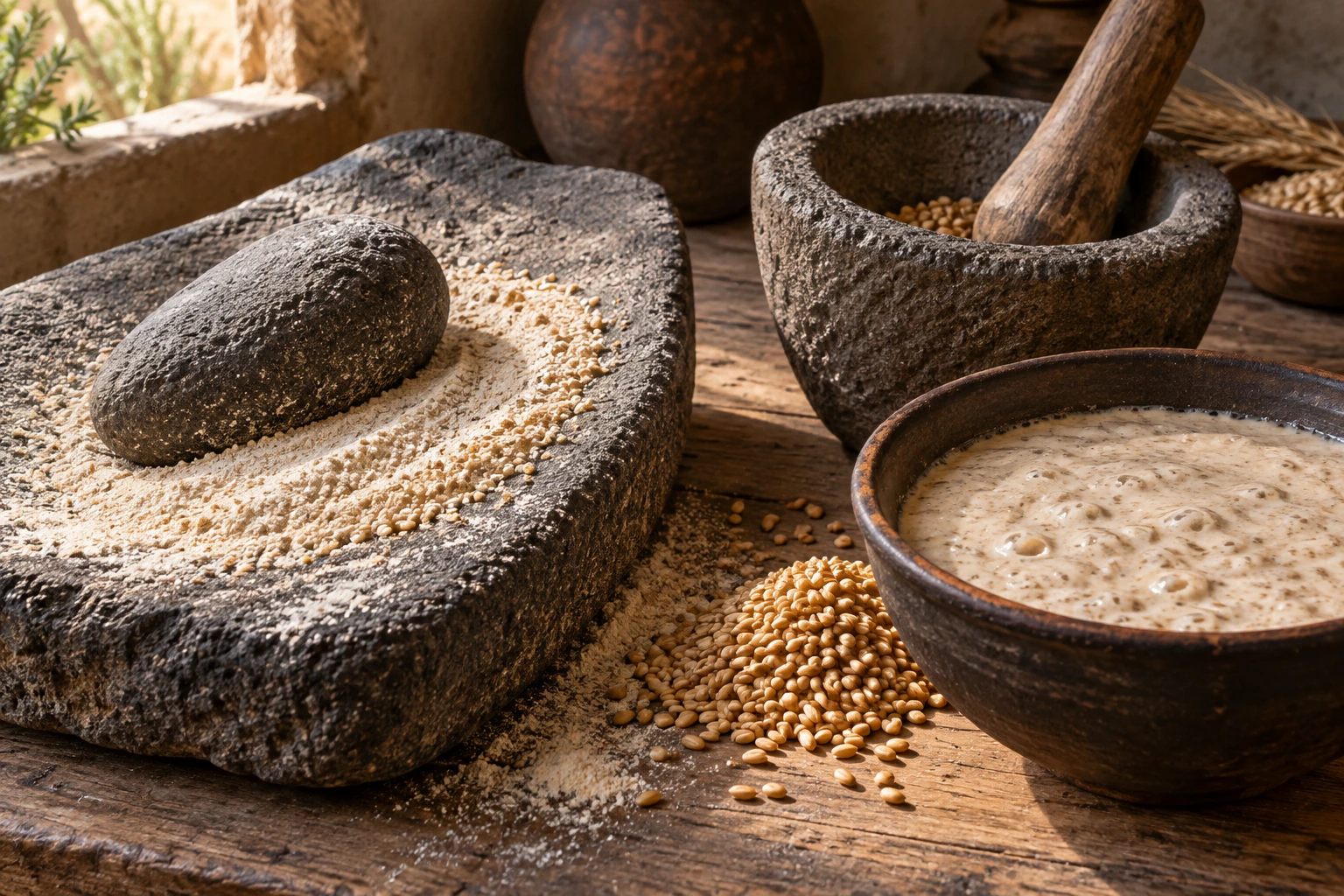
Open food dossier →A conceptual still life of grinding, pounding and grain fermentation; these tools and processes are not presented as one excavated assemblage.03 · Technology
Grinding, pounding and fermentation
Processing plants and using microbes widened the range of foods people could eat long before industrial food.
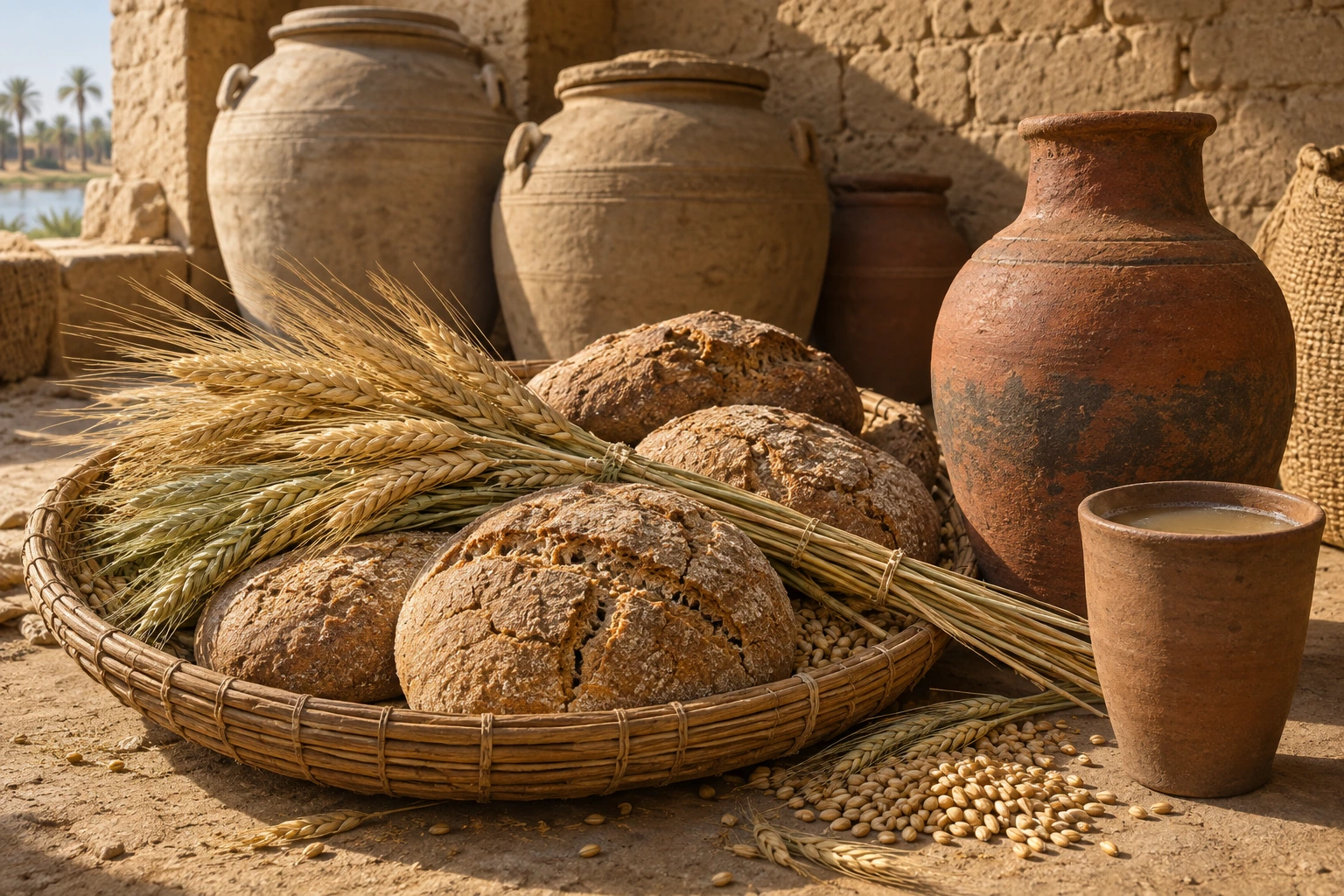
Open food dossier →An interpretive Middle Kingdom Egyptian still life of bread, grain beer and cereal storage, around 1900 BCE.04 · Civilization
Bread, beer and grain states
Stored cereals support dense settlements and taxation while increasing labor and nutritional risk.
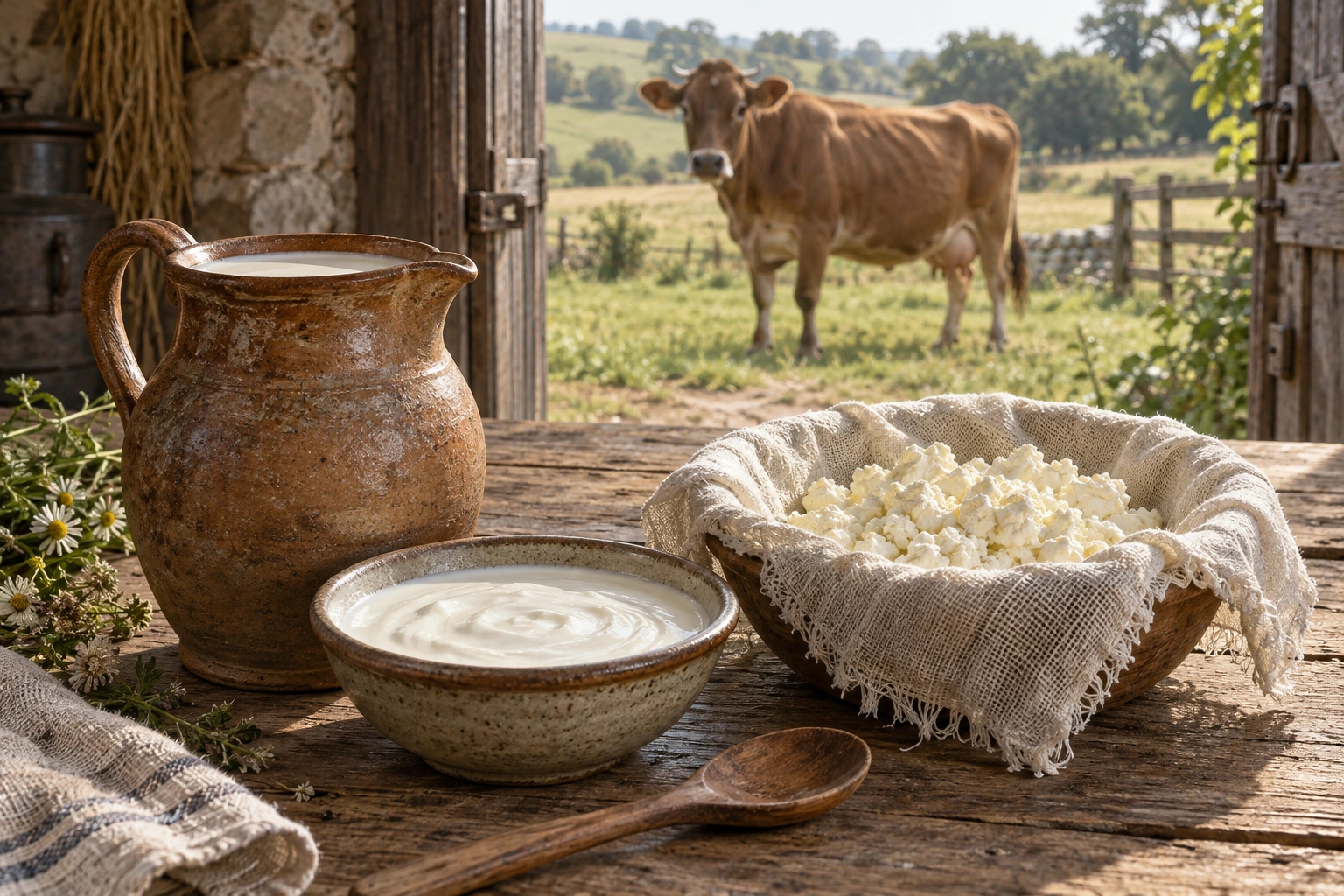
Open food dossier →Dairy foods and a domestic cow illustrate milk production and processing; adult lactase persistence cannot be identified from this scene.05 · Evolution
Milk and gene–culture evolution
Dairying created selection for adult lactase persistence in some populations, with multiple genetic solutions.
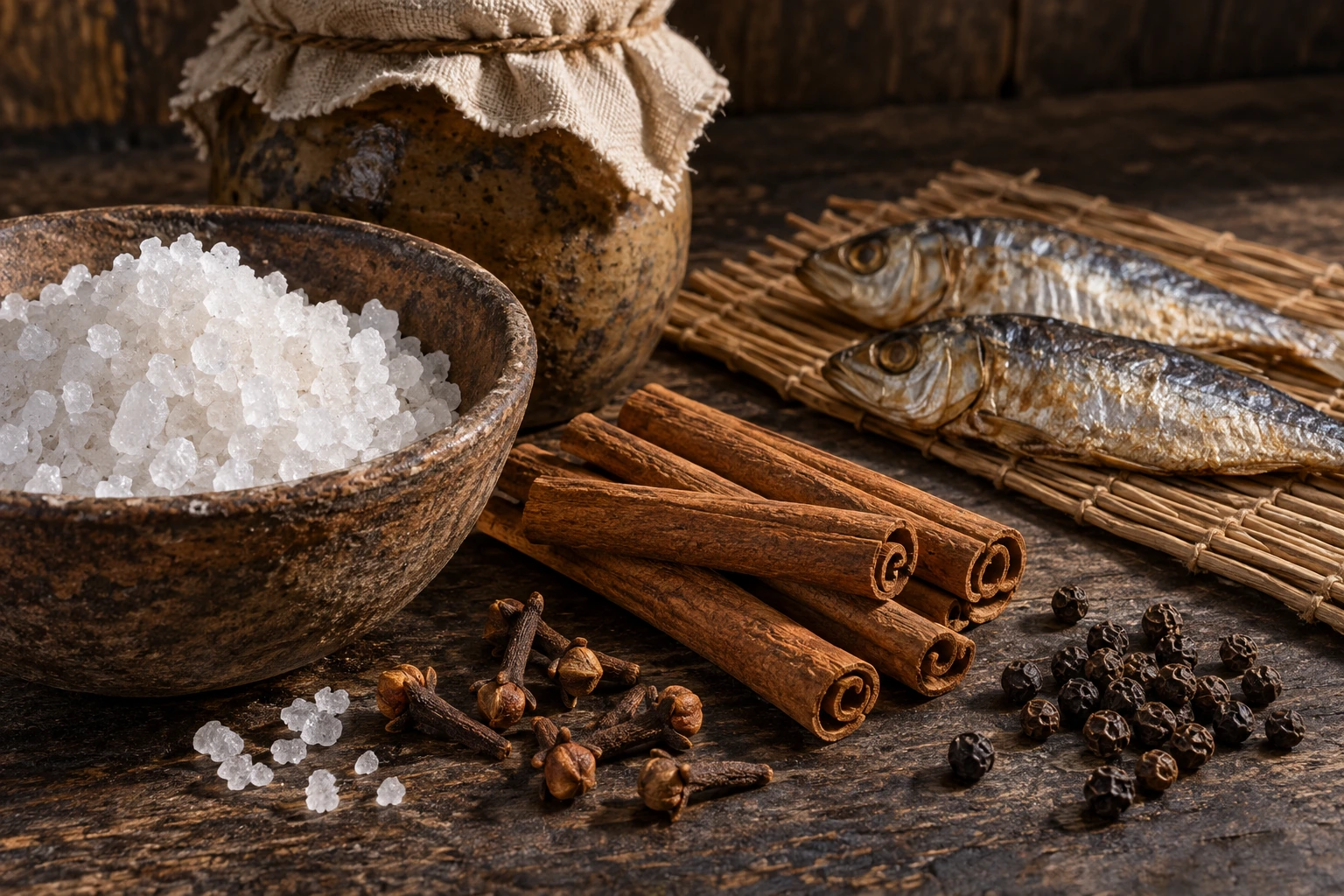
Open food dossier →Salt, spices and dried fish in a conceptual preservation still life; their presence does not imply one historical trade route or cargo.06 · Trade
Spice, salt and preservation
Preservation and sensory preference connect cuisine to empires, migration, labor and ecology.
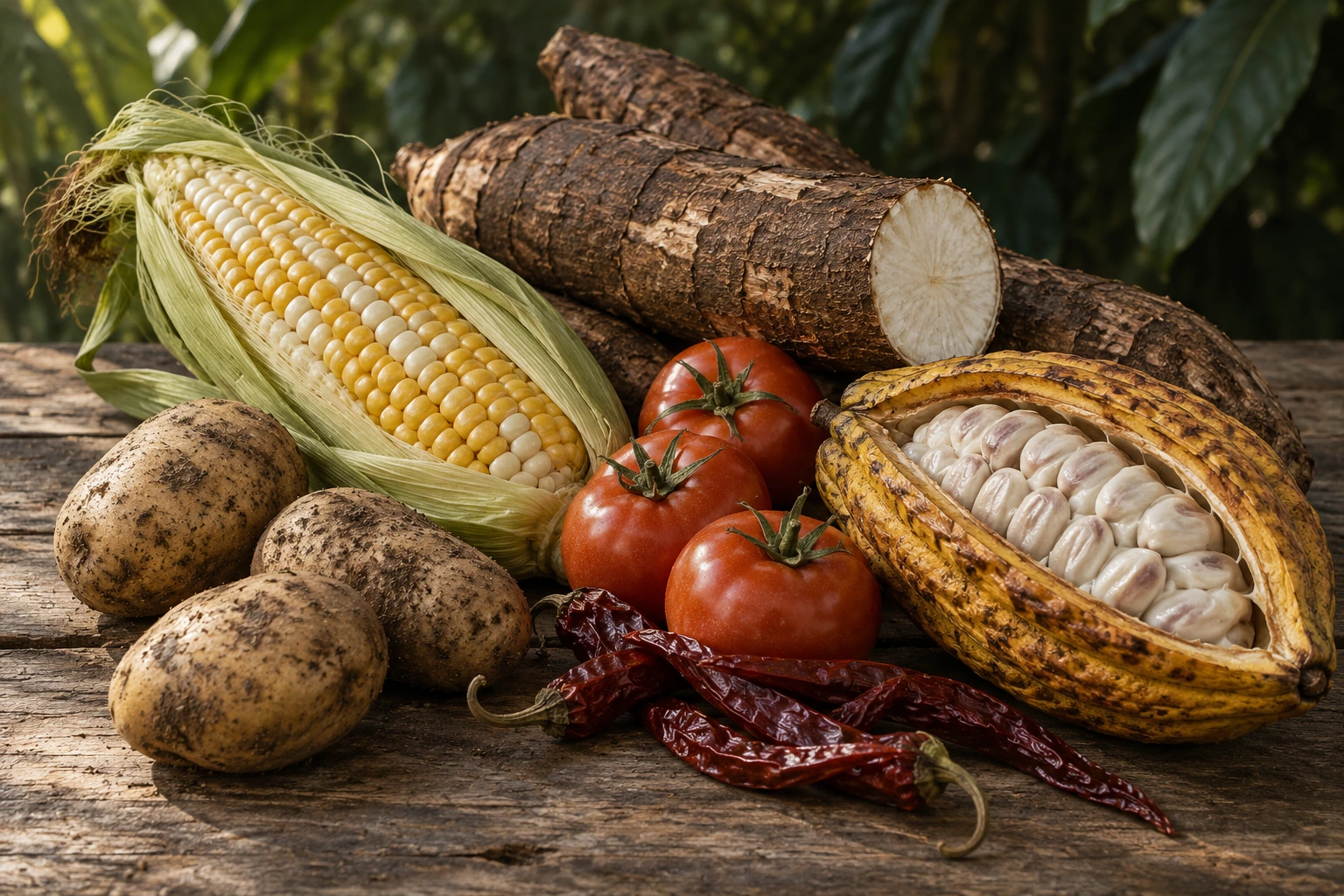
Open food dossier →Selected American crops whose later global circulation reshaped food systems; this assemblage is not a single historic meal or cargo.07 · Exchange
Columbian food worlds
Maize, potato, cassava, tomato, cacao and livestock reshaped diets, populations and landscapes globally.
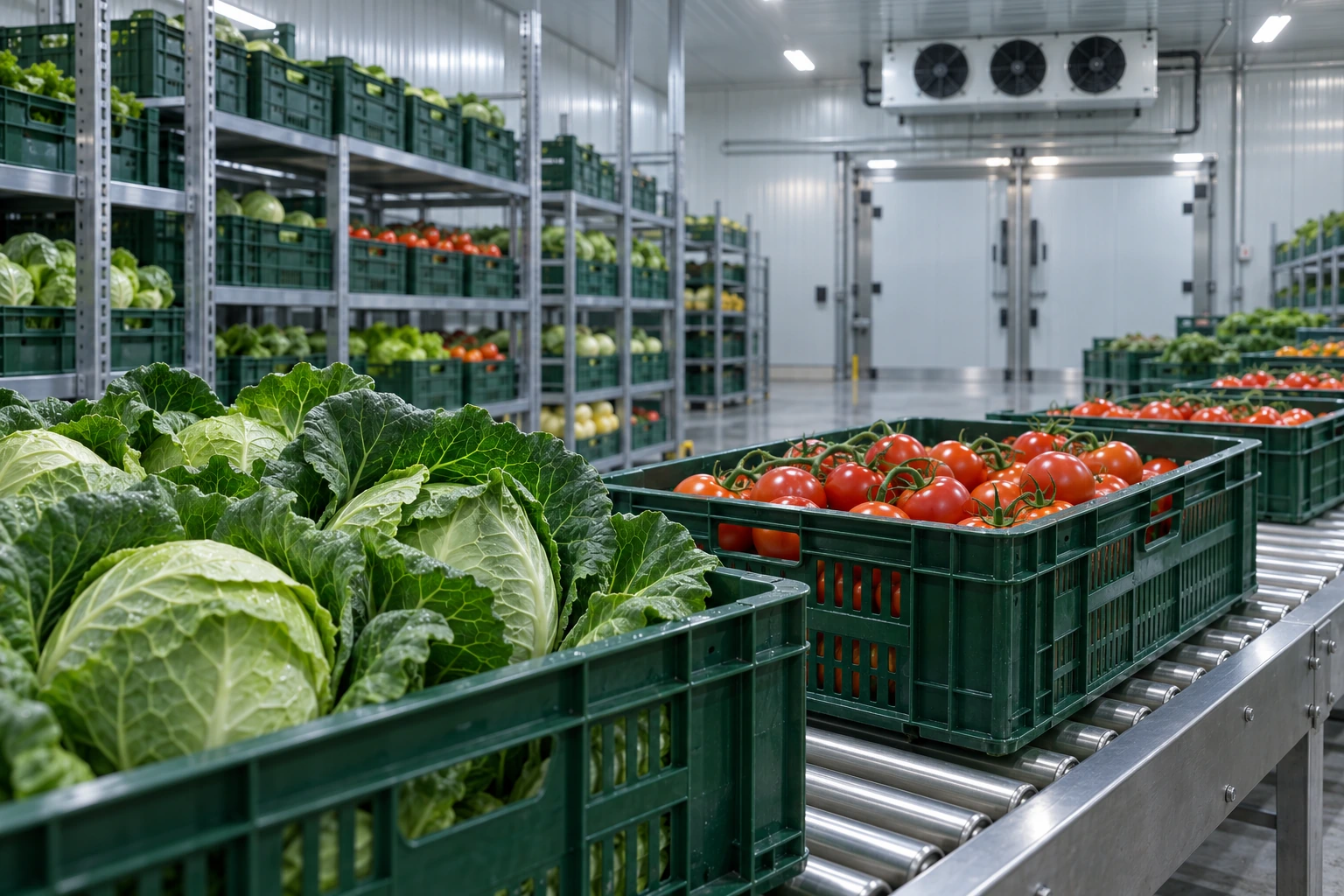
Open food dossier →A contemporary produce cold-storage and packing scene, one part of a wider industrial food system.08 · Modernity
Industrial food systems
Refrigeration, fertilizer, processing and logistics reduce some risks while creating new health and ecological costs.
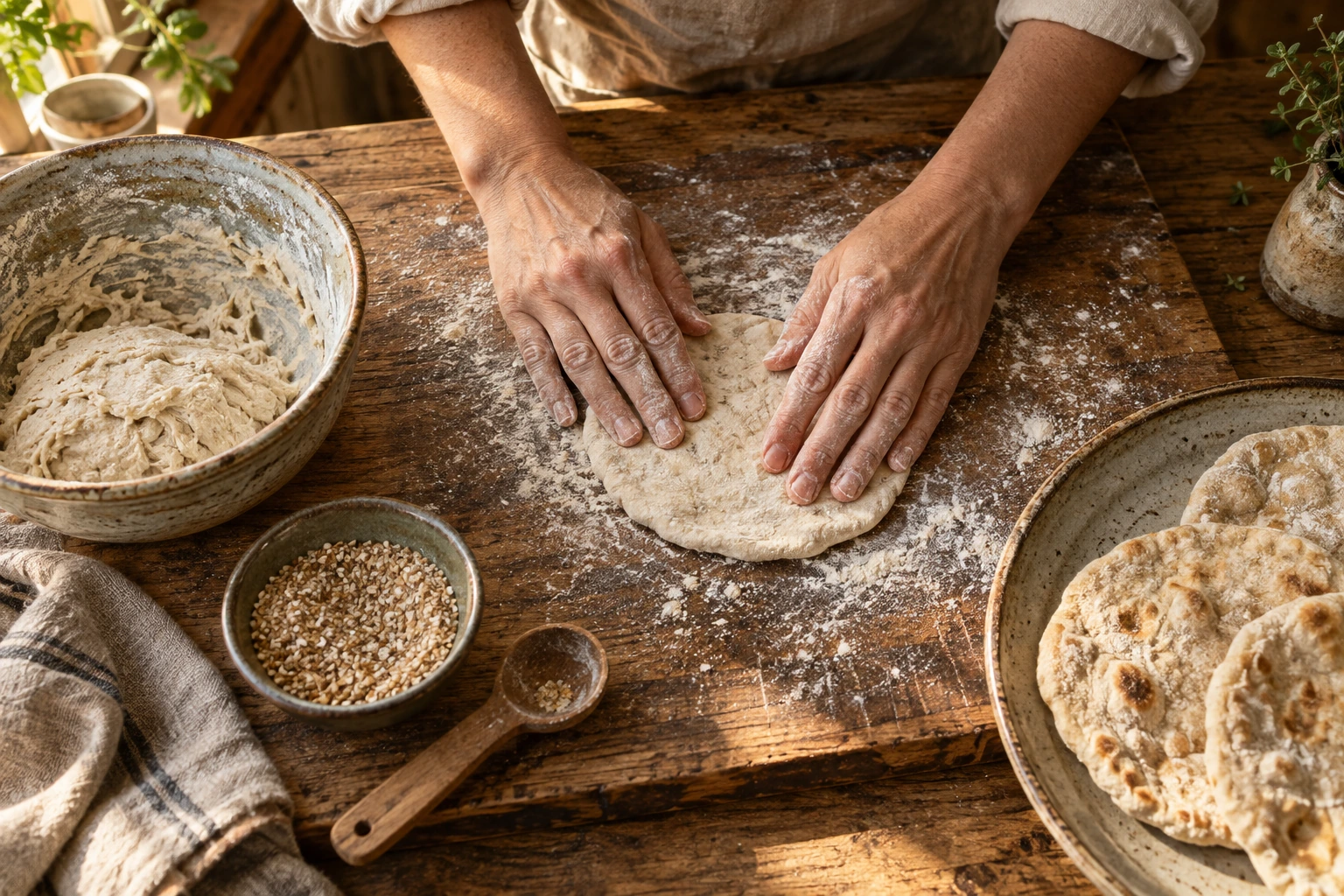
Open food dossier →A contemporary illustration of recipe knowledge enacted through hands, ingredients and familiar tools; no specific historic or national recipe is asserted.09 · Method
Recipes as evidence
Recipes change with ingredients, tools, knowledge and substitutions. They have histories that cannot be reduced to a timeless national tradition.