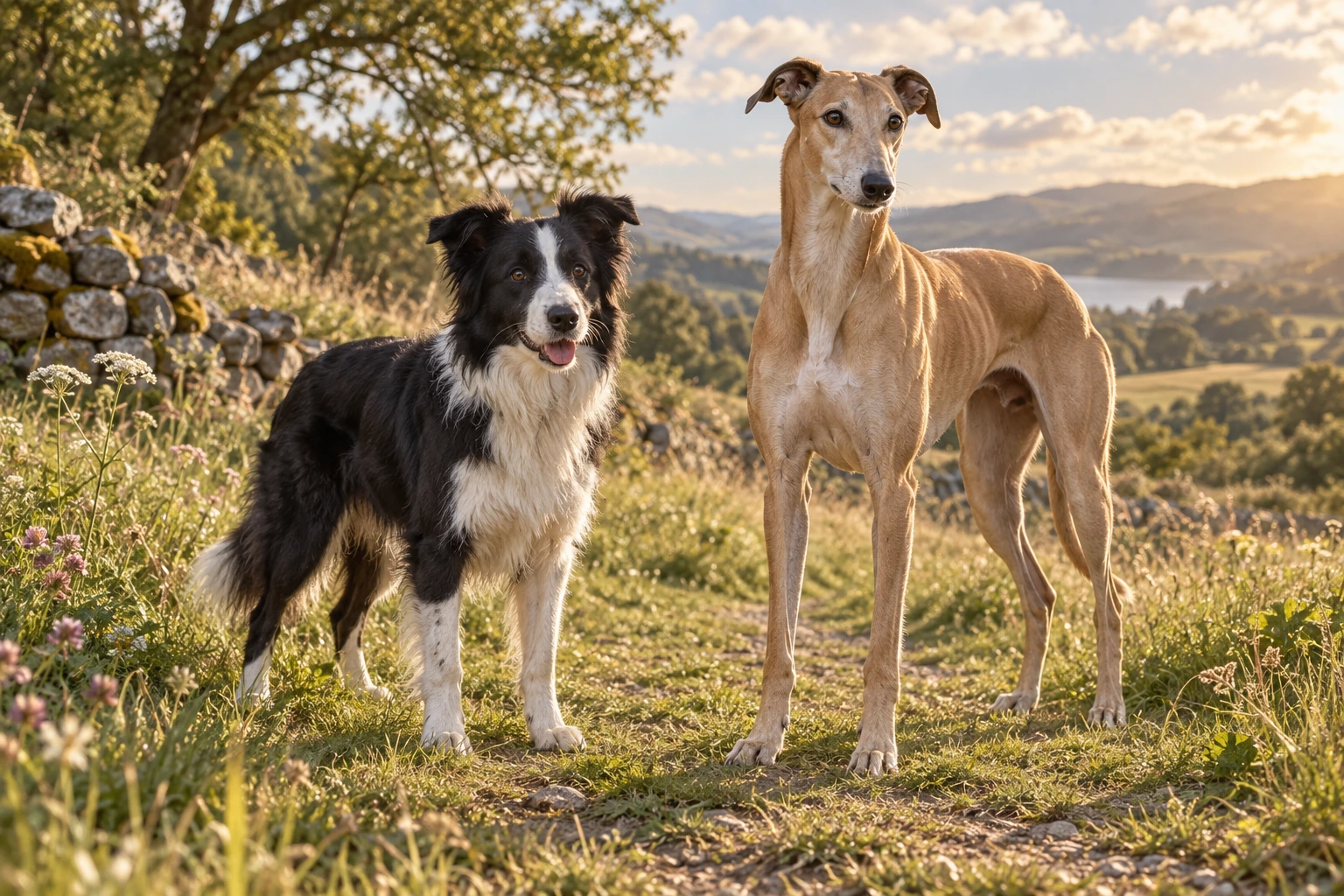
Two selected modern dog breed types, Border Collie and Greyhound; their appearance does not reconstruct the first domestic dogs.
Intentional + mutual
Dogs
From: Wolf populations
Companions, workers and hundreds of modern breeds; extreme morphology can carry serious welfare costs.
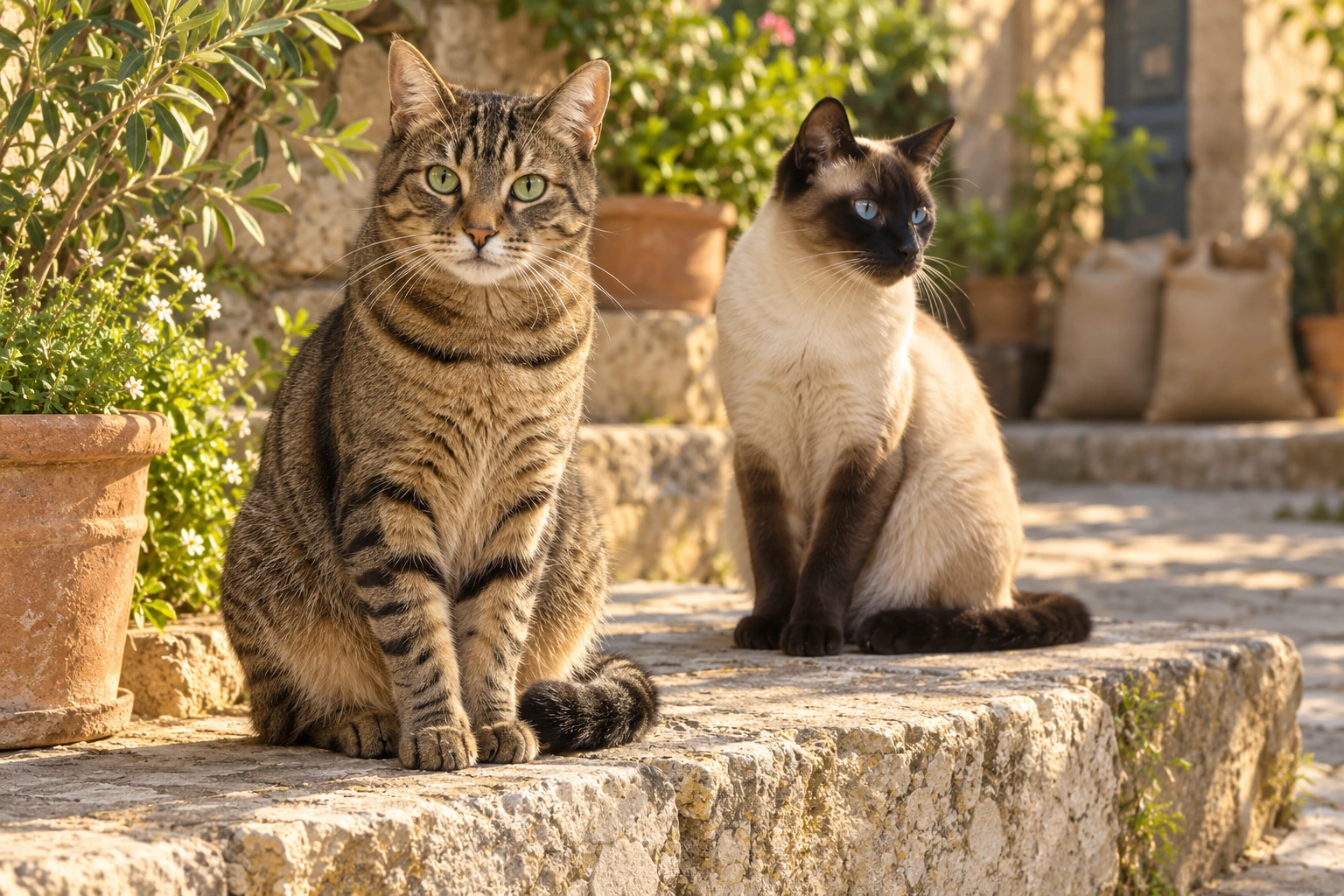
Selected modern domestic cat types: a mackerel tabby and a seal-point Siamese; this is not a reconstruction of early cat domestication.
Commensal → selected
Cats
From: Near Eastern and Egyptian wildcats
Settlement rodents favored proximity; later aesthetic breeding produced distinctive lines and hybrids.
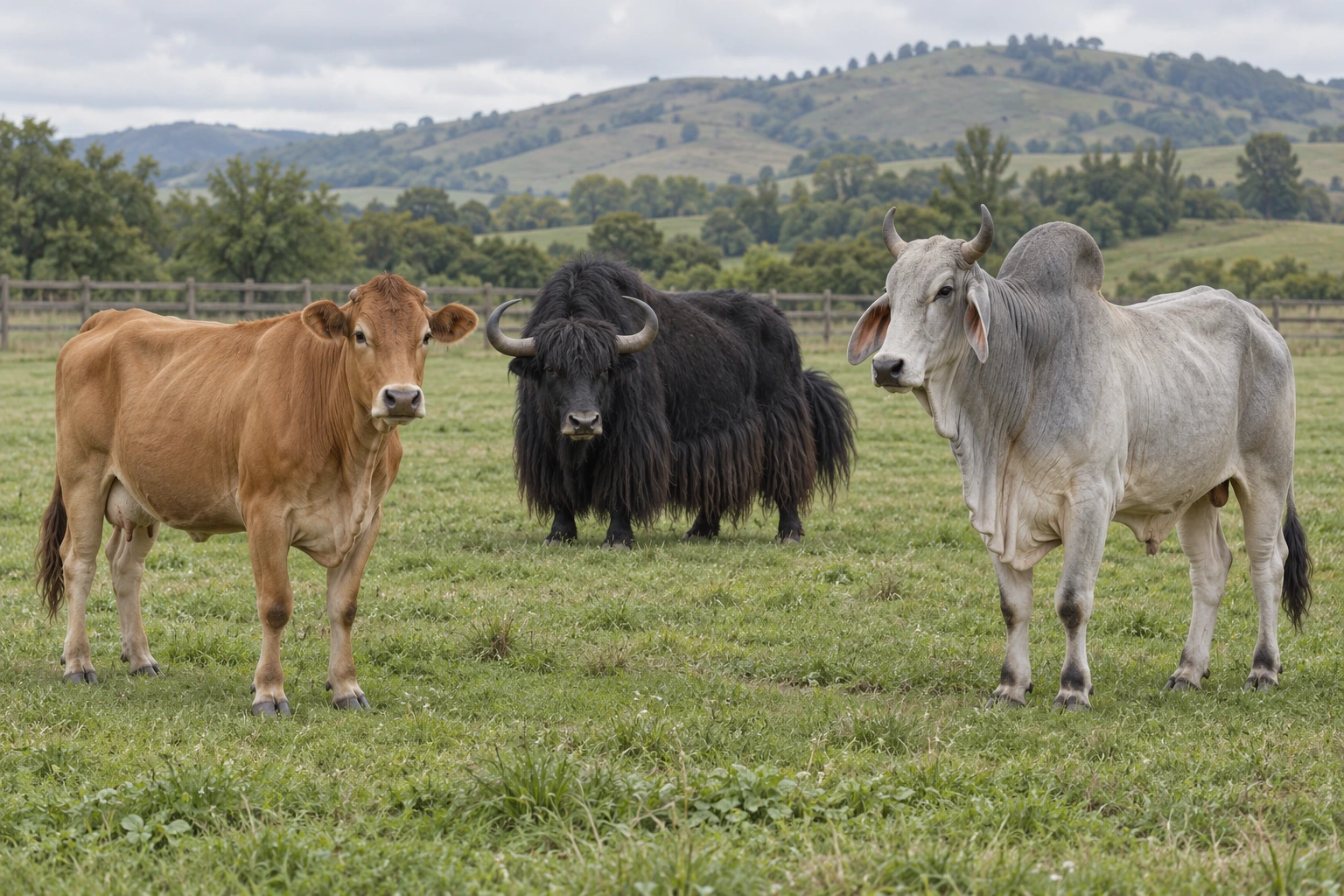
An interpretive gathering of taurine cattle, domestic yak and zebu in a managed paddock, showing selected body forms rather than a natural ancestral herd.
Intentional
Cattle, yak and zebu
From: Wild bovids
Meat, milk, traction, dung and status reshape landscapes, pathogens and human genes.
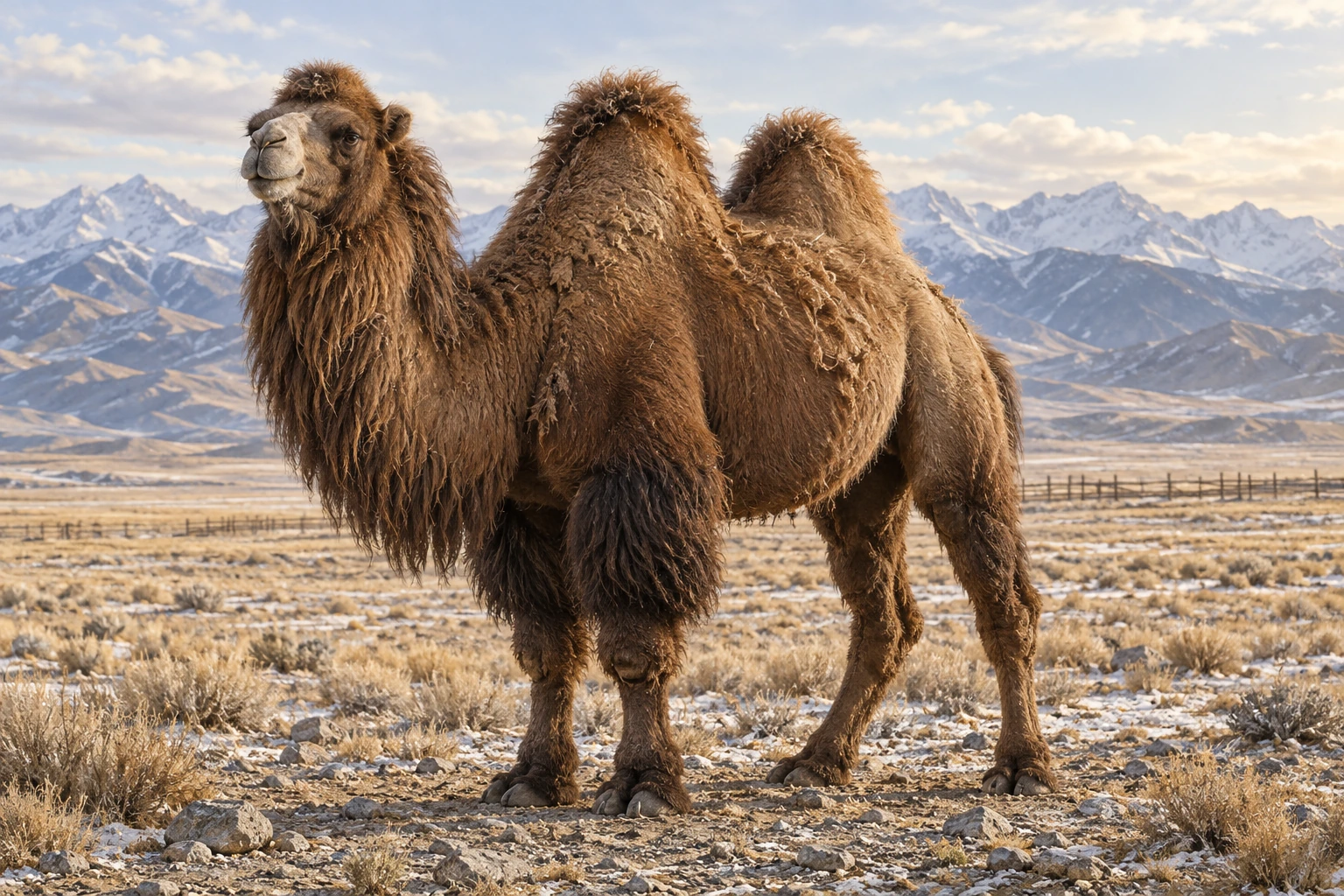
A domestic Bactrian camel in an interpretive pastoral landscape; this image represents one branch of camelid diversity.
Intentional
Camels and camelids
From: Wild camelid populations
Desert and high-altitude transport reorganized trade, warfare, food and settlement.
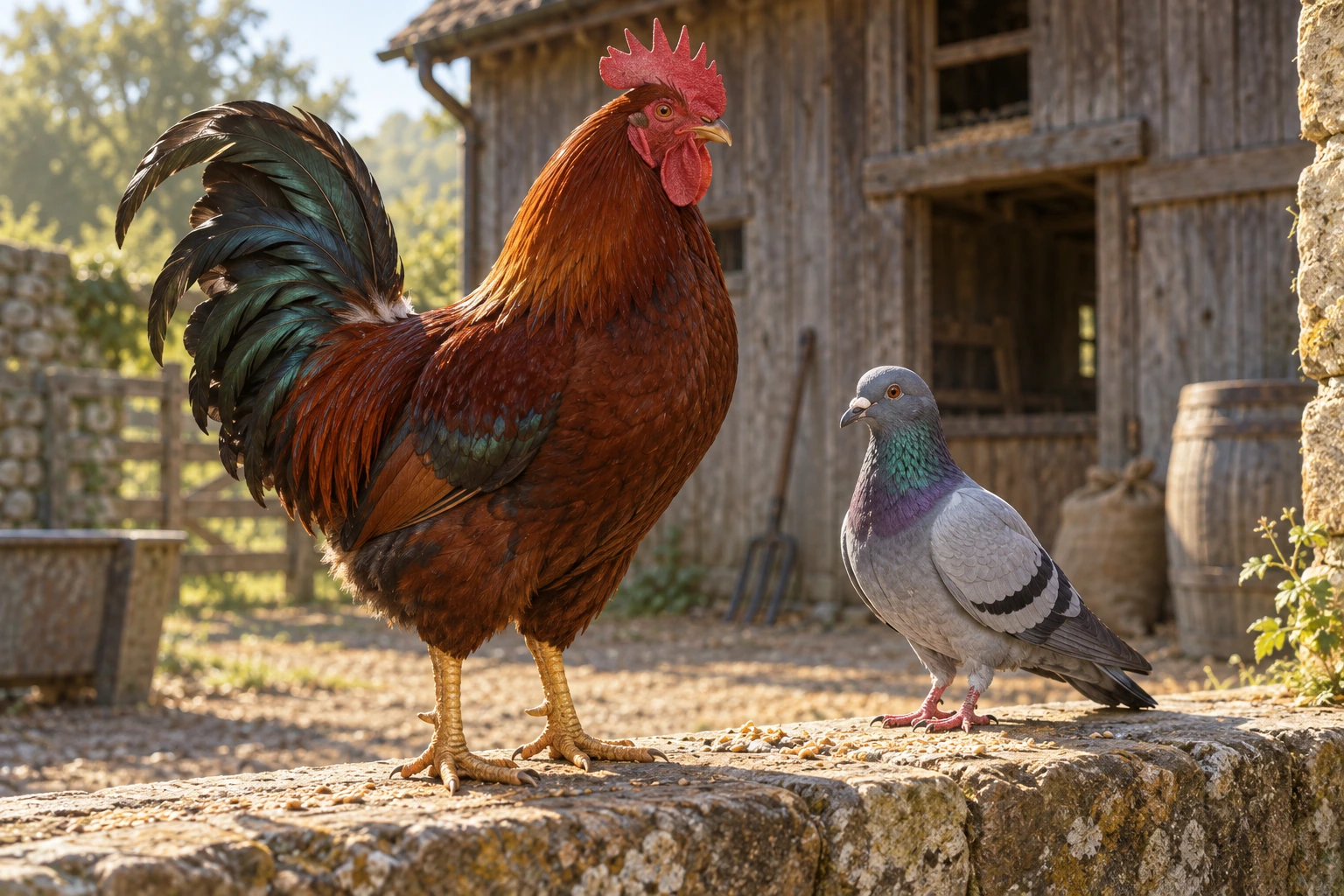
Selected domestic bird forms: a red rooster and a blue-bar homing pigeon in a modern courtyard.
Intentional
Chickens and pigeons
From: Wild birds
Food, messaging, sport and display create extraordinary breed diversity and global movement.
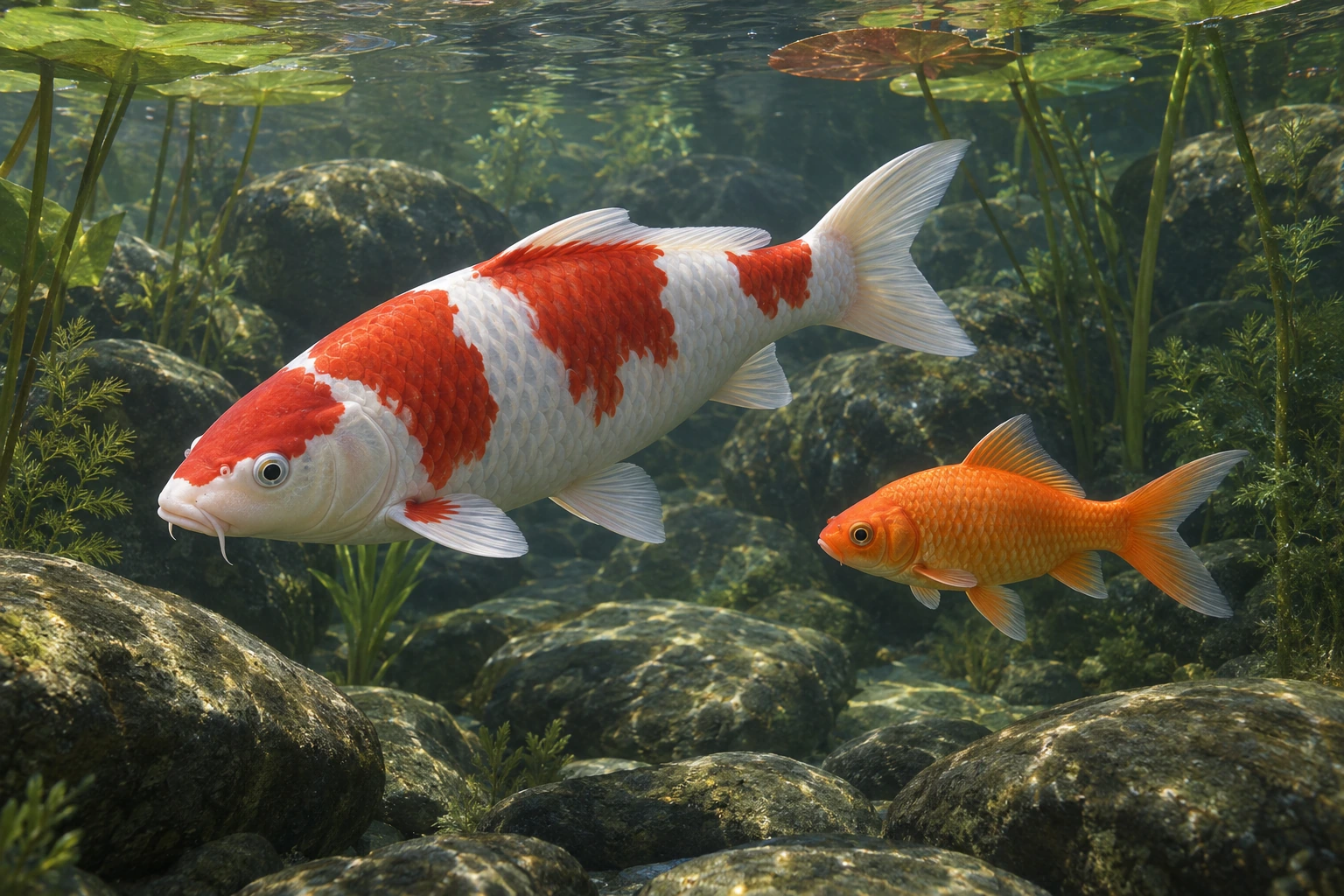
A Kohaku koi and common goldfish, two selected ornamental forms belonging to distinct species; no engineered fish is depicted.
Aesthetic selection
Goldfish, koi and designer fish
From: Wild carp and related fish
Color and body forms make visible how preference redirects inheritance.
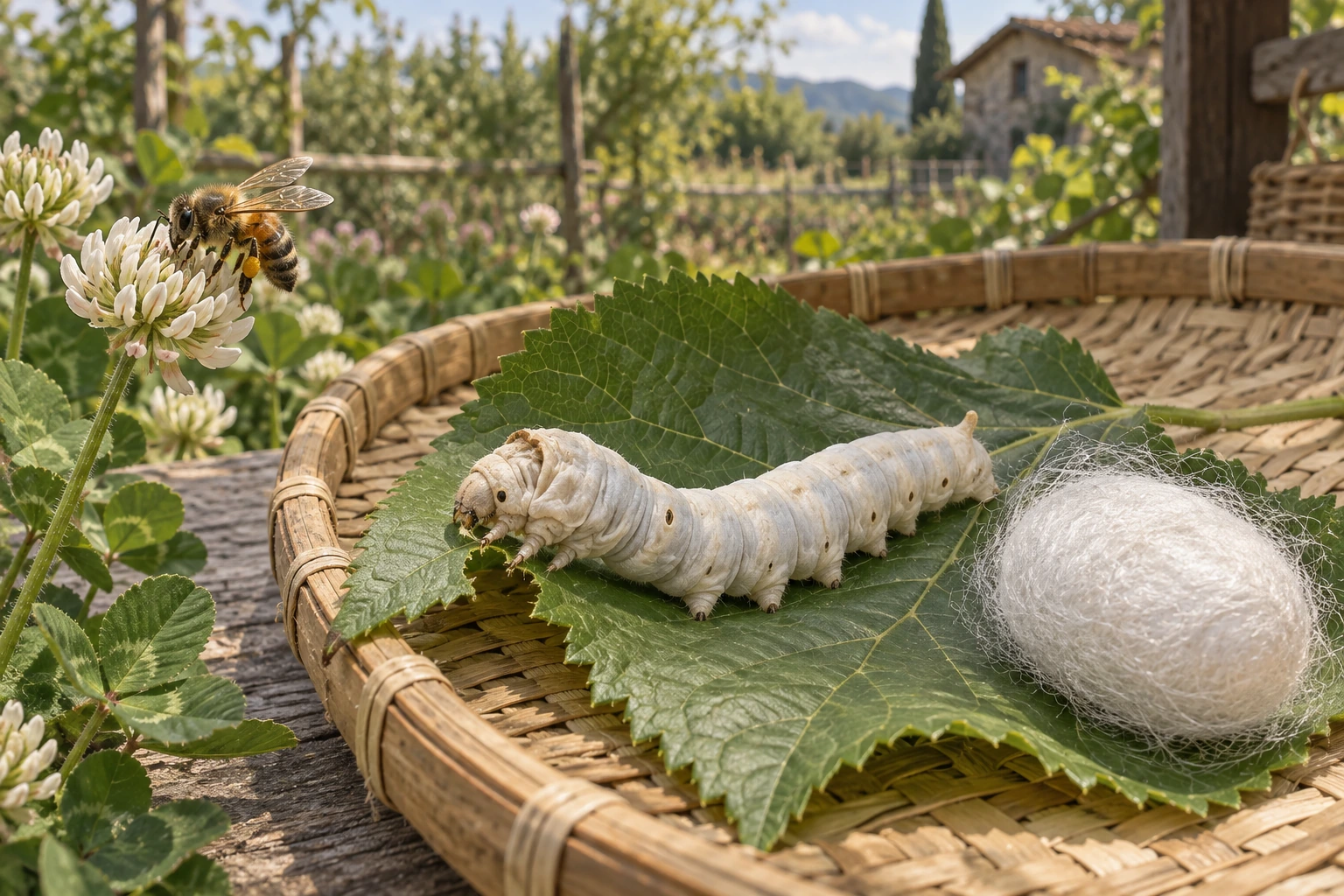
A staged association of domesticated silkworm rearing and a foraging honeybee, illustrating different human relationships with insects.
Obligate / managed
Silkworms and honey bees
From: Wild insects
Human systems reshape life cycles, pollination and global disease movement.
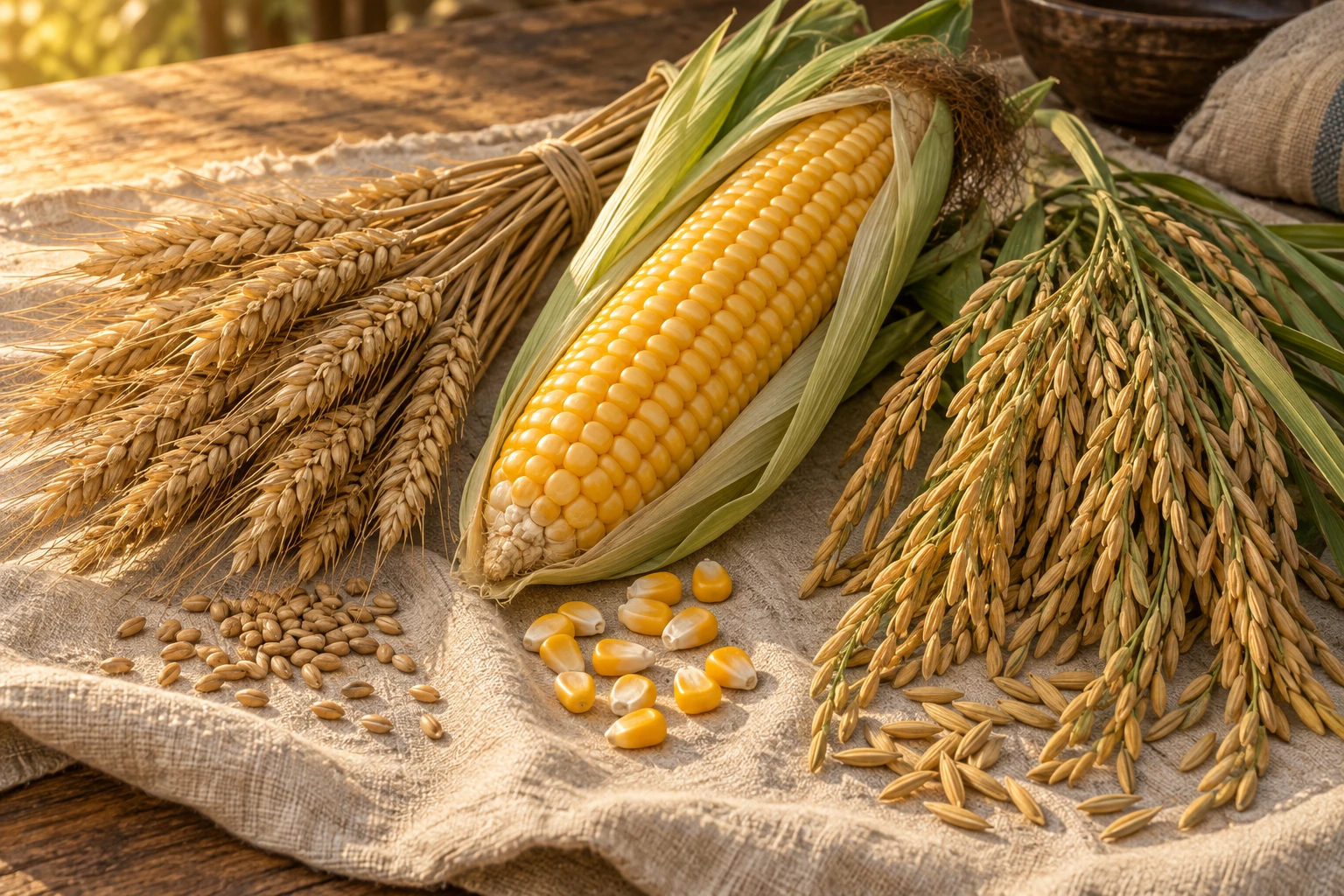
Selected cultivated wheat, maize and rice harvest forms, brought together as a botanical still life.
Intentional
Wheat, maize and rice
From: Wild grasses
Selection for seed retention, size and harvest traits shaped these crops through human labor.
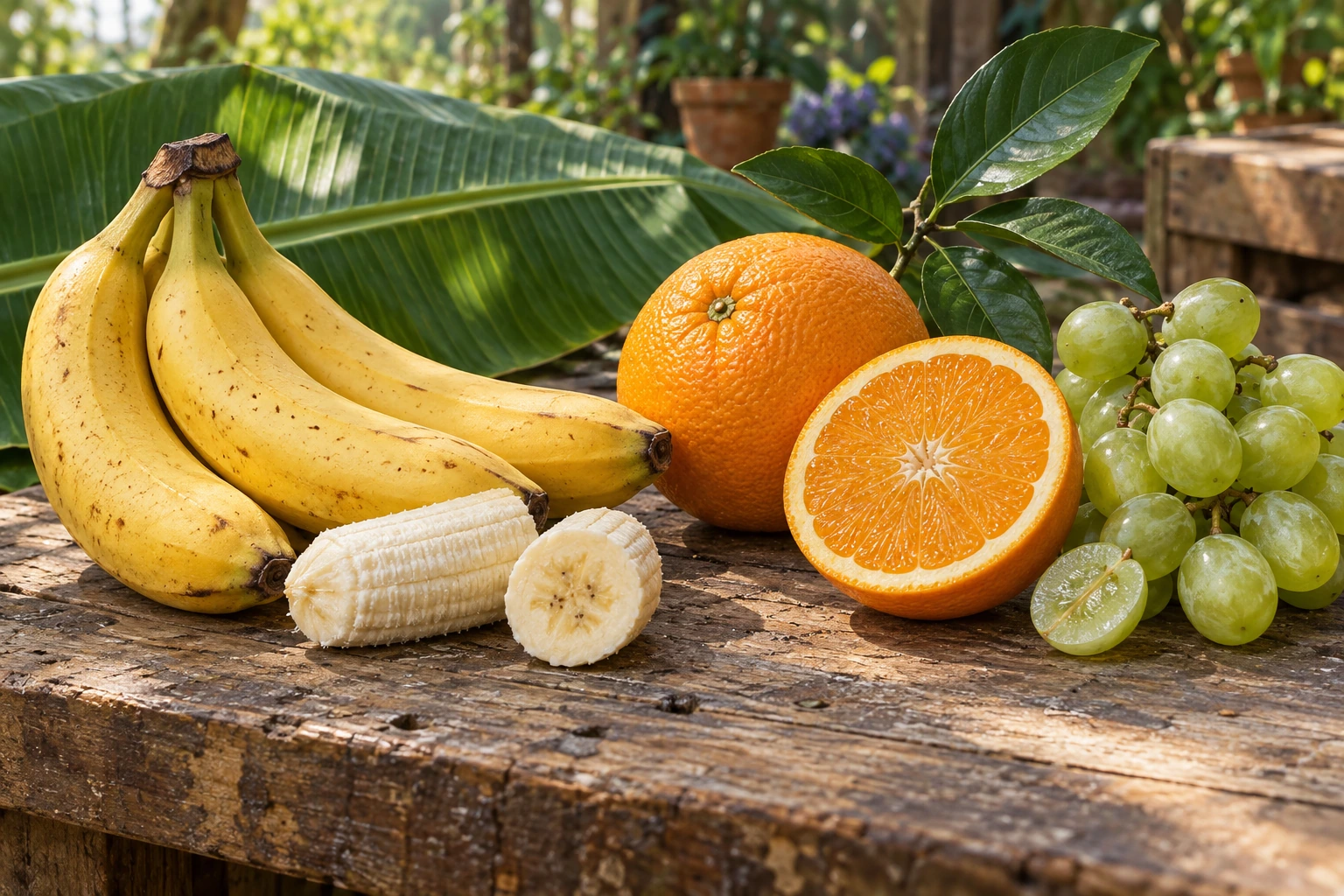
Selected seedless fruit cultivars in a horticultural still life; bananas, citrus and grapes have different reproductive and breeding histories.
Hybridization + cloning
Bananas, citrus and seedless fruit
From: Wild plant complexes
Many familiar fruits are selected hybrids propagated as clones, creating abundance and vulnerability.
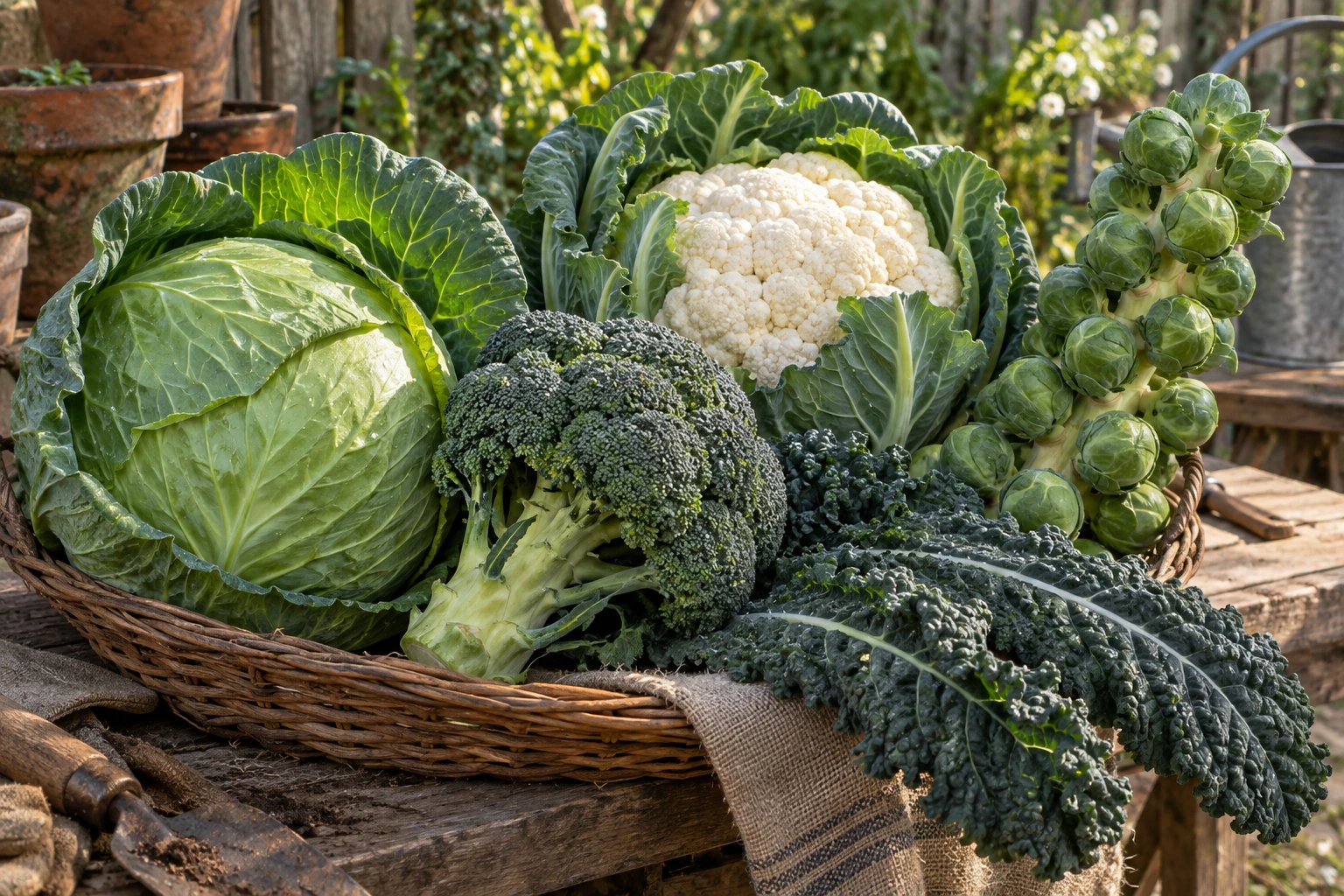
Selected Brassica oleracea crop forms emphasize different plant structures; they are separate cultivated plants, not one branching specimen.
Intentional
Brassica vegetables
From: Wild cabbage
Kale, broccoli, cauliflower, cabbage and Brussels sprouts are divergent body parts of one selected species.
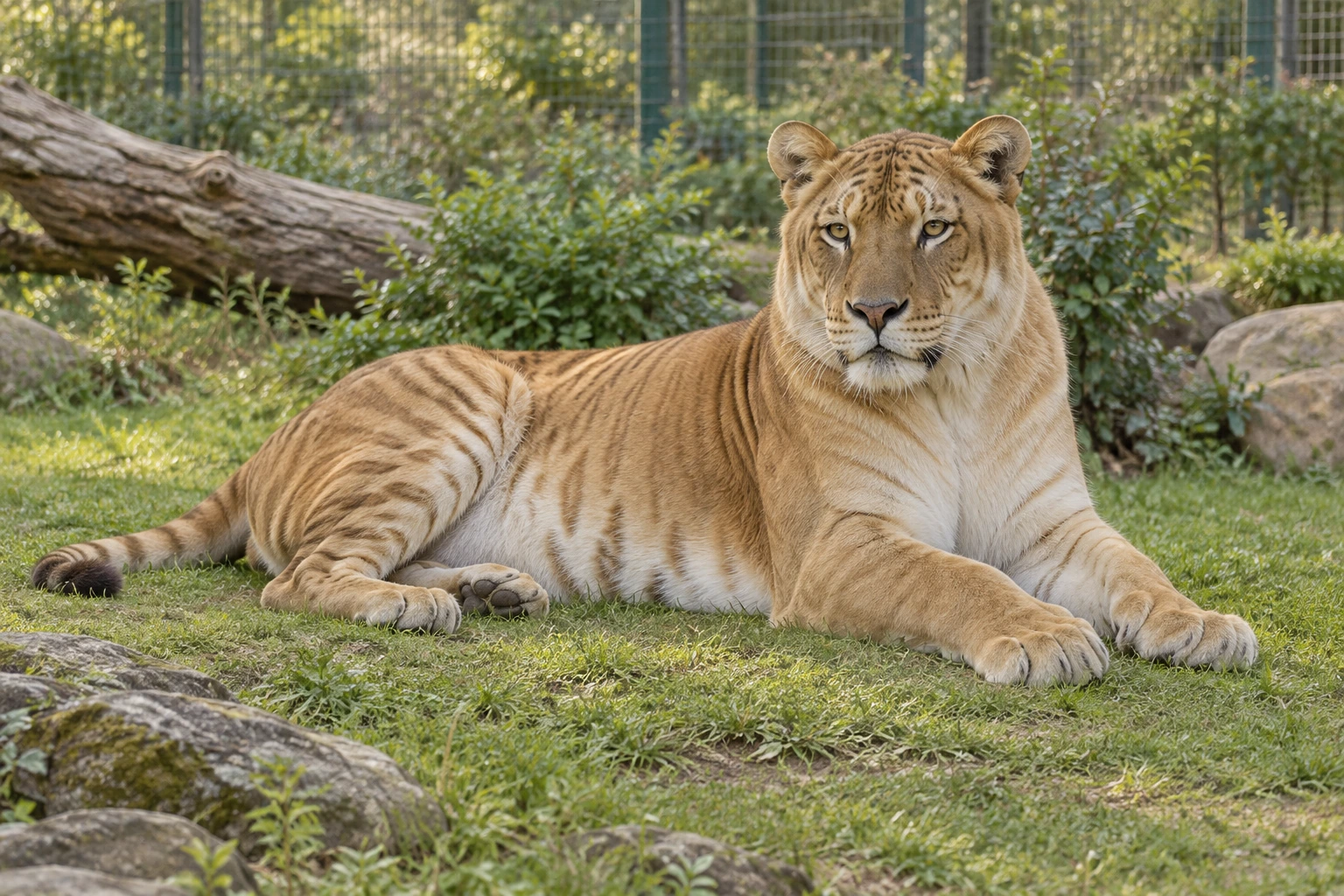
An interpretive captive liger, one example of human-enabled crossing; individual ancestry and reproductive traits cannot be verified from the illustration.
Human-enabled hybrid
Ligers, beefalo and cama
From: Domesticated/wild parents
Some hybrids require captivity or assisted reproduction; fertility and welfare vary.
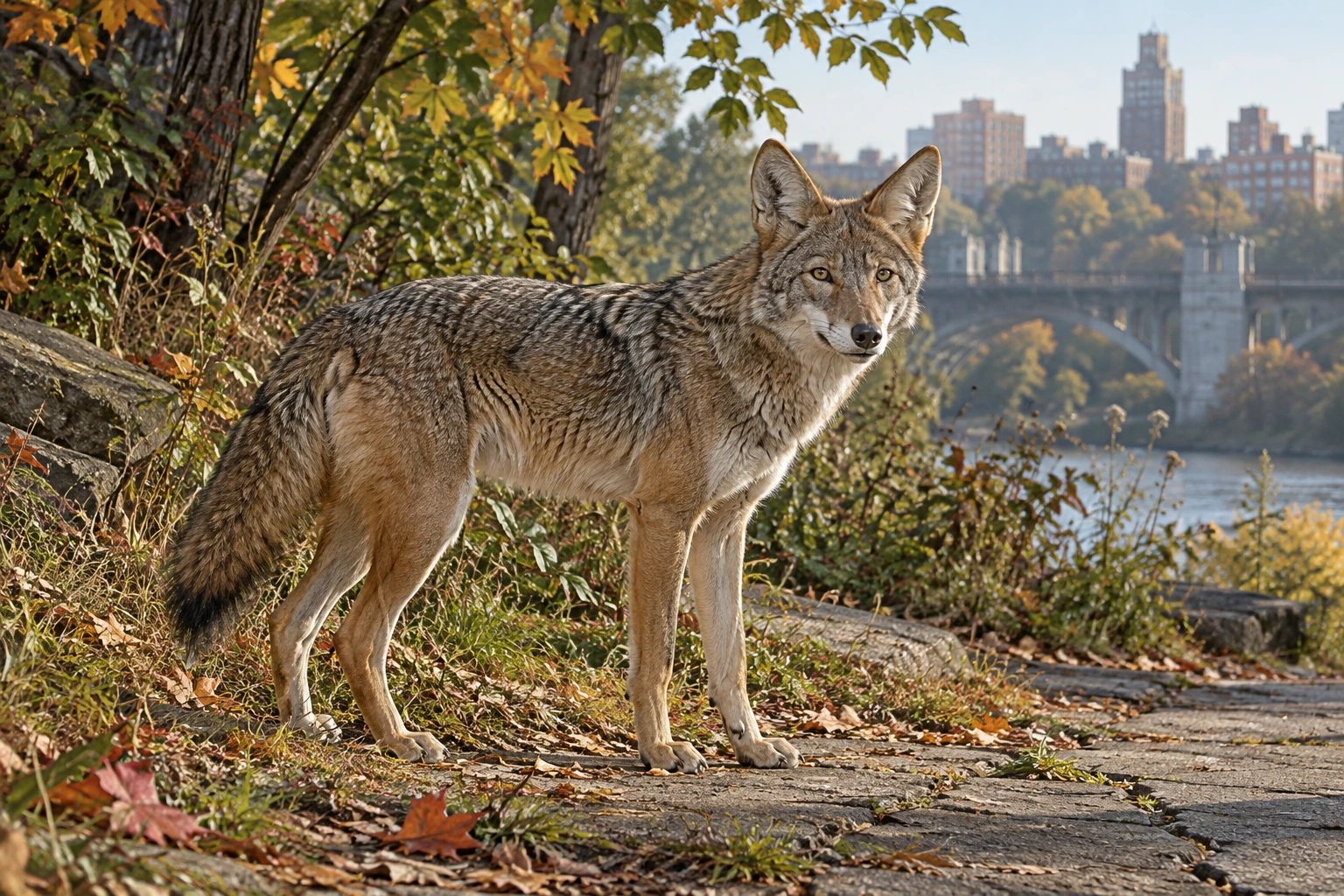
An eastern-coyote phenotype in human-altered habitat; mixed ancestry is a population finding, not a percentage visible in this individual.
Indirect
Coywolves and urban hybrids
From: Climate- and human-altered contact
Habitat change and range movement create new contact zones without a breeding plan.
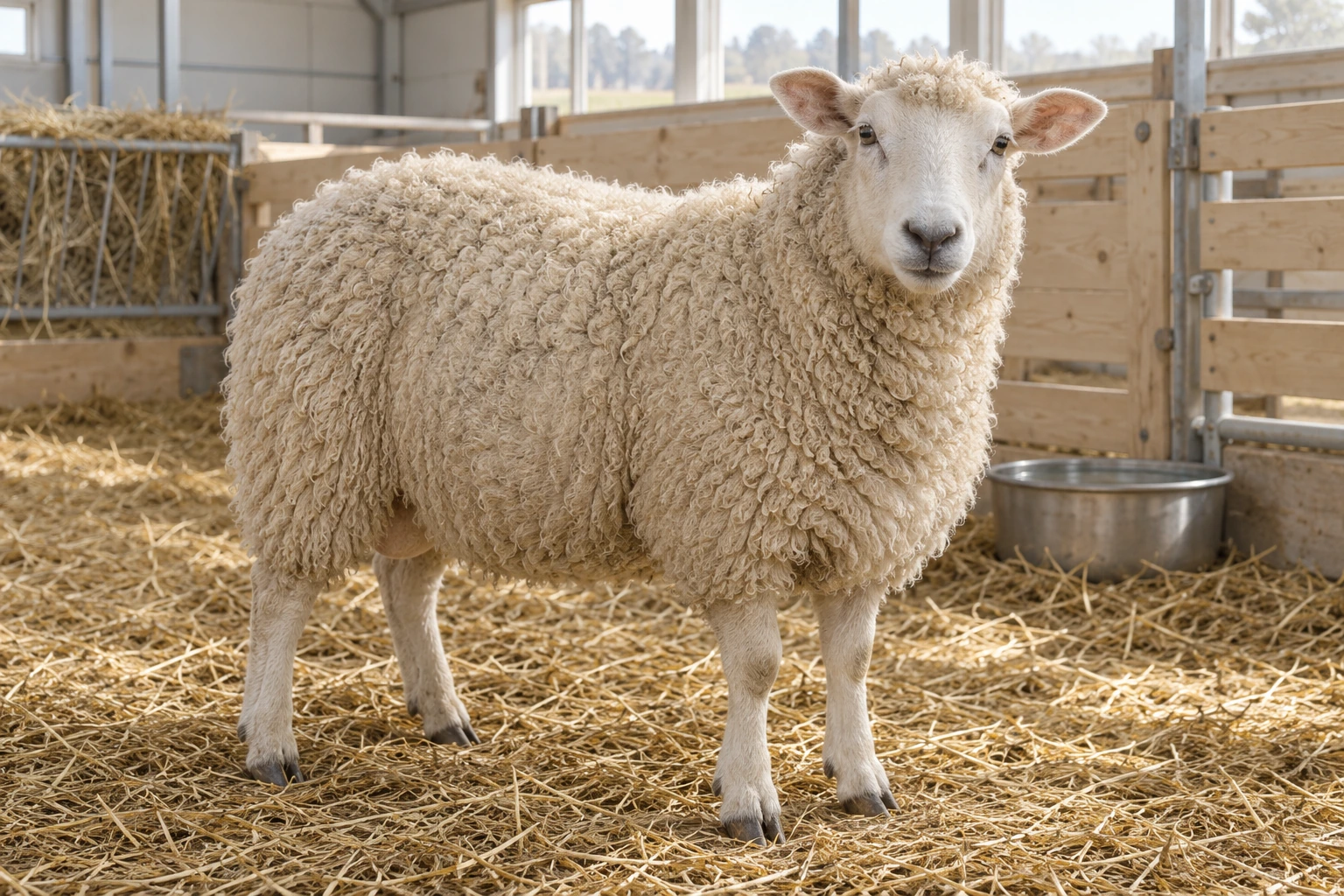
A representative research-farm sheep contextualizes mammalian cloning; appearance alone cannot establish whether an animal is a clone.
Designed
Laboratory and cloned animals
From: Selected lines / donor genomes
Research strains, cloned pets and edited organisms raise questions of welfare, ownership and biodiversity.
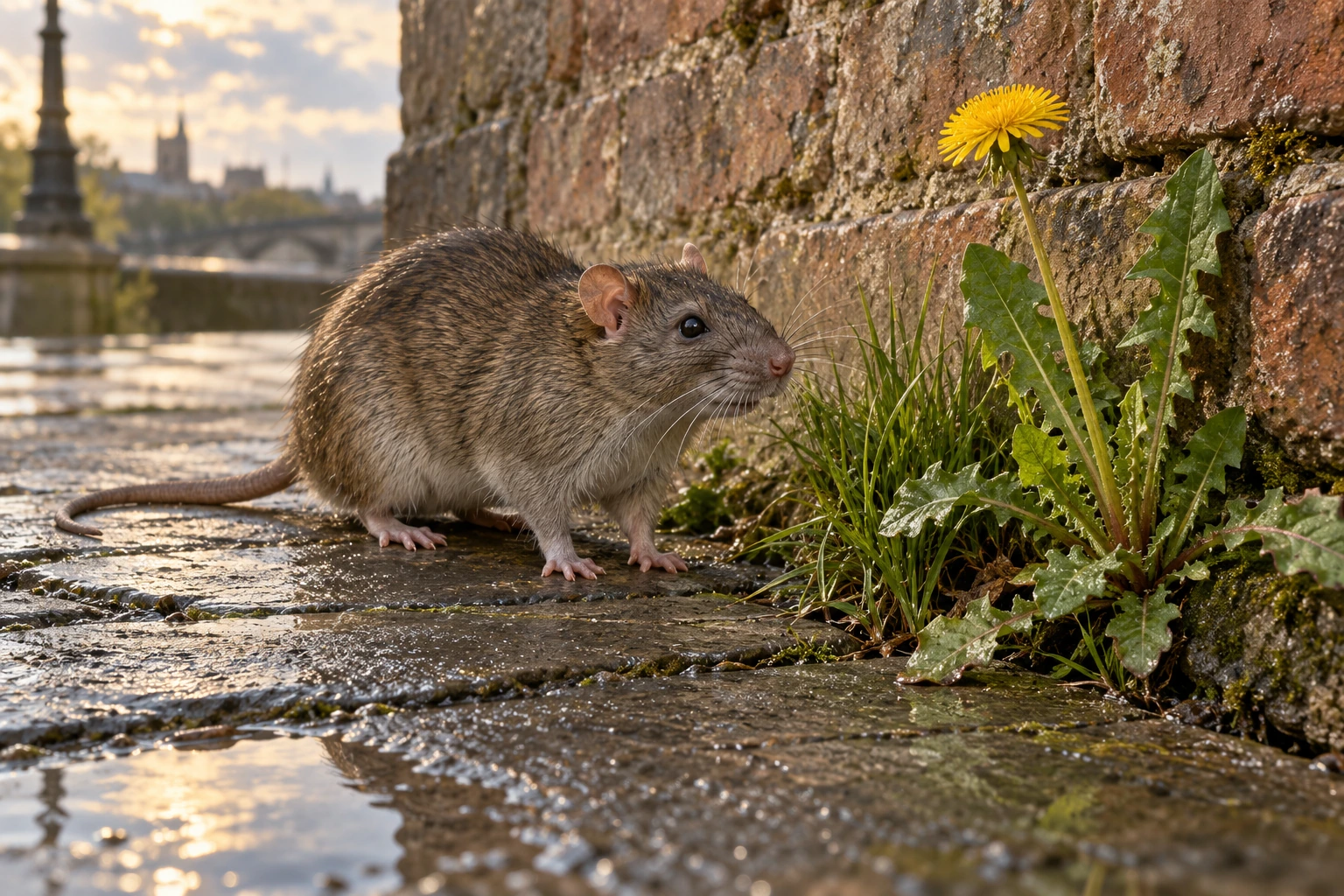
An urban brown rat and pavement weeds illustrate human-shaped habitats; microbial and pesticide resistance cannot be inferred from this scene.
Accidental coevolution
Weeds, rats and resistant microbes
From: Wild ancestors
Cities, farms and antibiotics select organisms humans did not intend to create but powerfully shaped.