COMPREHENSIVE INTERACTIVE REPORT · High species; debated behavior
Homo naledi
Mosaic African cousin335,000–236,000 years ago · South Africa
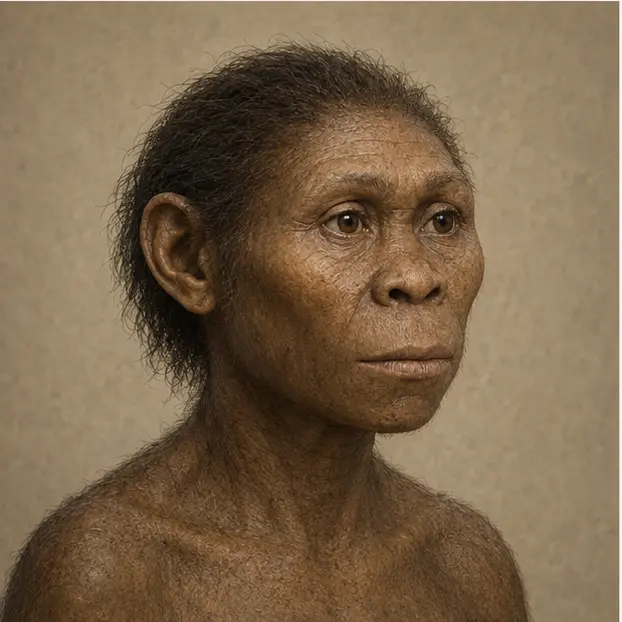
Appearance remains interpretive · clothing: not evidenced. Fossils provide the comparison context; soft tissue, hair, coloring and individual appearance remain uncertain.
Current synthesis
A small-brained Homo lineage with an unexpected mixture of ancestral and derived anatomy living during the Middle Pleistocene.
01
Anatomy
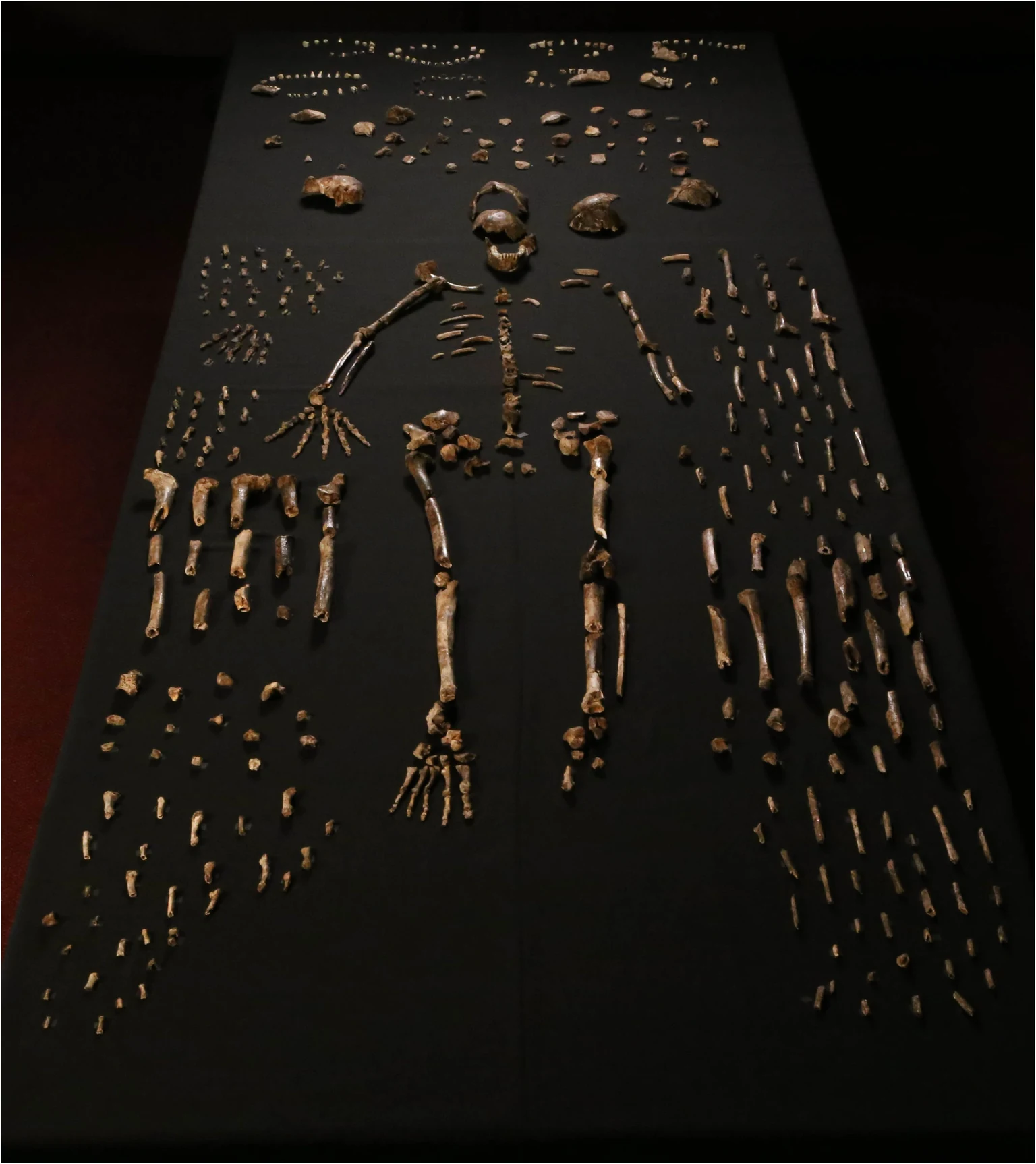
Human-like feet and hands combined with curved fingers, a small brain and primitive shoulder and trunk features.
Published fossil remains; the central skeleton combines several individuals. This figure supports anatomy, not burial or reconstructed appearance.
Human fossil remains: Berger et al. (2015), Figure 1. The central skeleton combines several individuals; the table is 120 cm wide. This anatomical figure does not establish burial, fire or ritual. Whole image resized; no content crop.Berger et al., eLife (2015), Figure 1 ↗ · CC BY 4.0
02
Ecology & food
Most of the evidence comes from the Rising Star cave system; little is known about how the species used the wider landscape.
03
Technology
No securely associated toolkit.
04
Clothing evidence
No securely associated evidence of clothing. Reconstruction is shown without garments.
05
Behavior & social evidence
Deliberate body disposal, burial, fire and engraving claims remain contested.
06
Relationships
A distinct mosaic lineage with unresolved deeper ancestry.
07
Controversies
Cave-access scenarios, dating of markings and evidentiary standards for intentional burial.
08
What reaches forward
Shows why brain size alone cannot establish behavior or cognition.