Compare the models scientists use to explain where humans emerged, how populations moved, why bodies changed and where evidence still permits more than one answer.1A theory is not a guess
In science, a theory organizes evidence and makes testable predictions.
2Models can overlap
“Out of Africa,” multiple dispersals and Levantine routes answer different levels of the same history.
3Status can change
New fossils, dates, proteins and genomes can strengthen, narrow or overturn a model.
21 models
RELATIONSHIP EXPLORER
Models address different questions about human history.
Select a question to compare models that share evidence, compete or work at different scales. Compatibility does not mean the models agree.
CENTRAL QUESTION
Where did our species emerge?
African origin is the strongest point of agreement. Current models describe connected populations across the continent, with anatomy and ancestry accumulating unevenly rather than at one birthplace.
Card detail
01Strong supportAfrican fossil record · early Homo sapiensOrigins · ~300–60 ka
African origin of Homo sapiens
Homo sapiens evolved in Africa; the large majority of living human ancestry descends from African populations.
Evidence
The oldest widely accepted H. sapiens fossils are African
Living human genetic diversity is greatest in Africa
Key limitation
Africa’s population history cannot be reduced to one isolated population or a single birthplace.
Testable next
Older fossils and genomes should continue to show deep, structured African diversity.
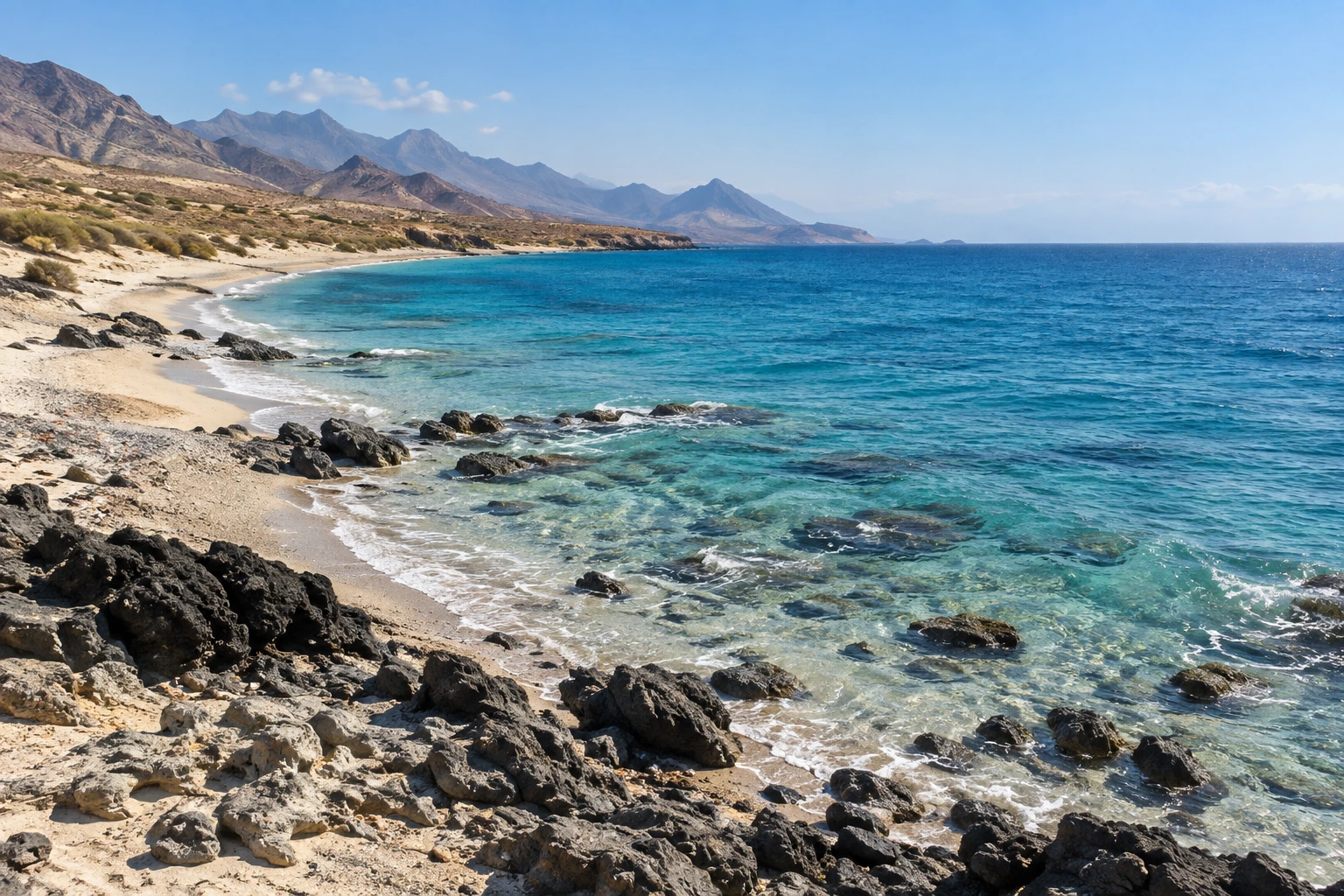
02Active modelAI-generated interpretation of Red Sea and Arabian coastal environments for discussions of dispersal around 70–50 ka. Shoreline form and conditions are illustrative; no route or crossing is depicted.Origins · Main expansion ~70–50 ka
Recent Out of Africa
A major expansion of H. sapiens from Africa supplied most ancestry outside Africa and largely replaced resident archaic populations.
Evidence
Genomic bottleneck in non-African populations
African source for most living ancestry
Key limitation
Strict replacement is rejected: admixture with Neanderthals, Denisovans and other lineages occurred.
Testable next
Most non-African ancestry should coalesce within a comparatively recent African-derived expansion.
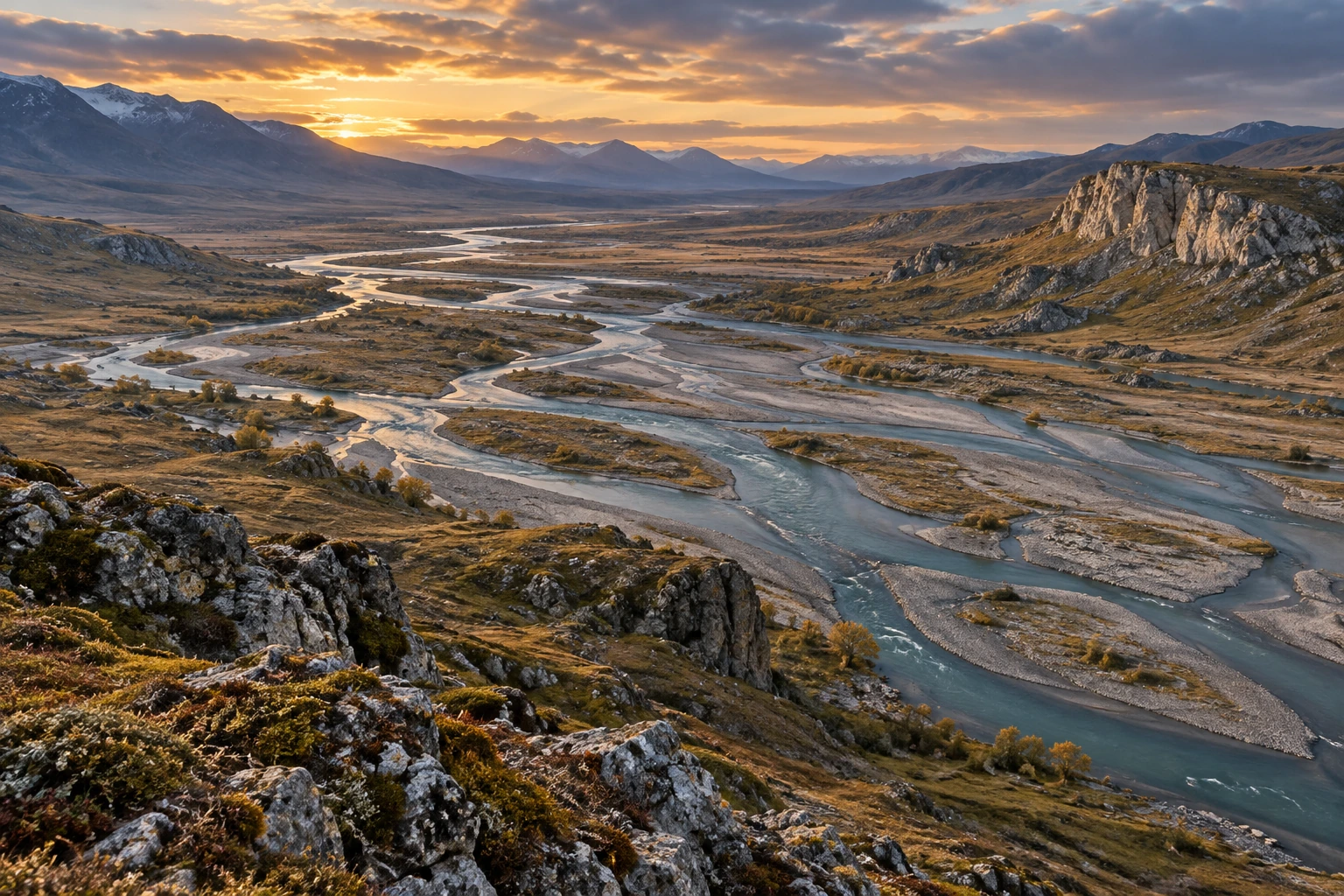
03Active modelGenerated landscape metaphor for branching and reconnecting ancestry. The channels do not encode lineages, proportions, dates or specific contact events.Origins · Deep Middle Pleistocene
Weakly structured African stem
Our species emerged through long-term interaction among several weakly differentiated African populations rather than one isolated founder population.
Evidence
Genome-based demographic modelling
Geographically dispersed early H. sapiens fossils
Key limitation
Model fit is not a fossil identification; competing demographic histories can produce similar patterns.
Testable next
New African genomes and fossils should reveal repeated connection, separation and re-contact.
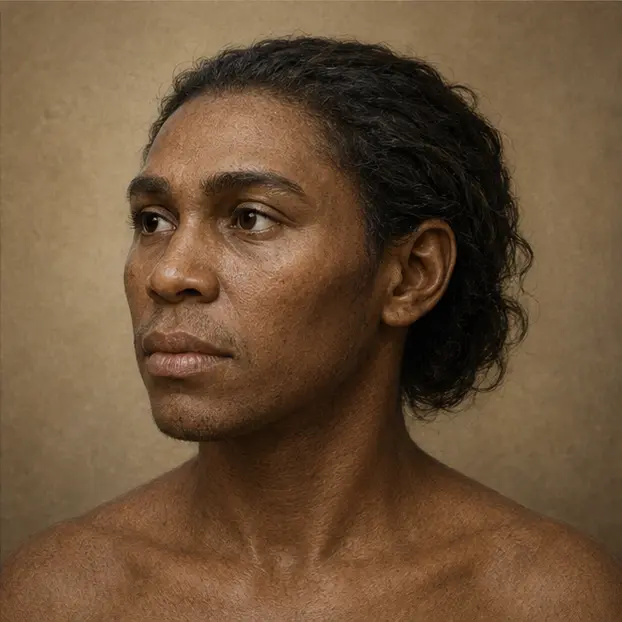
04Active modelOne appearance hypothesis · not a depiction of continental diversityOrigins · ~500–200 ka
Pan-African emergence
Traits associated with H. sapiens accumulated across interconnected African regions and populations.
Evidence
Early fossils distributed from Morocco to eastern and southern Africa
Regional mosaics of anatomy and technology
Key limitation
Pan-African is a family of models, not one agreed population history.
Testable next
No single locality will contain every earliest modern trait in one sudden package.
05Active modelGenerated representation of a maritime exchange context. Goods, people and ideas moved through varied networks shaped by cooperation, unequal power and coercion.Origins · Middle Pleistocene Africa
African multiregionalism
Regional African populations contributed unevenly to the emergence of H. sapiens while maintaining gene flow.
Evidence
Continental-scale fossil variation
Ecological refugia and reconnection
Key limitation
Must not be confused with classic global multiregional evolution.
Testable next
Regional continuity and interregional mixing should both be visible.
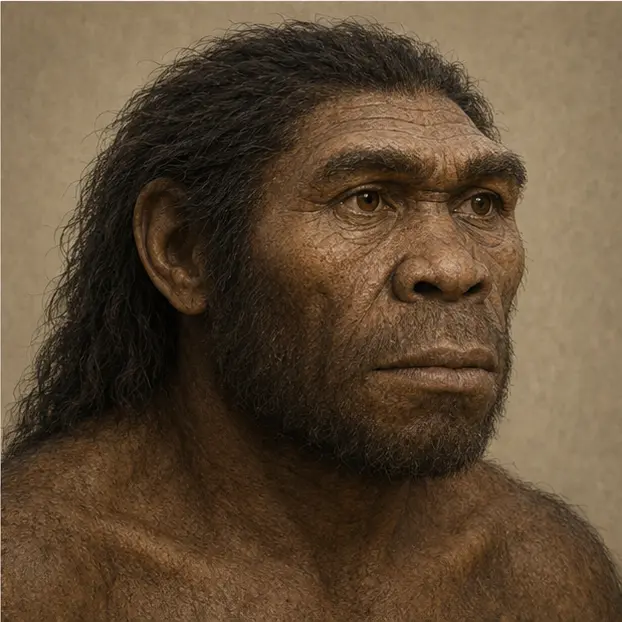
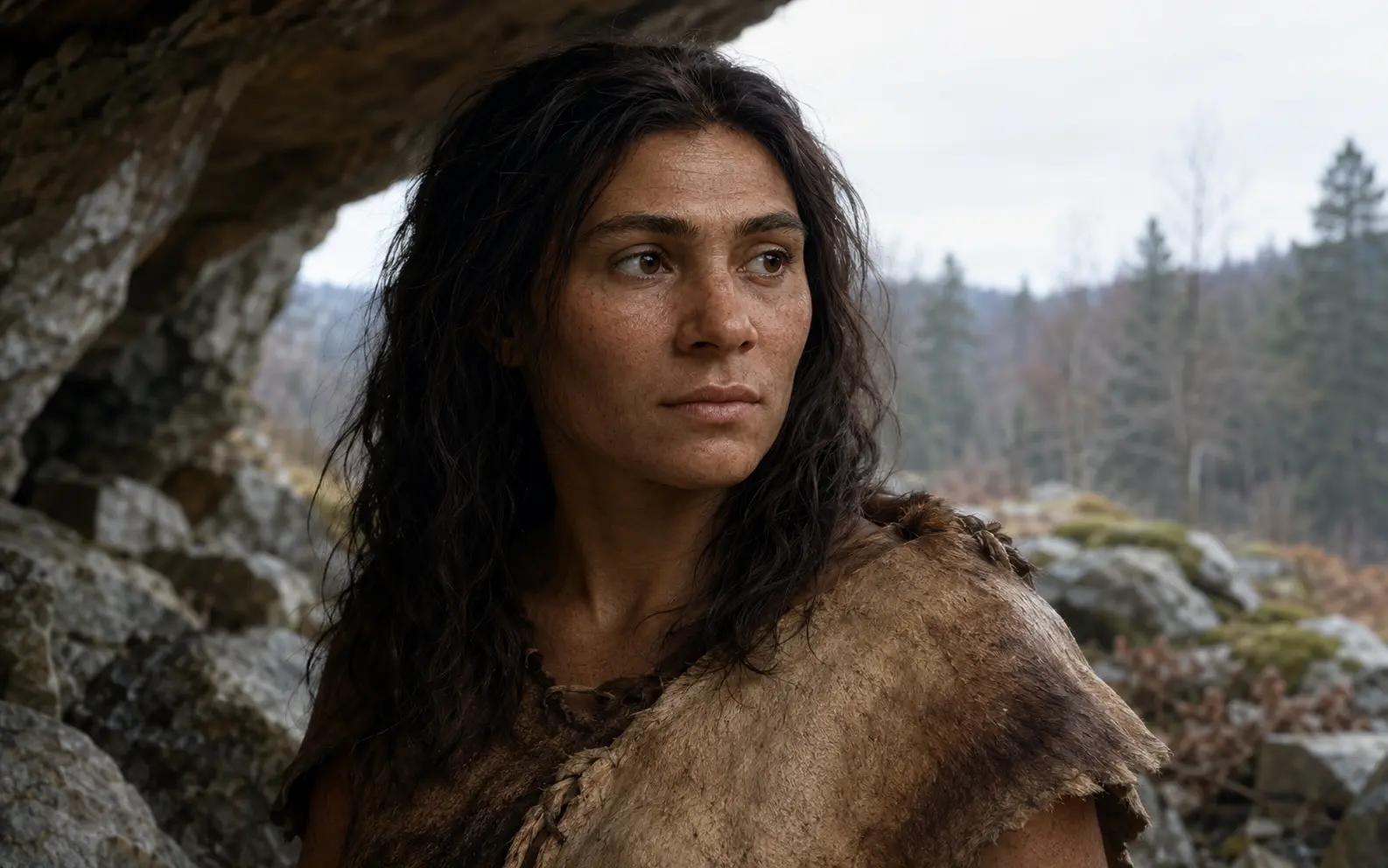
06Strong supportImagined appearance · DNA supports ancestry, not this faceOrigins · ~100–40 ka and later
Assimilation / leaky replacement
Expanding H. sapiens populations supplied most ancestry but incorporated genes from resident archaic humans.
Evidence
Neanderthal ancestry in living populations
Multiple Denisovan-related contributions
Key limitation
The amount and timing of admixture differed sharply by region.
Testable next
Additional ancient genomes will reveal more local, repeated and asymmetric admixture.
Regional archaic populations across Africa and Eurasia evolved into modern humans while gene flow maintained one species.
Evidence
Some proposed regional anatomical continuities
Long occupation histories in several regions
Key limitation
Living and ancient genomes strongly favor a recent African source for most ancestry; strict regional continuity is not supported.
Testable next
Deep regional genomic continuity should dominate living ancestry outside Africa—it does not.
08Active modelAI-generated interpretation of Red Sea and Arabian coastal environments for discussions of dispersal around 70–50 ka. Shoreline form and conditions are illustrative; no route or crossing is depicted.Dispersal · ~70–50 ka
Single successful dispersal
Most living non-African ancestry derives from one principal expansion, even though earlier excursions left limited or no surviving descendants.
Evidence
Shared bottleneck among non-African genomes
Broad genetic nesting of non-Africans
Key limitation
One successful ancestry expansion does not mean one journey, route or migration event.
Testable next
Earlier dispersals may appear archaeologically without major ancestry in living people.
09Strong supportAI-generated interpretation of Red Sea and Arabian coastal environments for discussions of dispersal around 70–50 ka. Shoreline form and conditions are illustrative; no route or crossing is depicted.Dispersal · ≥200–40 ka
Multiple dispersals from Africa
H. sapiens left Africa repeatedly; some expansions failed or were absorbed, while later ones contributed most living ancestry.
Evidence
Early H. sapiens remains in the Levant and Greece
Early gene flow into Neanderthals
Key limitation
A fossil presence does not establish ancestry to later populations.
Testable next
More early sites will predate the main ancestry expansion but show discontinuous occupation.
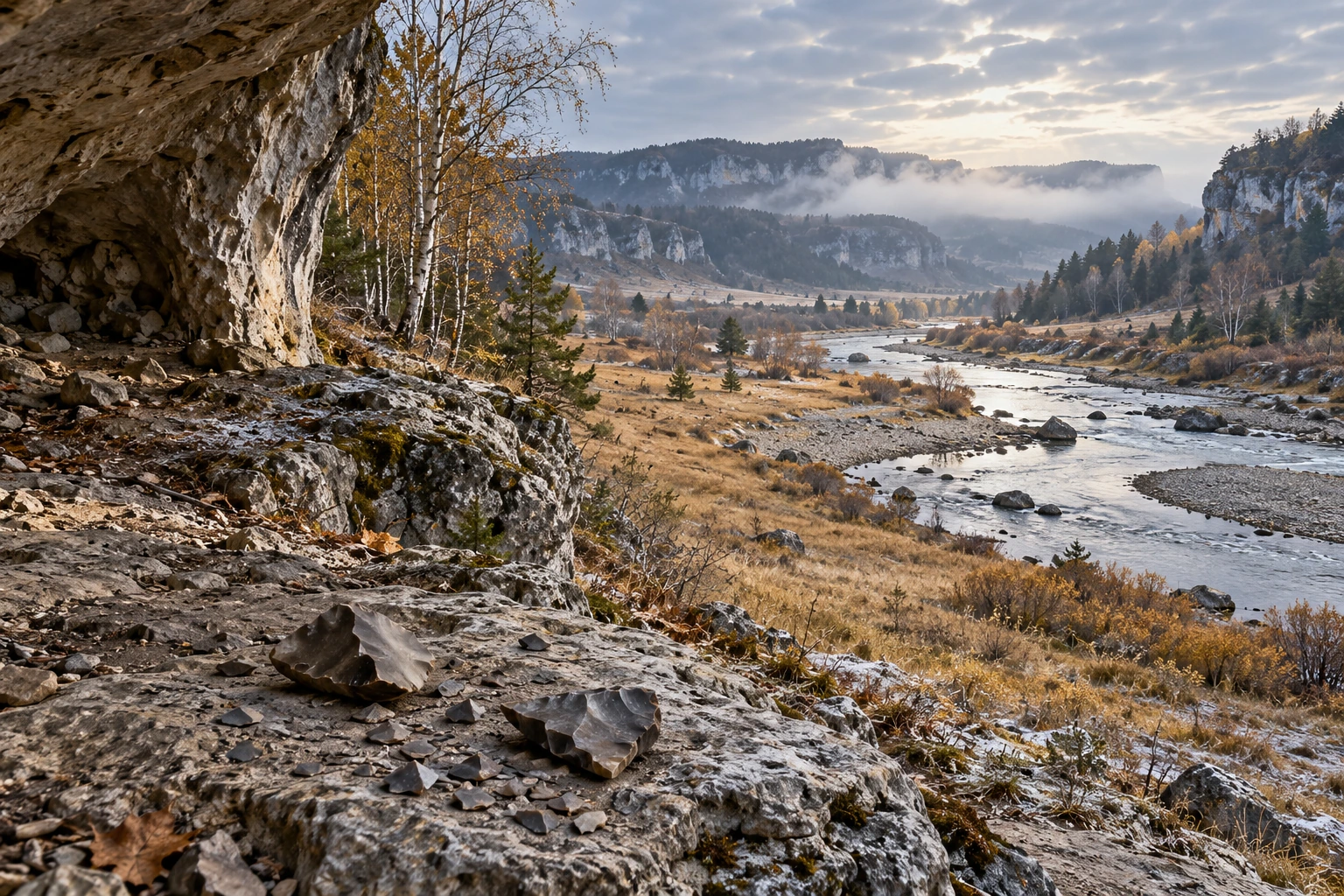
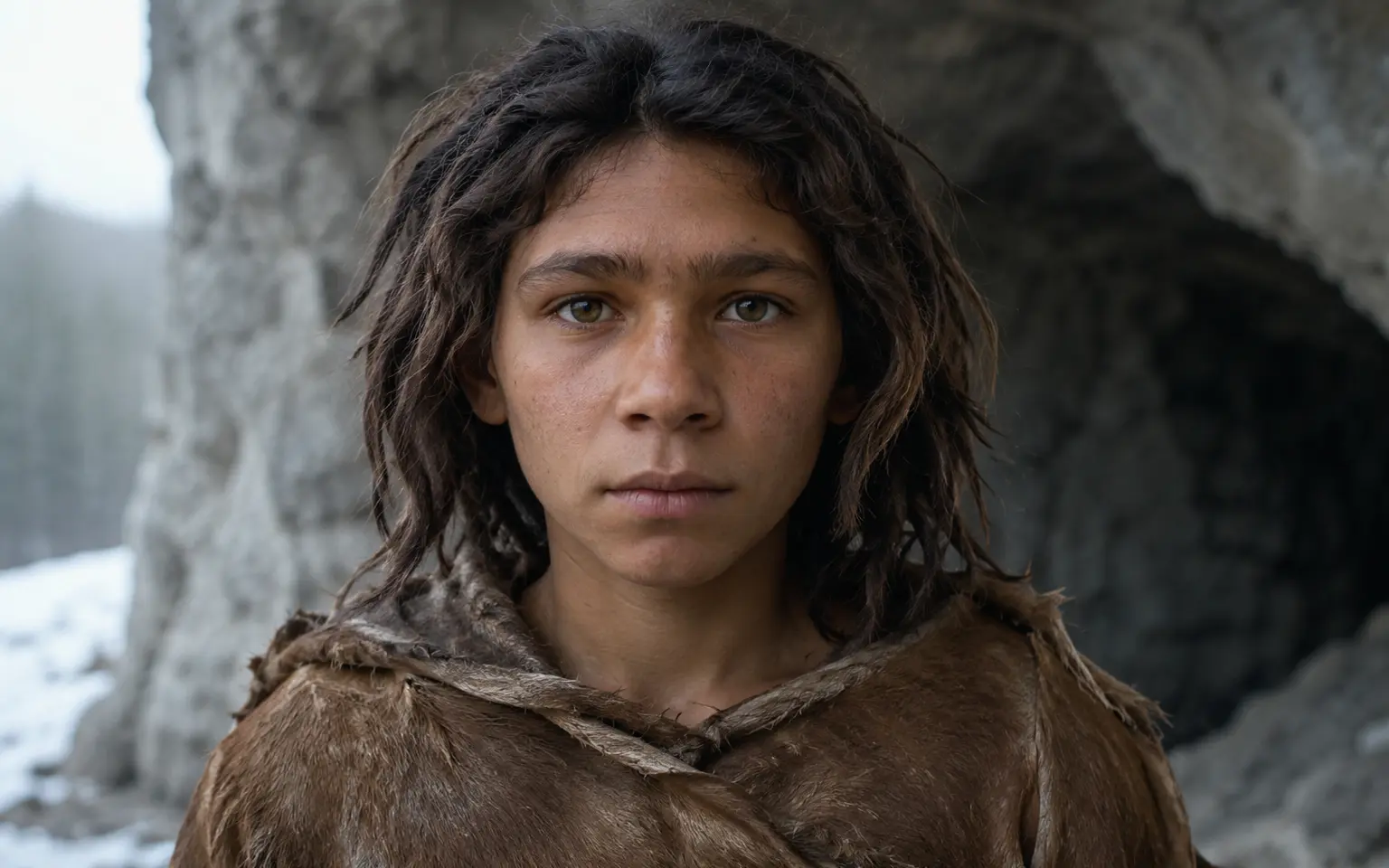
10Strong supportAI-generated interpretation of a Late Pleistocene western Eurasian river valley, rock shelter and flaked-stone context. The scene provides setting for population-overlap discussions without depicting a particular encounter.Routes · Repeated windows ≥180 ka
Levantine corridor / northern route
The Sinai–Levant land bridge repeatedly connected northeastern Africa with western Eurasia.
Evidence
Early H. sapiens at Misliya, Skhul and Qafzeh
Alternating humid corridors
Key limitation
Populations passed through the Levant at different times. It was not necessarily the only route or a lasting connection between populations.
Testable next
Occupation should pulse with climate and alternate among human lineages.
11Active modelAI-generated interpretation of Red Sea and Arabian coastal environments for discussions of dispersal around 70–50 ka. Shoreline form and conditions are illustrative; no route or crossing is depicted.Routes · ~70–50 ka
Southern coastal dispersal
Some populations moved from the Horn of Africa across or around the Bab-el-Mandeb and followed southern Asian coastal zones.
Evidence
Rapid appearance toward South and Southeast Asia
Coastal resource use
Key limitation
Many Pleistocene coastlines are submerged, and evidence does not support a simple beach-only migration.
Testable next
Submerged landscapes and Arabian coastal sites should preserve stepping-stone occupations.
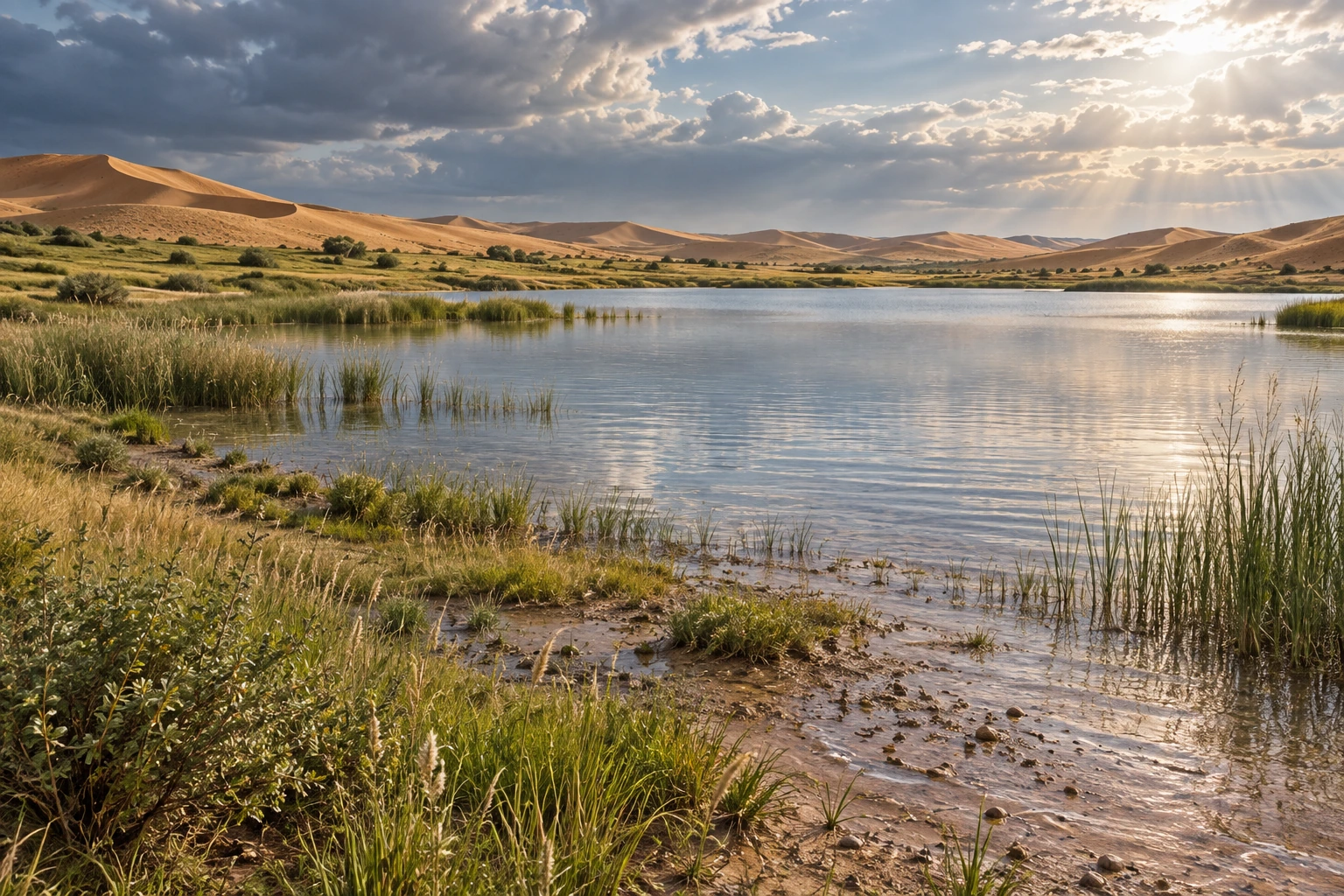
12Strong supportAI-generated landscape interpretation of northern Arabia during a Pleistocene humid phase, with freshwater lake, reeds and grassland. The basin and vegetation are illustrative environmental context for repeated population movements.Routes · Repeated humid phases
Green Arabia climate windows
Humid intervals opened grassland and freshwater corridors through Arabia, enabling repeated hominin movement.
Evidence
Palaeolakes and river systems
Dated occupations during humid phases
Key limitation
Climate opportunity does not prove which population moved or whether it contributed descendants.
Testable next
Occupation density should track humid episodes and water networks.
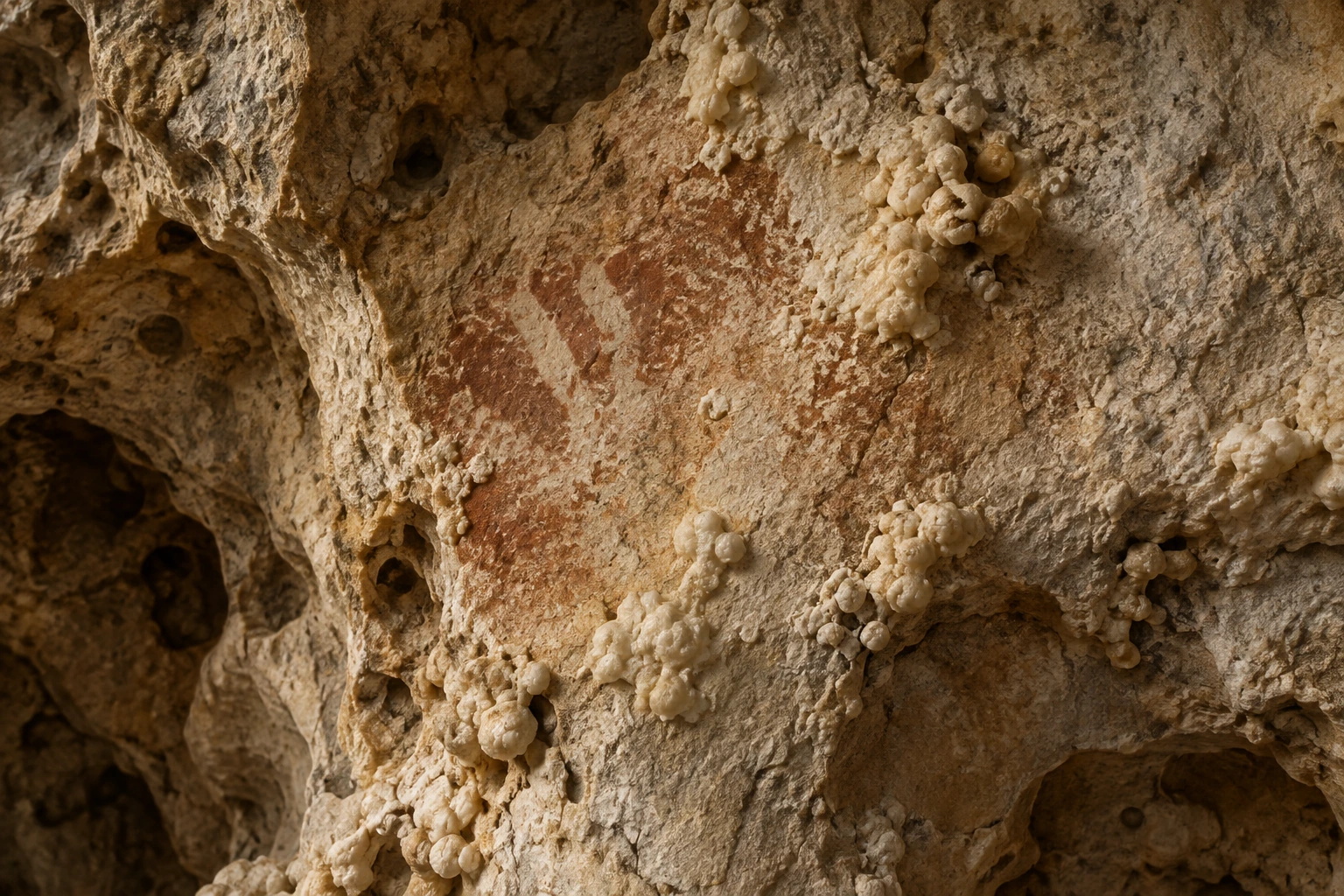
13Active modelInterpretive study of pigment and overlying calcite, inspired by the fragmentary hand-stencil evidence from Liang Metanduno. It is not a tracing; the 67.8 ka minimum age does not prove the maker’s identity or a migration route.Routes · ≥65–50 ka
Northern and southern routes to Sahul
People reached Sahul through Wallacea using planned water crossings; northern and southern island chains remain competing or complementary route models.
Evidence
Early occupation of Sahul
Wallacean archaeology and rock art
Key limitation
Sparse and submerged sites make route priority uncertain.
Testable next
Older island sites should cluster along feasible sea-crossing routes and places with usable resources.
14Strong supportReturn flows · ancestry moved both waysDispersal · Multiple periods
Back-to-Africa migrations
Populations repeatedly moved from Eurasia into Africa, carrying ancestry, technologies and pathogens.
Evidence
Neanderthal-related ancestry in African populations
West Eurasian ancestry in parts of Africa
Key limitation
There was no single return migration; magnitude and timing differ by region.
Testable next
Ancient African genomes should reveal geographically uneven Eurasian-related pulses.
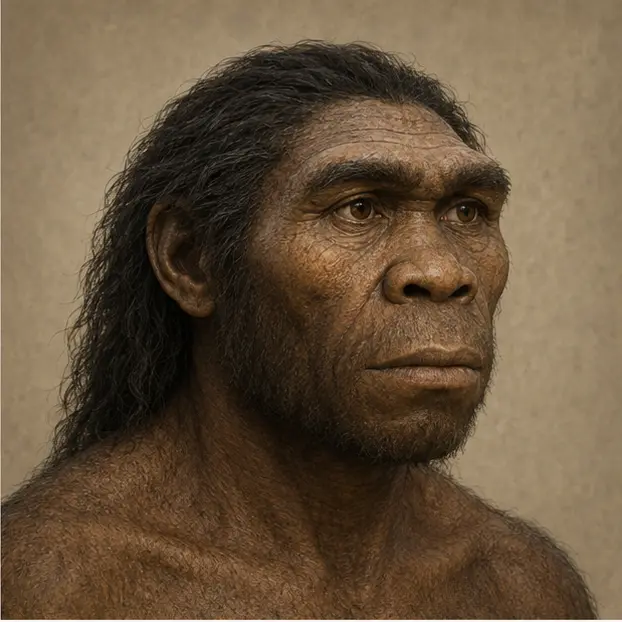
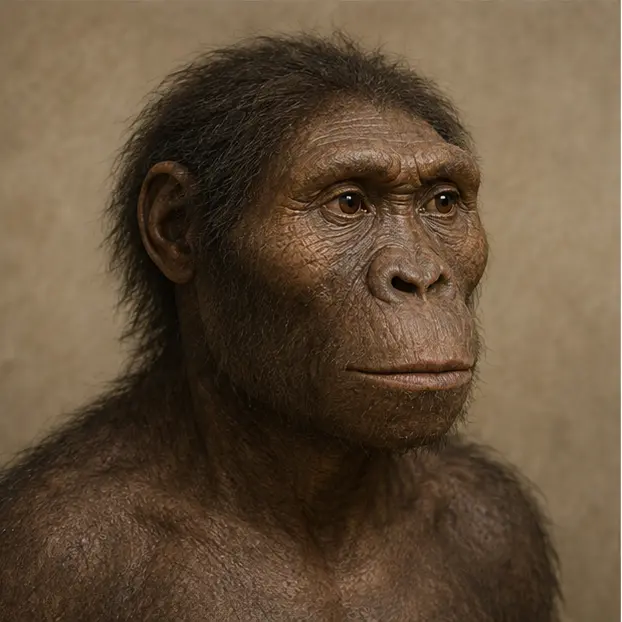
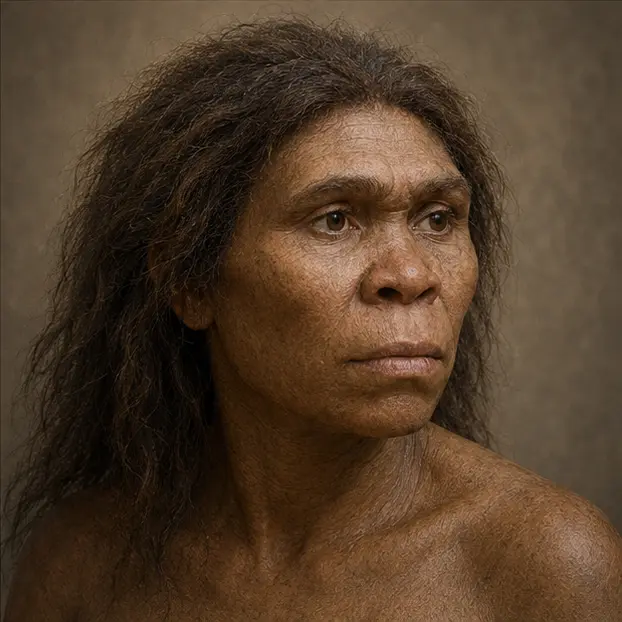
15Strong supportDenny · imagined appearance; ancestry established from DNALineages · Genus Homo
Braided-stream evolution
Human evolution repeatedly involved separation, local adaptation, reconnection and gene flow; a pure branching tree is incomplete.
Evidence
Neanderthal and Denisovan introgression
Ghost-lineage signals
Key limitation
A metaphor, not a single demographic model; it should not erase real lineage divergence.
Testable next
More genomes and proteins will identify additional crossings among named and unnamed populations.
Open grasslands drove upright walking and other human traits.
Evidence
Some early hominins occupied mixed or open habitats
Bipedalism is useful for terrestrial travel
Key limitation
Early hominins also occupied woodlands; no single habitat explains bipedalism.
Testable next
A strict version expects bipedal traits to track open habitats, which the record does not consistently show.
18Active modelFlexibility across changing environmentsAdaptation · Human evolutionary history
Variability selection
Changing conditions favored behavioral and biological flexibility, rather than adaptation to one habitat.
Evidence
Repeated climate variability
Generalist behaviors and diets
Key limitation
Correlation between variability and traits does not alone establish selection mechanism.
Testable next
Flexible traits should spread during periods and regions of high environmental instability.
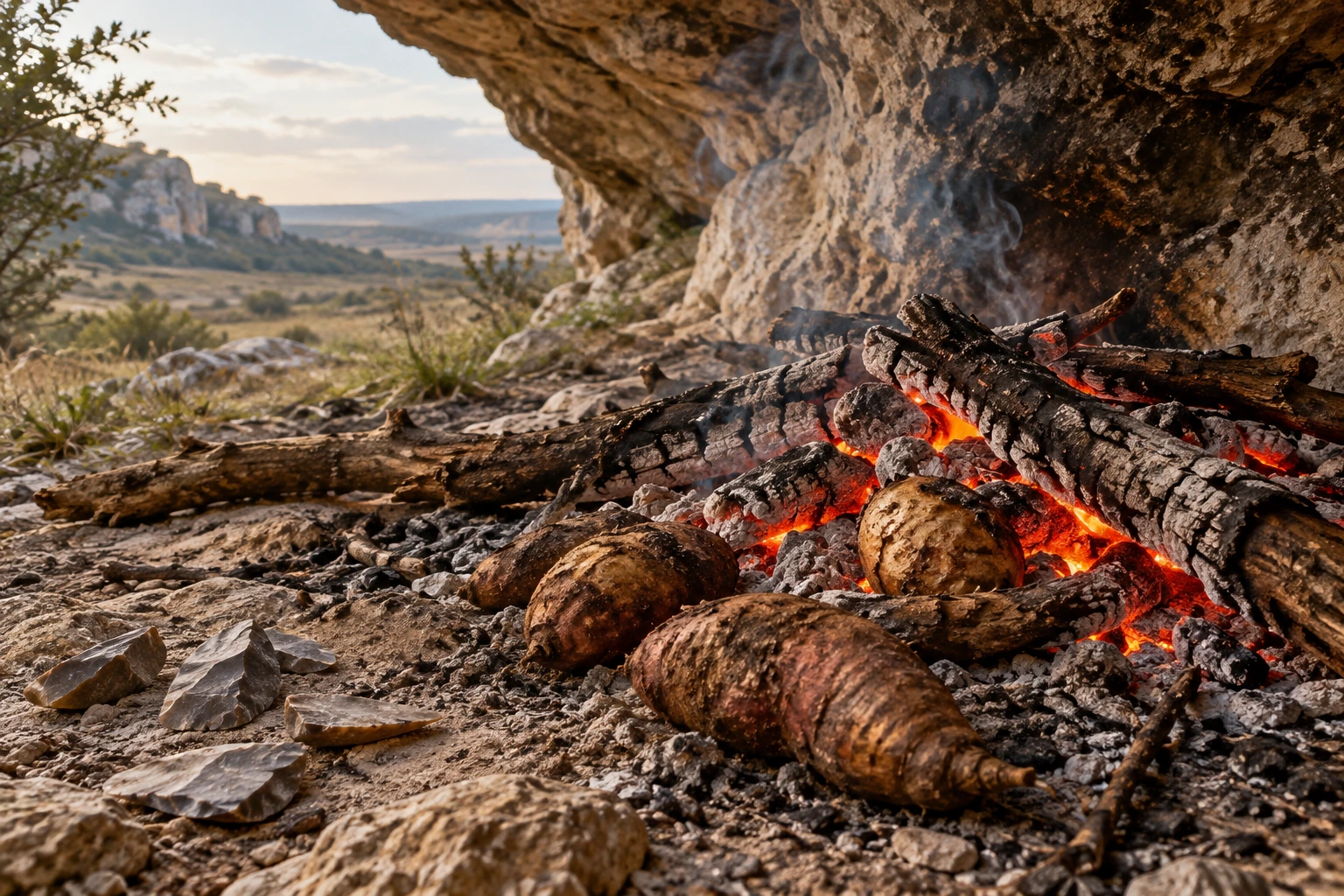
19Active modelInterpretive study of fire, tubers and stone tools; it does not identify the first cooking event or a particular archaeological site.Adaptation · Early–Middle Pleistocene
Cooking hypothesis
Thermal processing increased usable energy and reshaped anatomy, life history and social behavior.
Evidence
Cooking raises digestibility
Later human anatomy has reduced chewing and gut demands
Key limitation
Secure controlled-fire evidence is later and patchier than some anatomical arguments require.
Testable next
Early habitual cooking should leave repeatable fire, residue and dental signals.
A semi-aquatic phase caused major human traits such as bipedalism, hair patterns and fat distribution.
Evidence
Uses broad comparisons with aquatic mammals
Key limitation
No coherent fossil, ecological or comparative evidence supports a semi-aquatic human ancestor; proposed traits have better-supported explanations.
Testable next
Would require a consistent aquatic-adaptation package in fossils and habitats; none is known.
21Unsupported / fringeOriginal editorial illustration evoking the study of ancient built environments; no specific monument is identified.Fringe claims · Variable
Ancient intervention claims
Non-human advanced beings engineered humans or supplied major cultural achievements.
Evidence
No credible archaeological, genetic or palaeoanthropological evidence
Key limitation
Typically relies on gaps, incredulity and misrepresentation of Indigenous and ancient capabilities.
Testable next
Extraordinary material or genomic evidence would be required; none has passed independent verification.
VIEWER-SUBMITTED EXPLAINER
Check the video’s claims.
The linked video is here for a claim-by-claim review: identify each claim, connect it to a named model and check it against primary research. Its inclusion is not an endorsement.