We Are What’s LeftBeta

CIVILIZATIONS · PLACES, PEOPLE AND EVIDENCE

From settlements to the present.

Explore 26 cases, from early settlements to living communities and contemporary connectivity.

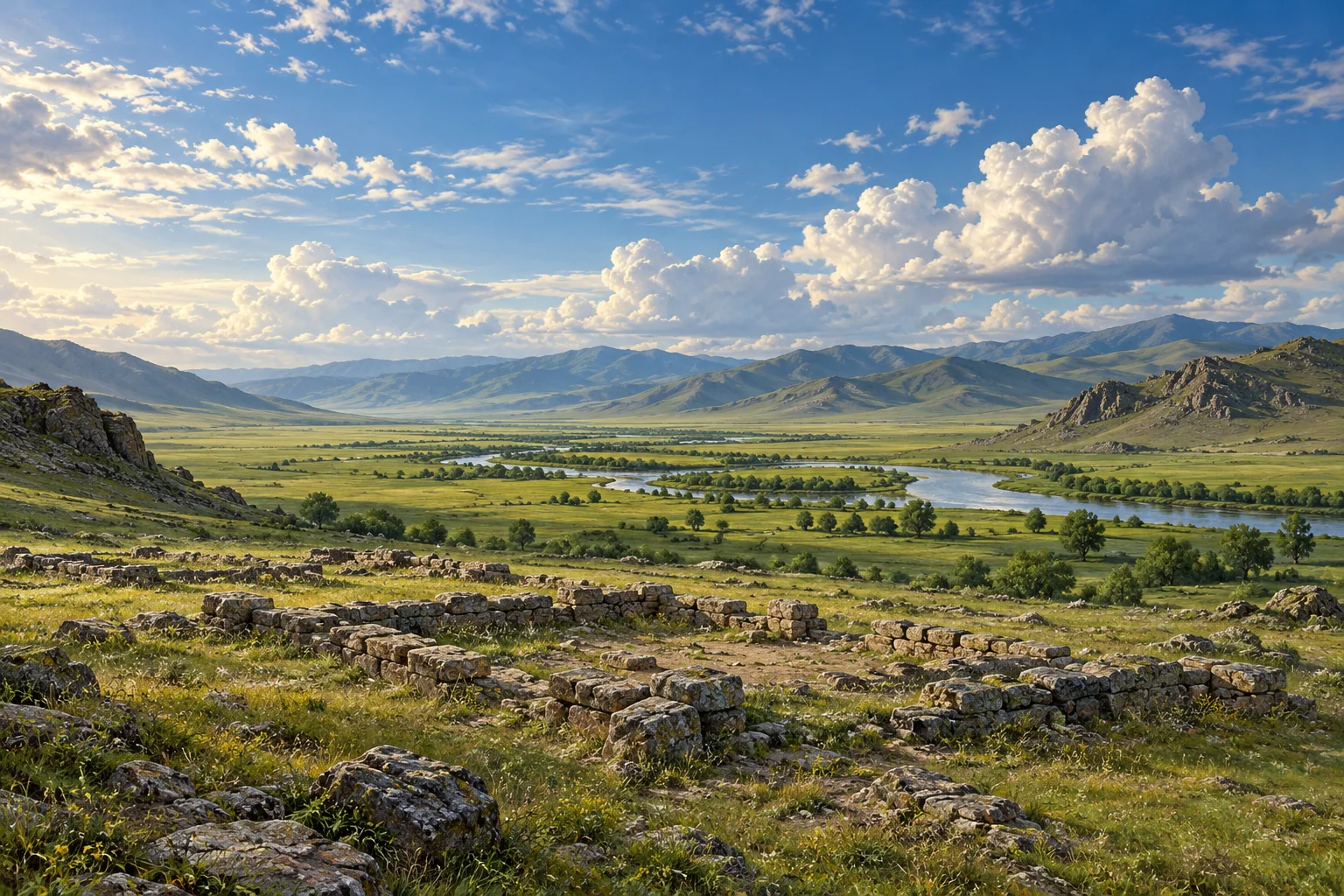
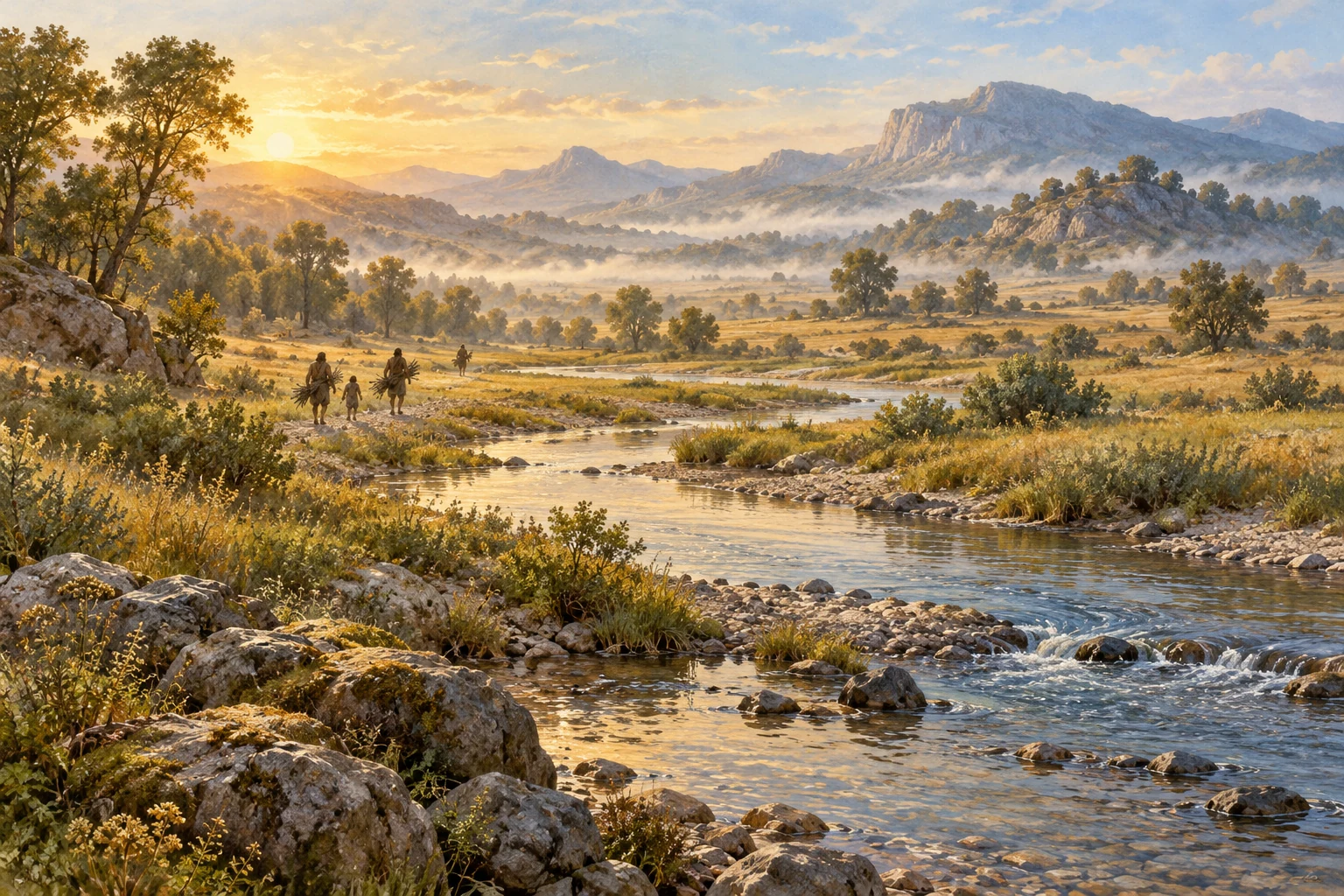
An imagined open grassland river terrace with small distant figures beside a stream.

Find a case

Clear filters

Dates describe the focus of each case. Some refer to an occupation; others refer to documentation or a contemporary account.

26 of 26 cases · grouped by region

Africa6 cases
Read Memphis: a capital seen through its necropolis
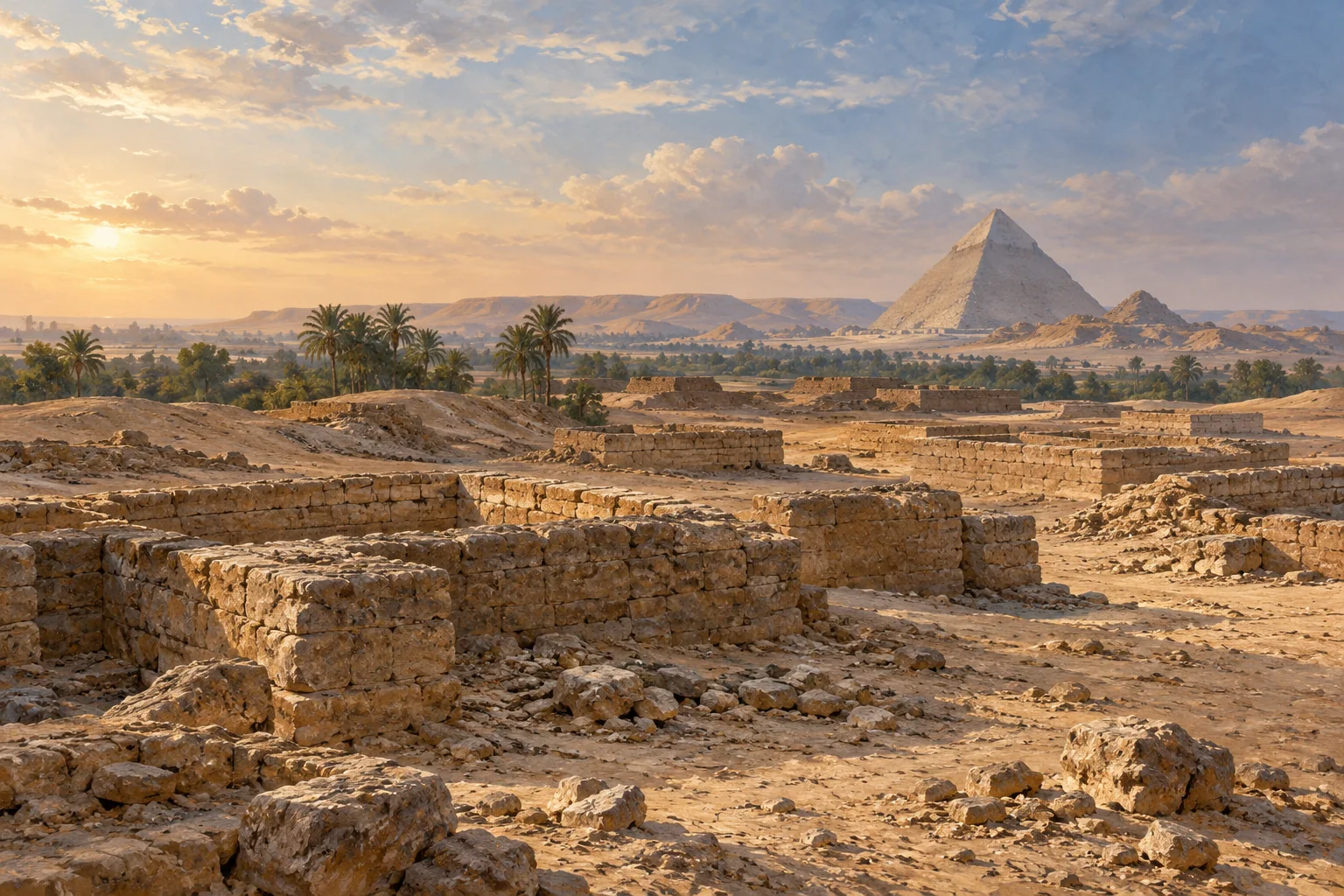
Low mastaba walls and distant pyramids in an imagined Memphite archaeological landscape.

Memphis: a capital seen through its necropolis

2700 BCE–2200 BCE (focus interval) · Egypt

Whose lives become most visible in monumental remains?

Pyramids, mastabas, rock tombs and temple remains survive in the Memphis necropolis. They provide evidence of funerary building and institutions, while leaving much of household life outside this case.

Read Meroë: cities, temples and water
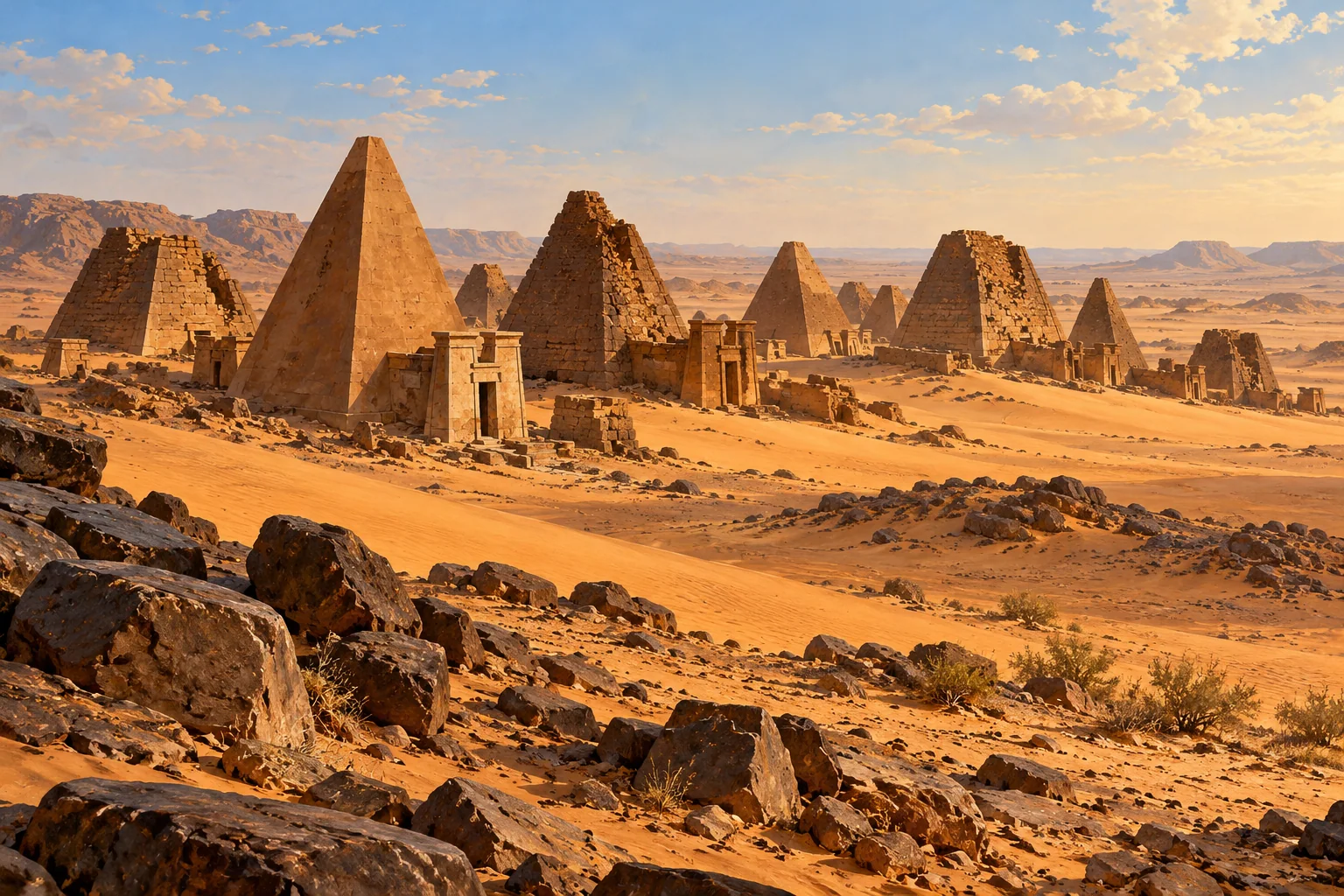
Nubian-style pyramid ruins in an arid landscape.

Meroë: cities, temples and water

800 BCE–400 CE (focus interval) · Sudan

How do royal places work within a dry landscape?

Meroë, Naqa and Musawwarat es-Sufra preserve royal, religious, domestic and water-management remains. Together they allow questions about how places were organized beyond the royal tombs.

Read Aksum: stelae, tombs and settlement
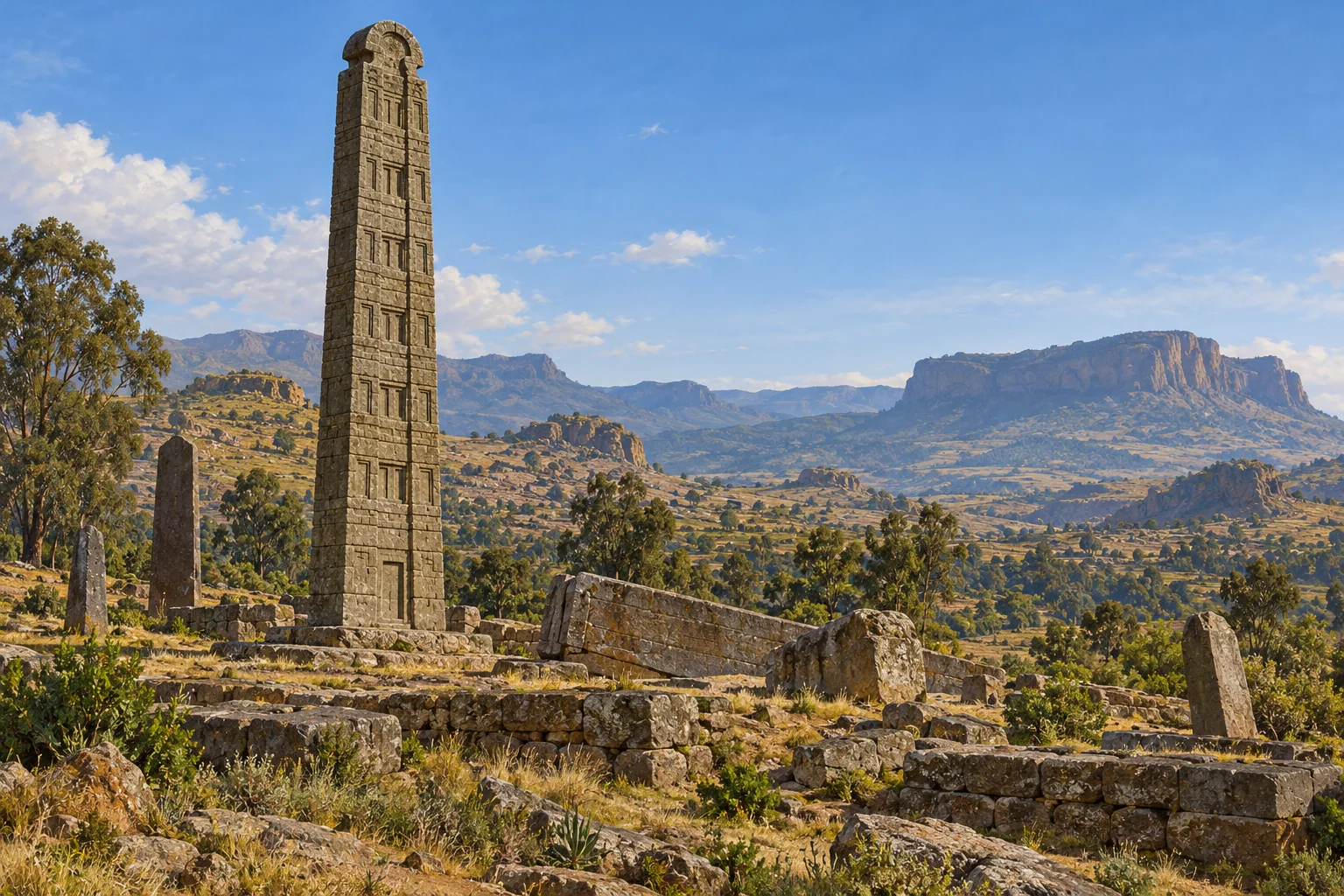
Carved stelae and stone remains in an Ethiopian highland landscape.

Aksum: stelae, tombs and settlement

1 CE–1300 CE (focus interval) · Ethiopia

What survives when a political center changes?

Stelae, royal tombs and palatial ruins survive at Aksum. Excavation and archive records help ask how this center changed, rather than treating its long chronology as a period of unchanged power.

Read Kilwa: a port seen through its material traces
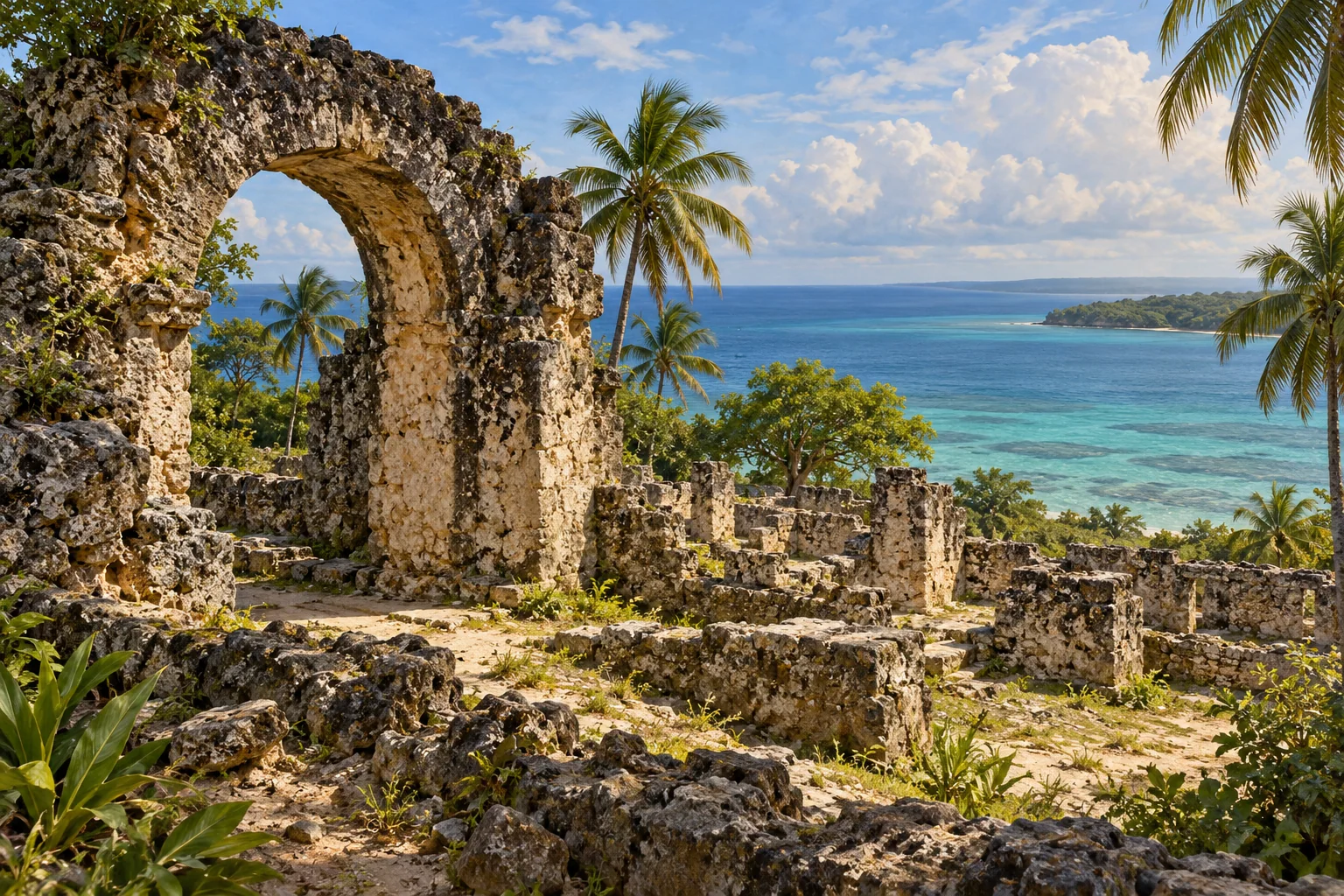
Coral-stone coastal ruins and palms beside the Indian Ocean.

Kilwa: a port seen through its material traces

1200 CE–1600 CE (focus interval) · Tanzania

How can an object connect places without drawing a voyage?

Chinese porcelain and Persian earthenware are among the material traces recorded at Kilwa. Imported wares help study a port’s connections, but an object alone cannot identify a merchant or prove a direct voyage.

Read Timbuktu: places of learning
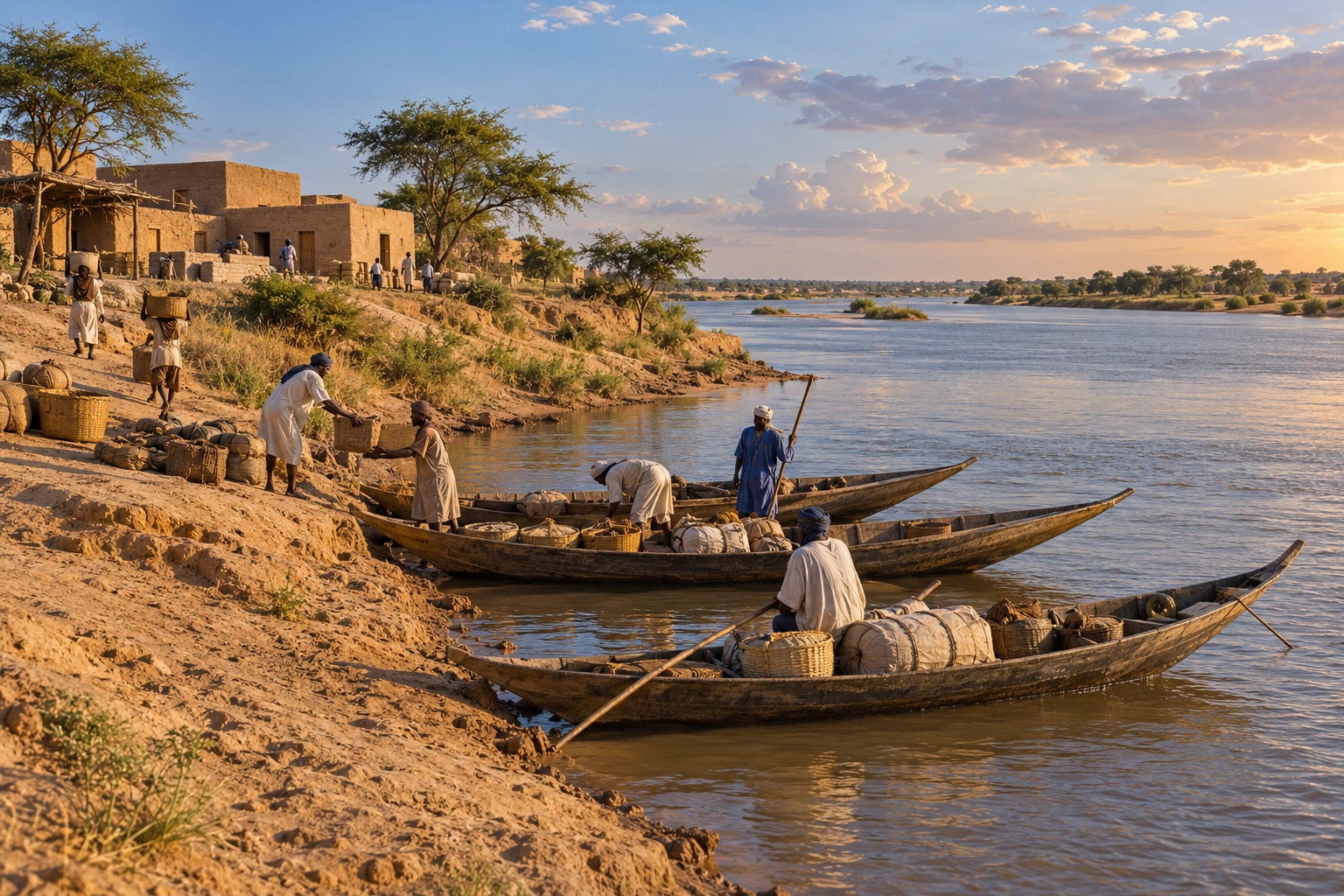
An imagined riverbank scene with people loading baskets and bundled goods into wooden boats.

Timbuktu: places of learning

1400 CE–1600 CE (focus interval) · Mali

Where does learning become part of a city?

Timbuktu’s mosques and institutions of learning are one starting point for its intellectual history. Family-library collections provide another, but modern inventories cannot date every manuscript to the medieval period.

Read Osun-Osogbo: a living sacred landscape
Forest and river context in southwestern Nigeria; no shrines or ceremonies are depicted.

Osun-Osogbo: a living sacred landscape

2019 documentation project; living heritage continues · Nigeria

How should a historical account approach a living sacred place?

Osun-Osogbo is a living Yoruba sacred landscape with shrines and other cultural features. A 2019 project recorded the condition of three monumental structures; that date belongs to the survey, not the origin of the grove.

Americas4 cases
Read Palenque: a city in relief
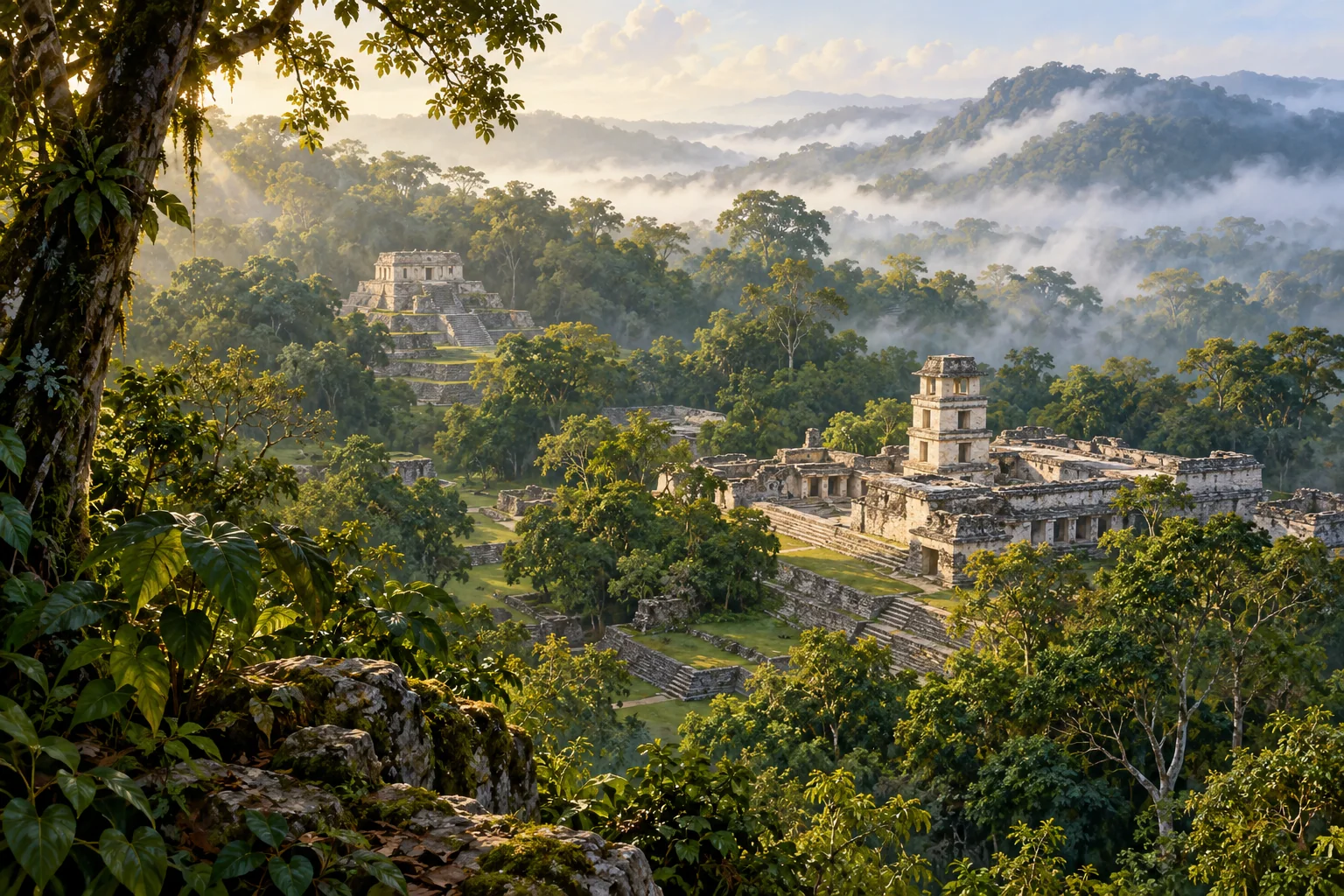
Limestone architectural terraces within a tropical forest.

Palenque: a city in relief

500 CE–700 CE (focus interval) · Mexico

What do buildings and reliefs preserve together?

Palenque’s buildings and sculpted reliefs record major development in the sixth and seventh centuries CE. Architectural research provides a view of this particular city, not a single picture of Maya life.

Read Tenochtitlan and Xochimilco: water and urban layers
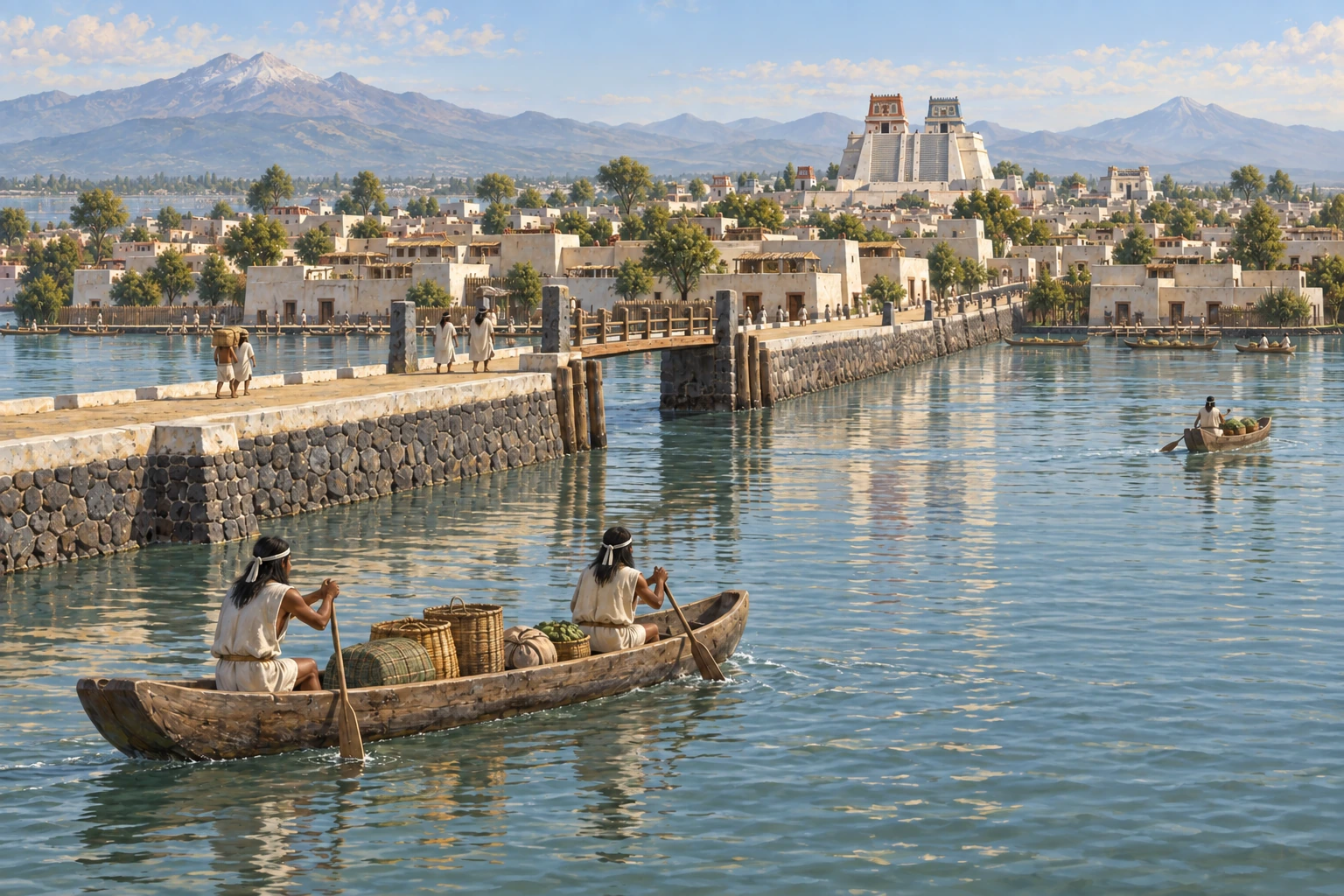
Tenochtitlan's lake connections

Tenochtitlan and Xochimilco: water and urban layers

1300 CE–1521 CE (focus interval) · Mexico

What remains visible when a city is rebuilt?

The Mexico City and Xochimilco property brings together a layered historic center, canals and artificial islands. The surviving water infrastructure raises questions about what changed and what continued.

Read Machu Picchu: building with a mountain
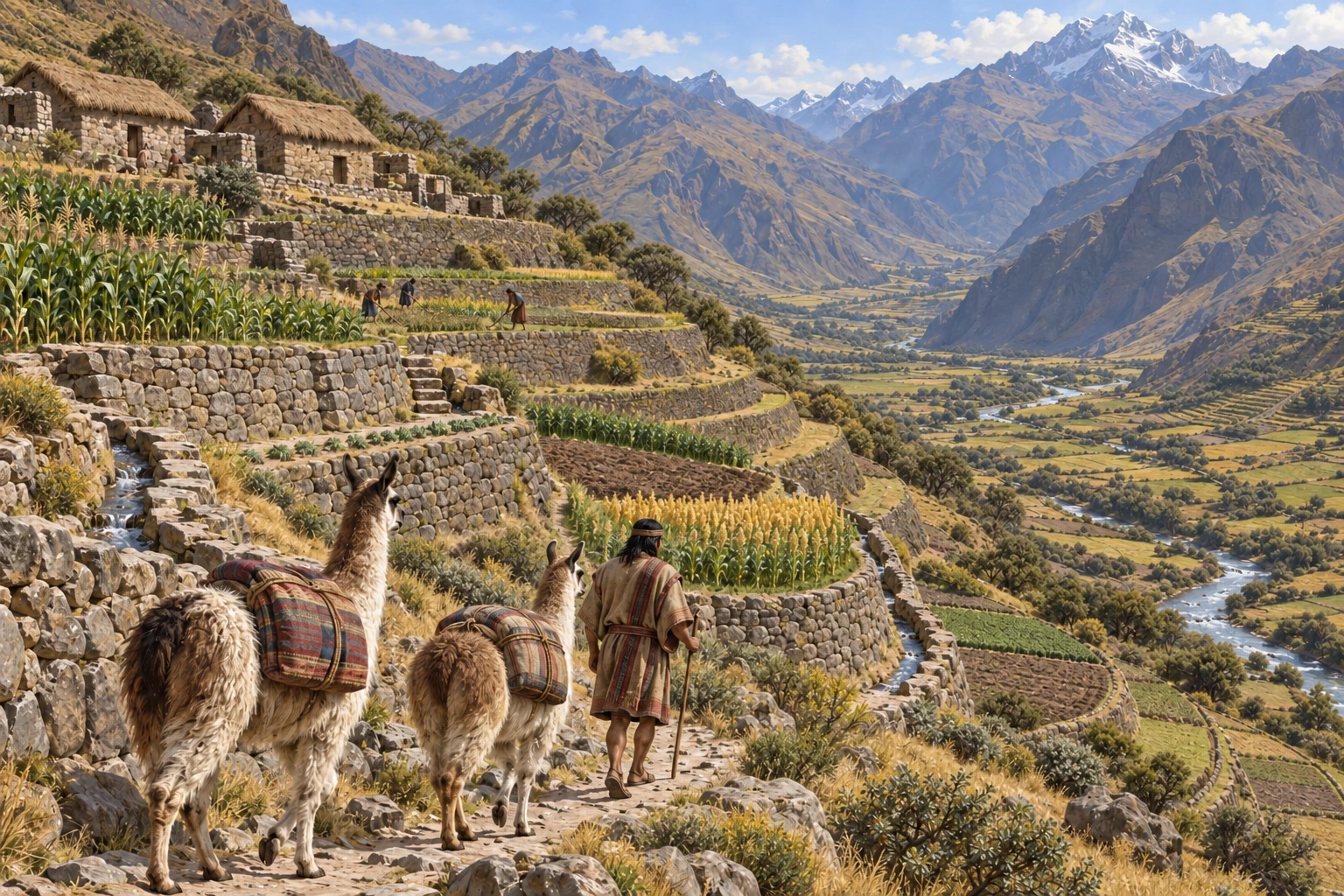
An illustrated Andean landscape with terraced fields, a person and pack animals on a stone path.

Machu Picchu: building with a mountain

c. 1420–1532 CE (AMS-supported occupation interval) · Peru

How does a built place work with a steep landscape?

Terraces, ramps and buildings at Machu Picchu were fitted to an Andean mountain setting. Dating evidence helps examine the site’s occupation, without dating every structure or all of Tawantinsuyu.

Read Haudenosaunee: a Confederacy speaks for itself
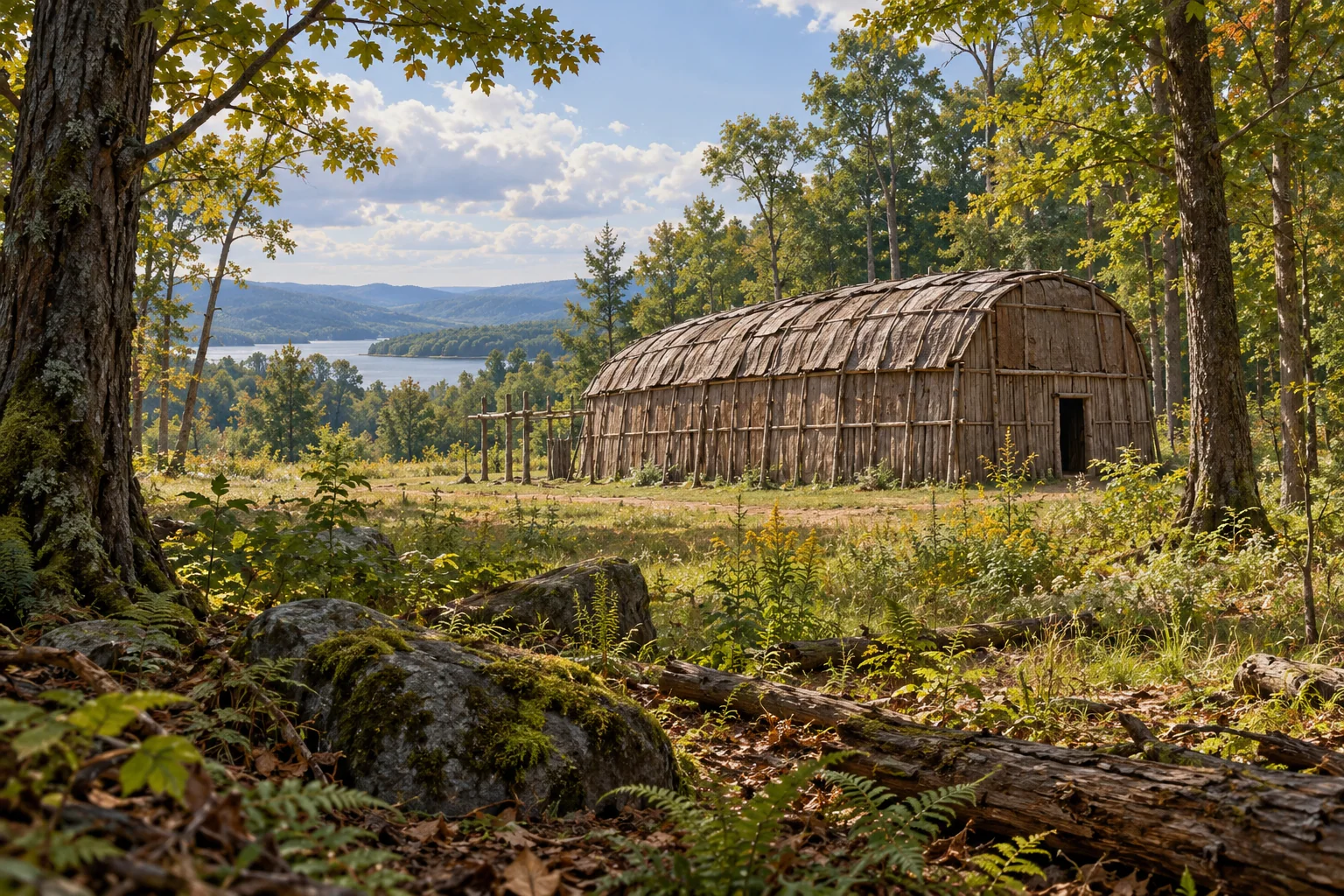
A wood-and-bark longhouse in a forest clearing; regional interpretive context, not a documented Haudenosaunee building.

Haudenosaunee: a Confederacy speaks for itself

Contemporary public description (2026); founding date not asserted · North America

Who should explain a living political tradition?

The Haudenosaunee Confederacy describes its national councils, Clan Mothers, chiefs and Grand Council in its own public account. This case begins with that living governance, then reads historical documents alongside it.

Asia11 cases
Read Çatalhöyük: houses beside houses
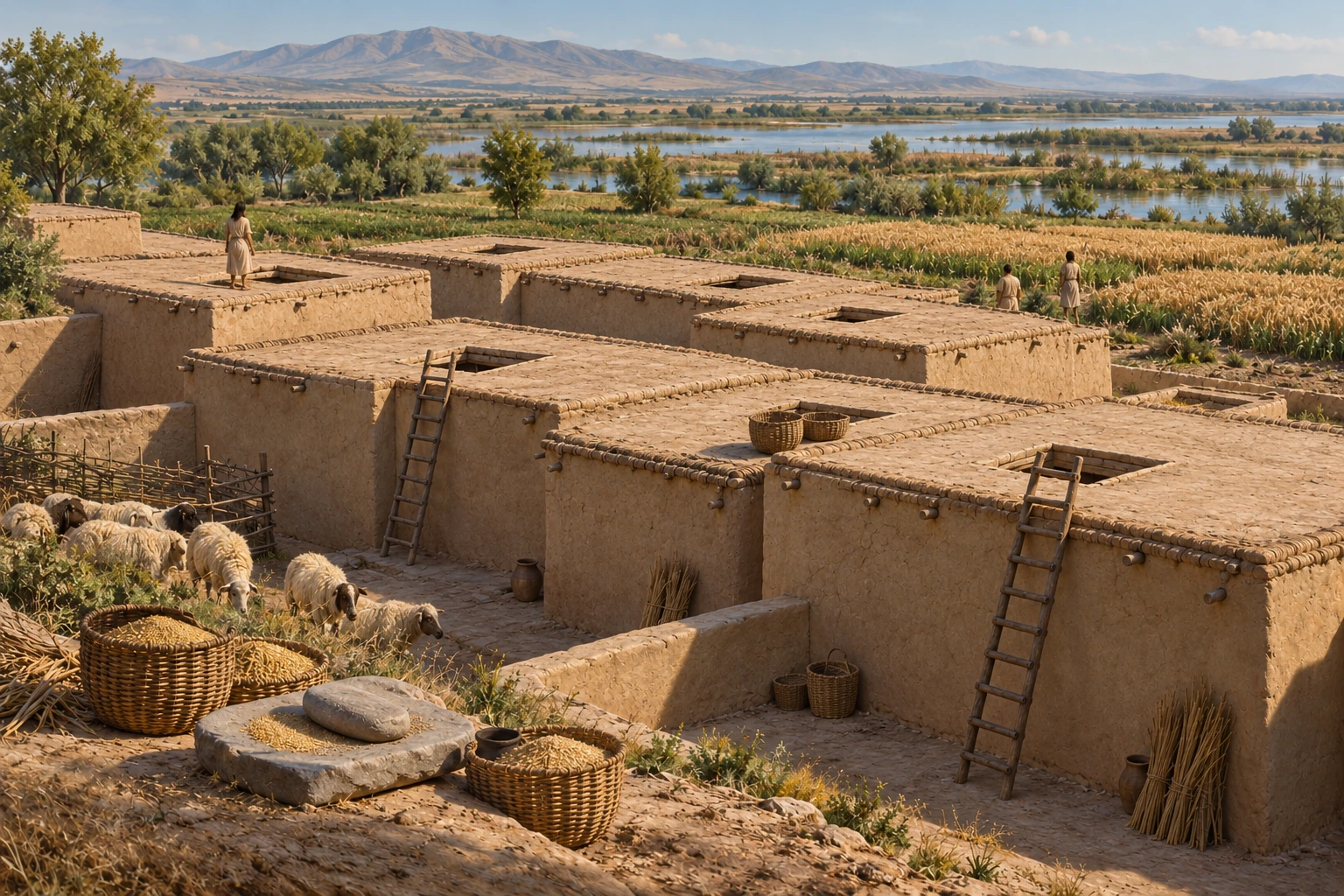
Early farming village · central Anatolia, c. 7000 BCE

Çatalhöyük: houses beside houses

7400 BCE–5200 BCE (focus interval) · Turkey

How does a settlement take shape without streets?

The closely packed houses at Çatalhöyük were reached through roof openings. Successive occupation levels on the eastern mound and a later western settlement let researchers study how people arranged and rebuilt their homes.

Read Uruk, Ur and Eridu: cities in a wetland landscape
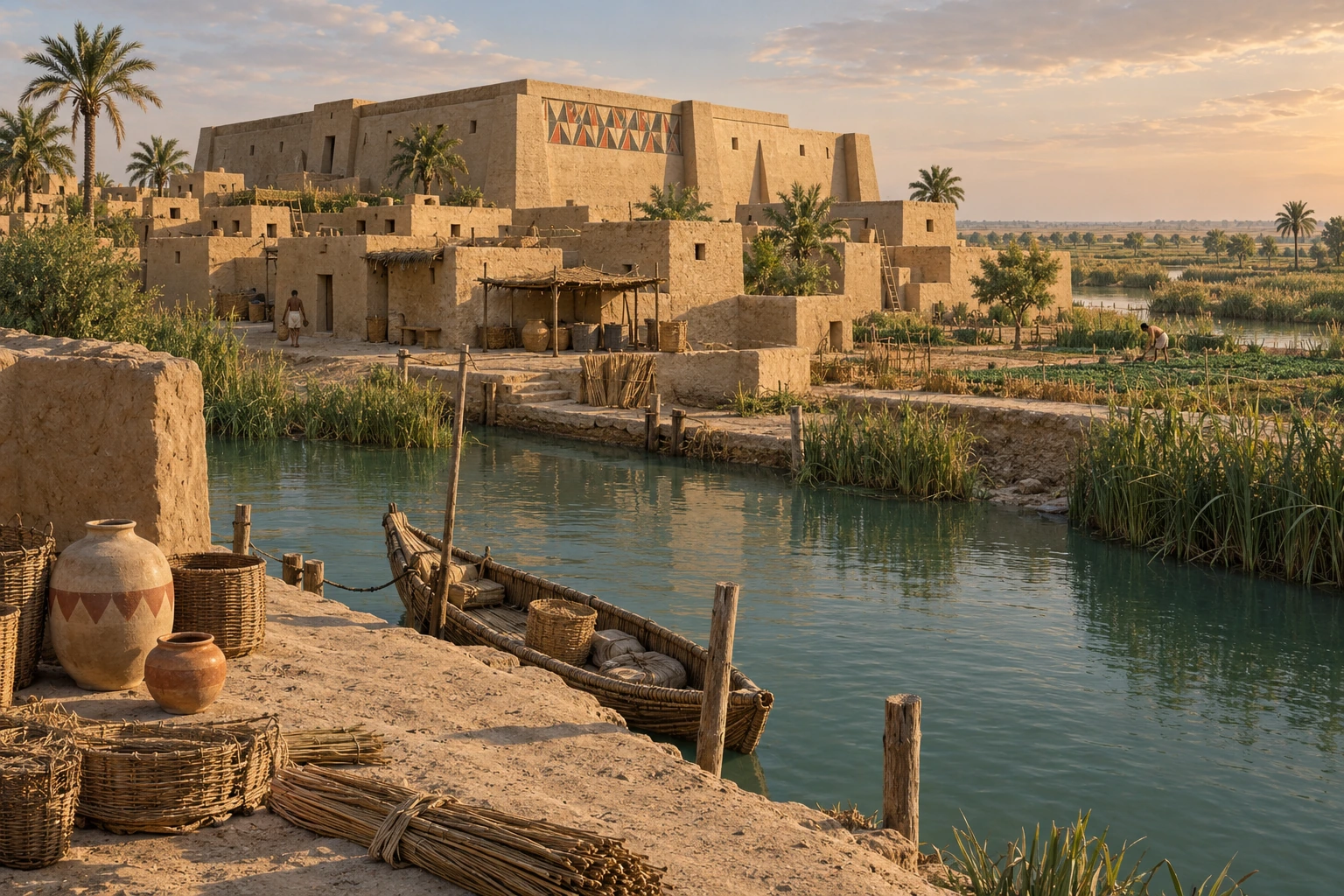
Uruk urban life · southern Mesopotamia, c. 3200 BCE

Uruk, Ur and Eridu: cities in a wetland landscape

4000 BCE–2000 BCE (focus interval) · Iraq

What belongs in a history of a city beyond its walls?

The heritage property brings together Uruk, Ur and Eridu with four wetland areas in southern Iraq. Reading the cities alongside their surroundings raises questions about the environments that supported settlement.

Read Mohenjo-daro: reading a city plan
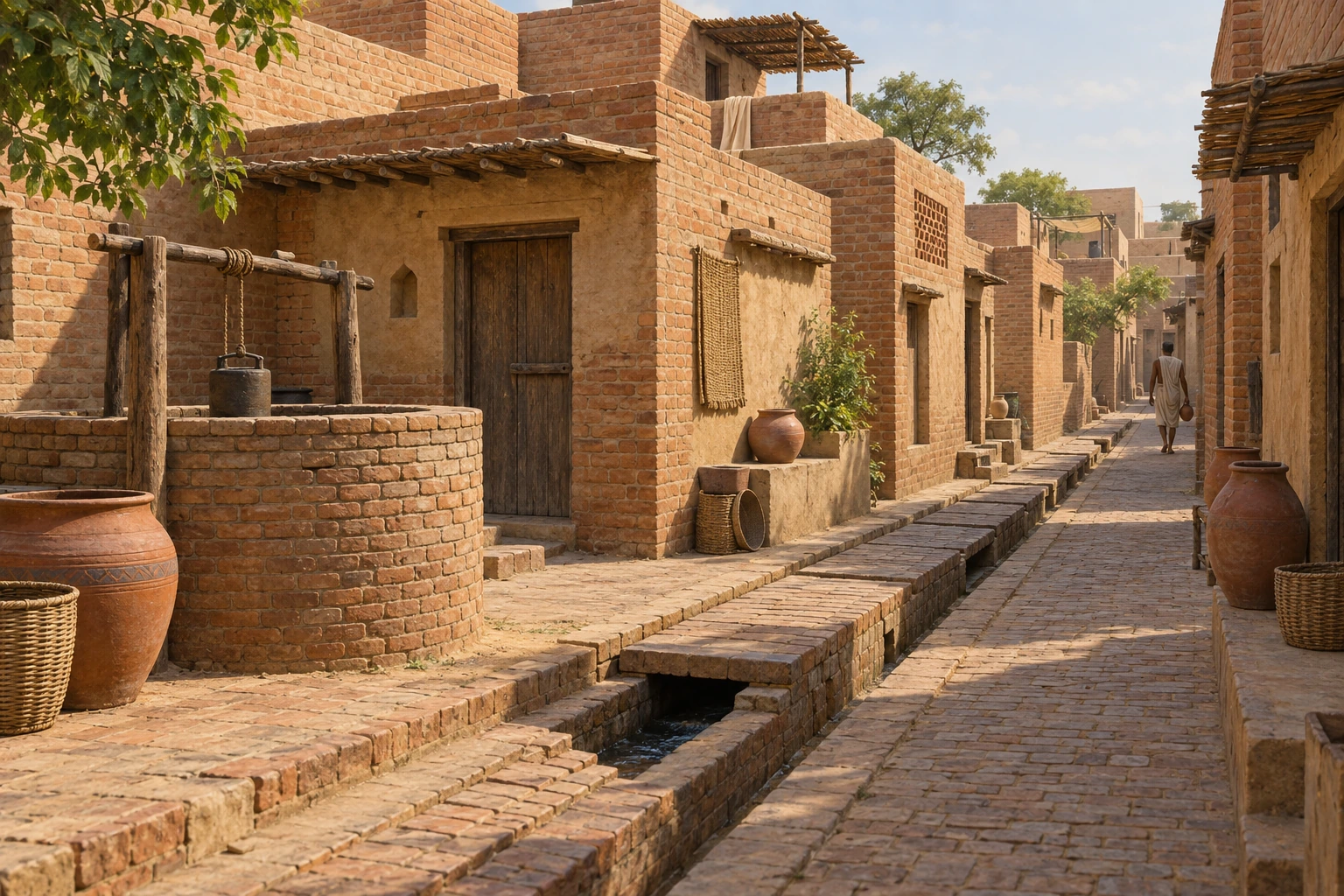
Harappan urban street · Indus region, c. 2500 BCE

Mohenjo-daro: reading a city plan

2600 BCE–1900 BCE (focus interval) · Pakistan

What can a plan tell us before we name its rulers?

Mohenjo-daro’s surviving city plan raises a practical question: how were shared spaces and infrastructure coordinated? Its ordered layout alone cannot identify rulers or tell us which language residents spoke.

Read Yin Xu: writing in an archaeological context
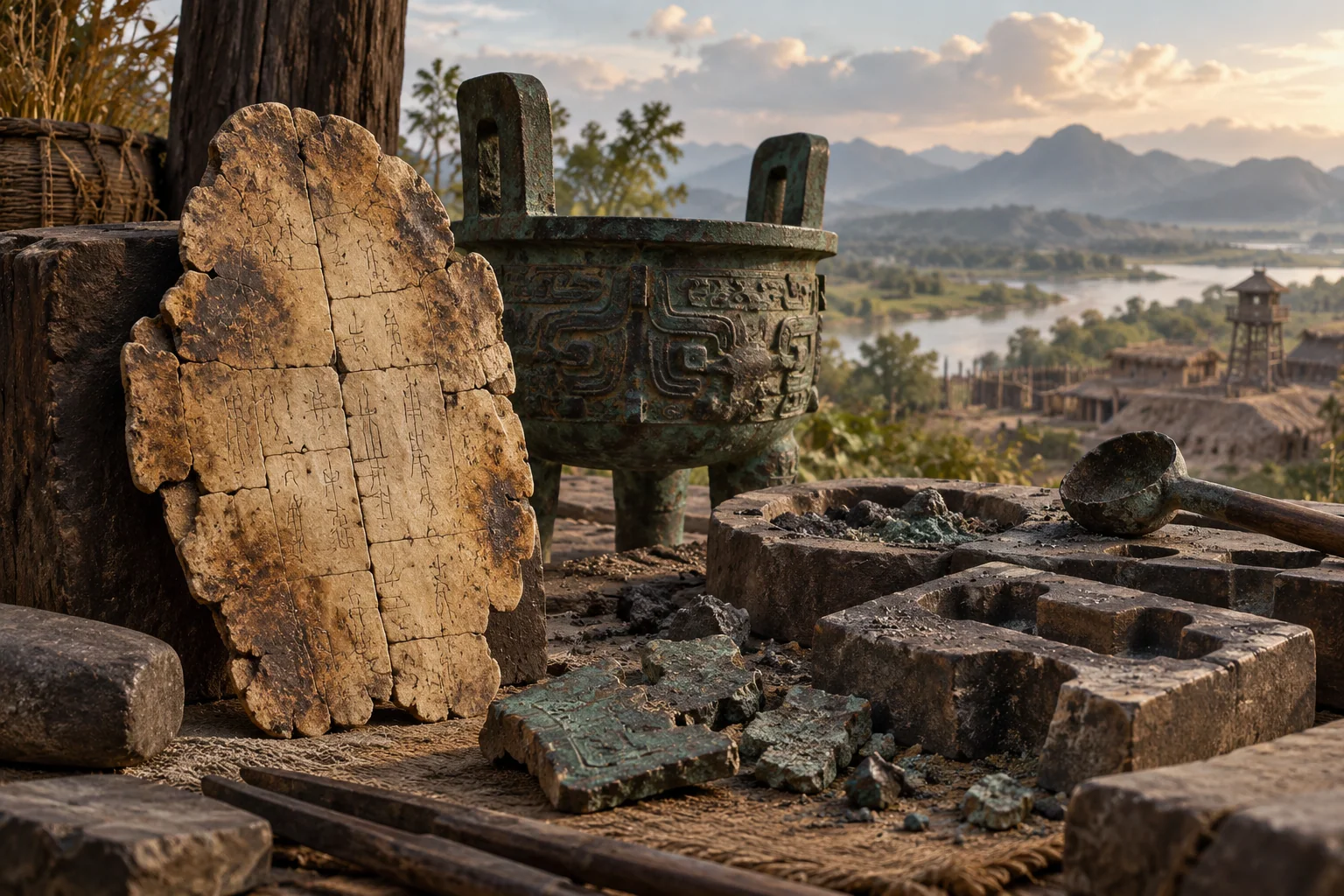
An imagined oracle-bone fragment and bronze objects; the marks are not a transcription of an actual inscription.

Yin Xu: writing in an archaeological context

1300 BCE–1046 BCE (focus interval) · China

What changes when writing survives with its context?

Palace and ancestral-temple remains, burials and inscribed oracle bones survive at Yin Xu. Reading the writing alongside its archaeological context helps keep an object’s inscription distinct from its findspot and date.

Read Persepolis: constructing a royal place
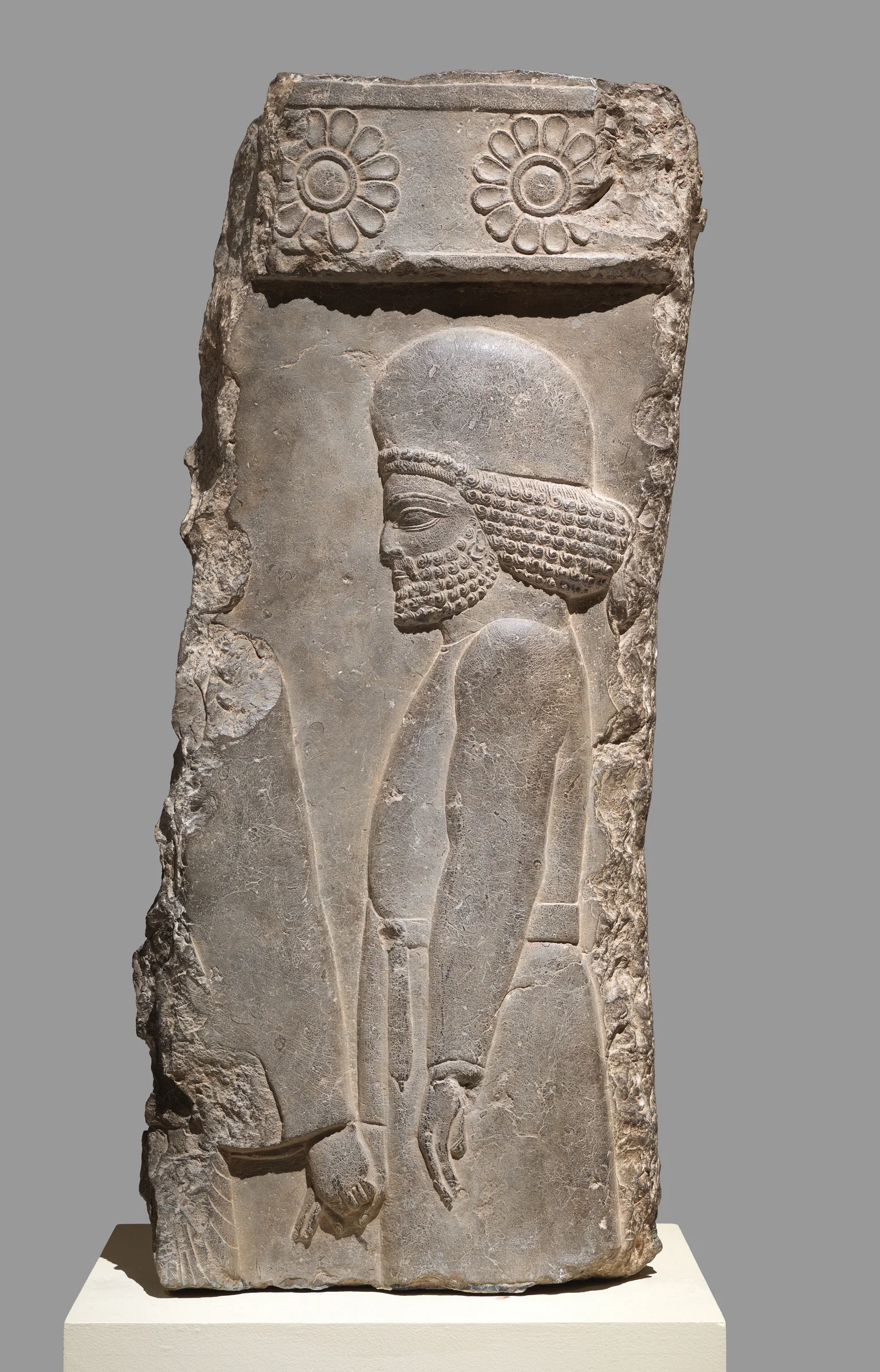
Museum photograph of a limestone relief showing a figure in a procession, Persepolis, ca. 405–359 BCE; The Met, object 39.133.
The Metropolitan Museum of Art · Fletcher Fund, 1939 · 39.133 · CC0 1.0 / Public Domain

Persepolis: constructing a royal place

518 BCE–330 BCE (focus interval) · Iran

What does a palace complex choose to make visible?

Darius I began the Persepolis complex in 518 BCE on a monumental terrace. Its buildings and surviving objects provide ways to examine royal presentation and the work of construction.

Read Mogao: a crossroads in painted caves
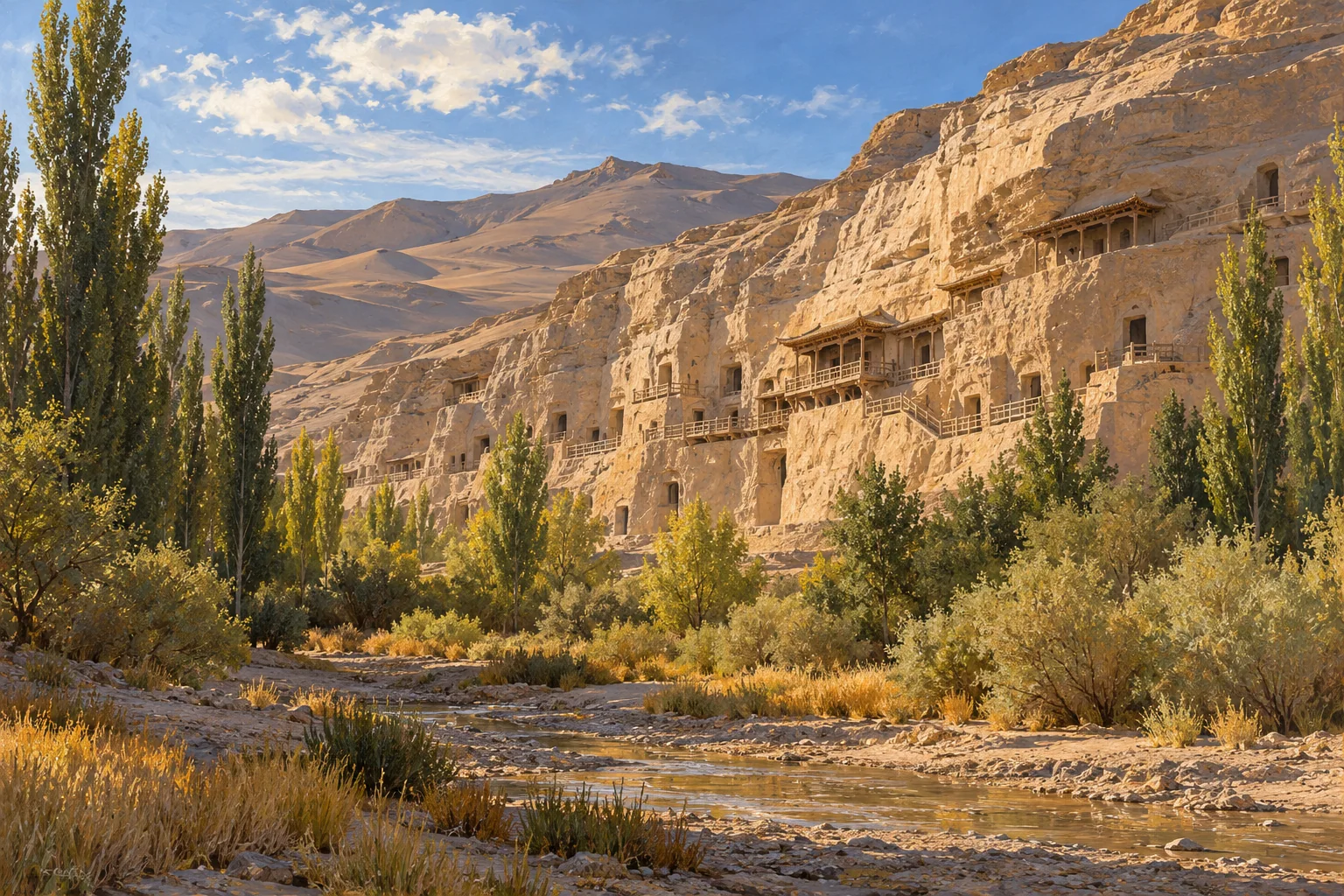
Cave openings and exterior facades in a desert cliff landscape.

Mogao: a crossroads in painted caves

366 CE–1400 CE (focus interval) · China

What can a place of devotion preserve about movement?

Mogao’s 492 decorated caves preserve Buddhist art spanning roughly a millennium. Manuscripts add evidence of languages and bookmaking, while their later dispersal shapes what researchers can study today.

Read Gyeongju: traces of Silla
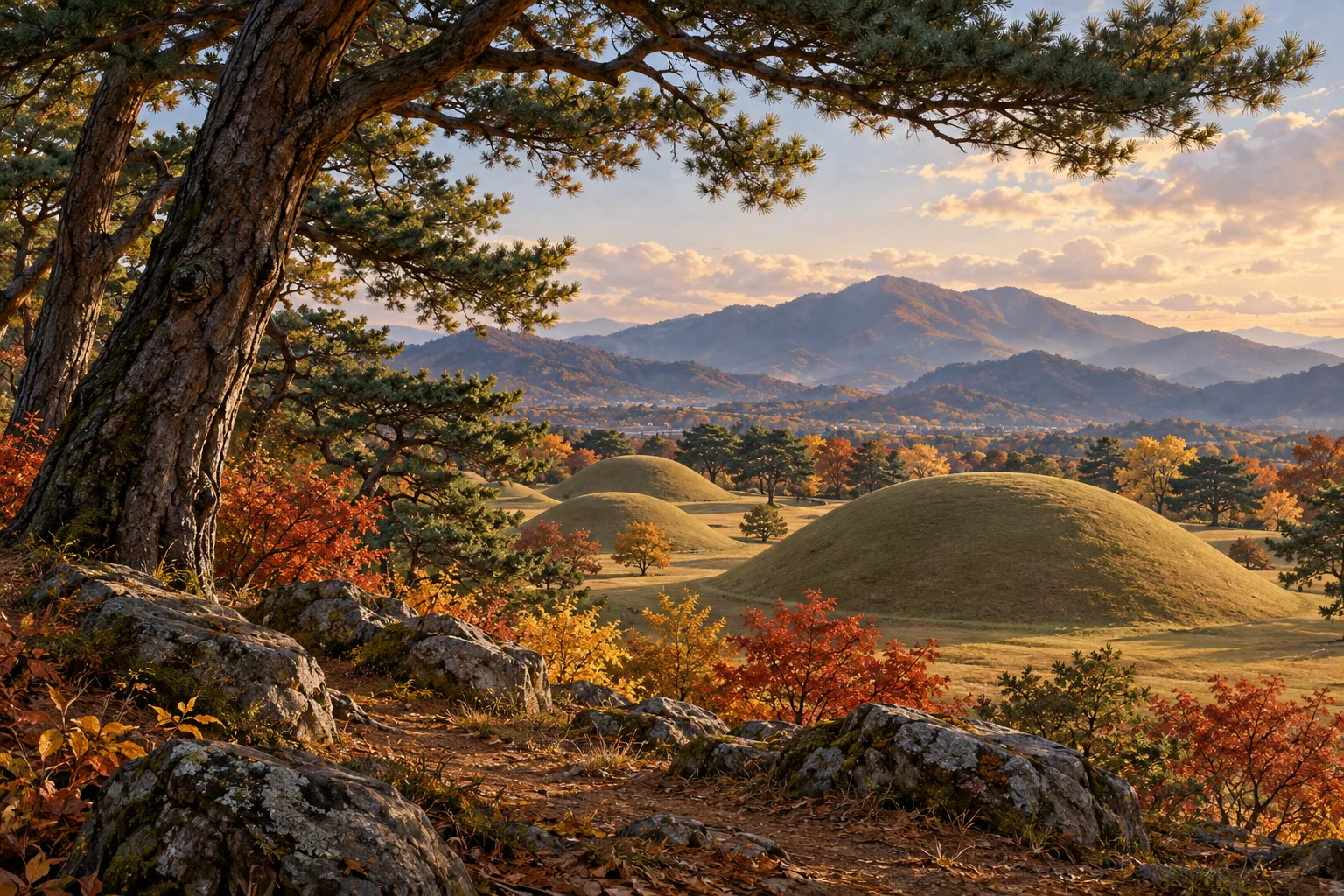
Grass-covered burial mounds and pine trees in a Korean landscape.

Gyeongju: traces of Silla

c. 500–1000 CE (burial and monumental focus) · South Korea

How do temples and palaces open different views of a place?

Buddhist art, temples and palace remains survive at Gyeongju. Museum records of Silla tomb objects add another view, with dates and contexts that must be kept distinct from the later buildings.

Read Hegmataneh: testing a capital’s chronology
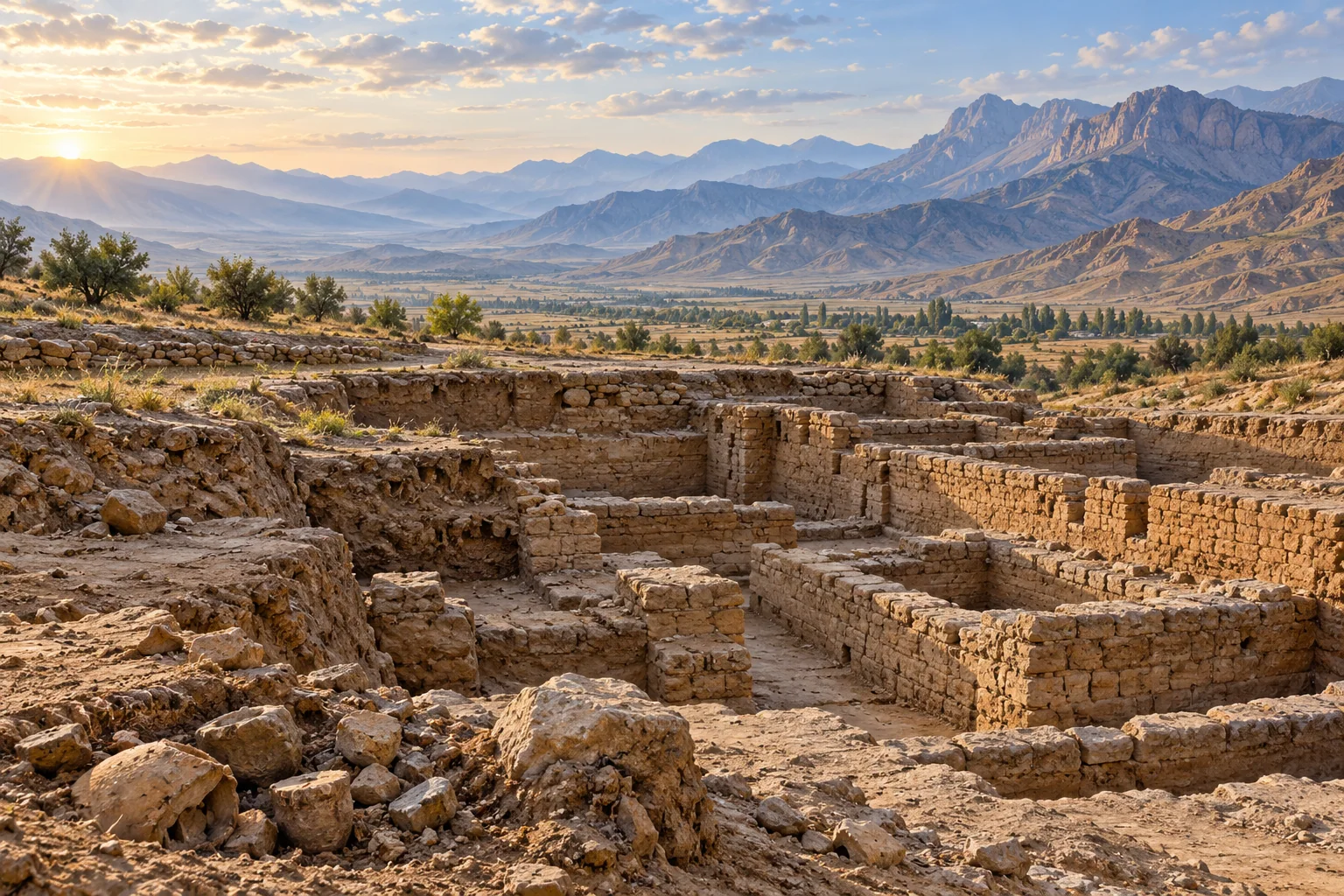
Layered mudbrick foundations in an Iranian highland excavation context.

Hegmataneh: testing a capital’s chronology

c. 540–740 CE (tentative sampled-structure interval) · Iran

How certain is a name attached to a layered site?

Hegmataneh’s identification as a Median and later capital is part of the question. An excavation report rejects a Median date for the architecture it investigated, so the dates of particular structures matter.

Read Samarra: building an Abbasid capital
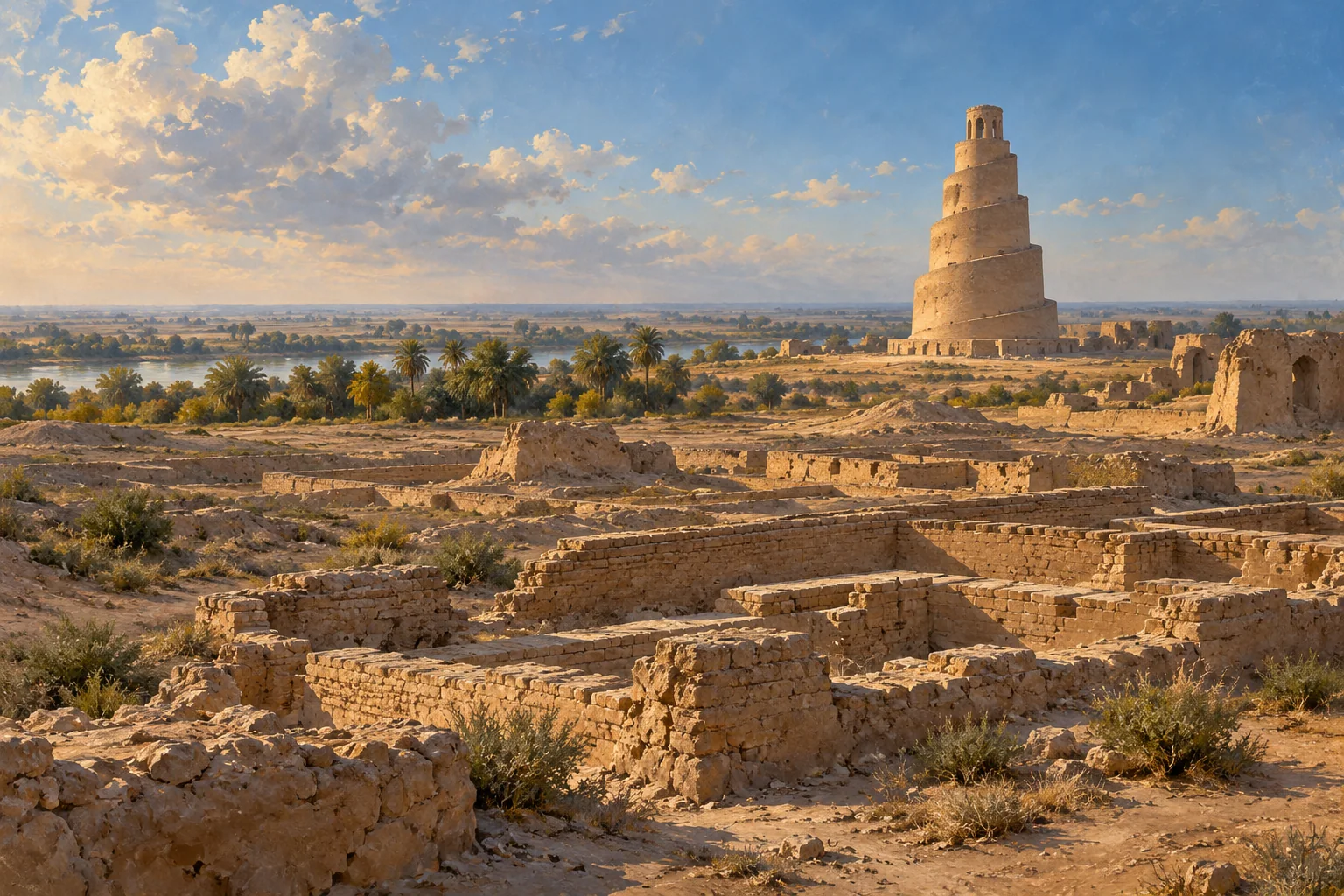
Brick ruins and a distant spiral minaret in an imagined Samarra landscape.

Samarra: building an Abbasid capital

836 CE–892 CE (focus interval) · Iraq

What can the footprint of a capital reveal?

Samarra’s palaces and major mosques form part of a large Abbasid urban landscape. The excavation archive also records pottery, painted fragments and plaster, offering evidence beyond the capital’s skyline.

Read Orkhon Valley: a capital in a pastoral landscape
Low stone remains in an open Mongolian river-valley landscape.

Orkhon Valley: a capital in a pastoral landscape

1200 CE–1400 CE (focus interval) · Mongolia

How can a capital belong to a mobile landscape?

The remains of Karakorum sit within the Orkhon Valley’s pastoral cultural landscape. Studying the capital alongside that landscape avoids treating the city as the whole Mongol Empire.

Read Trowulan: studying a Majapahit city
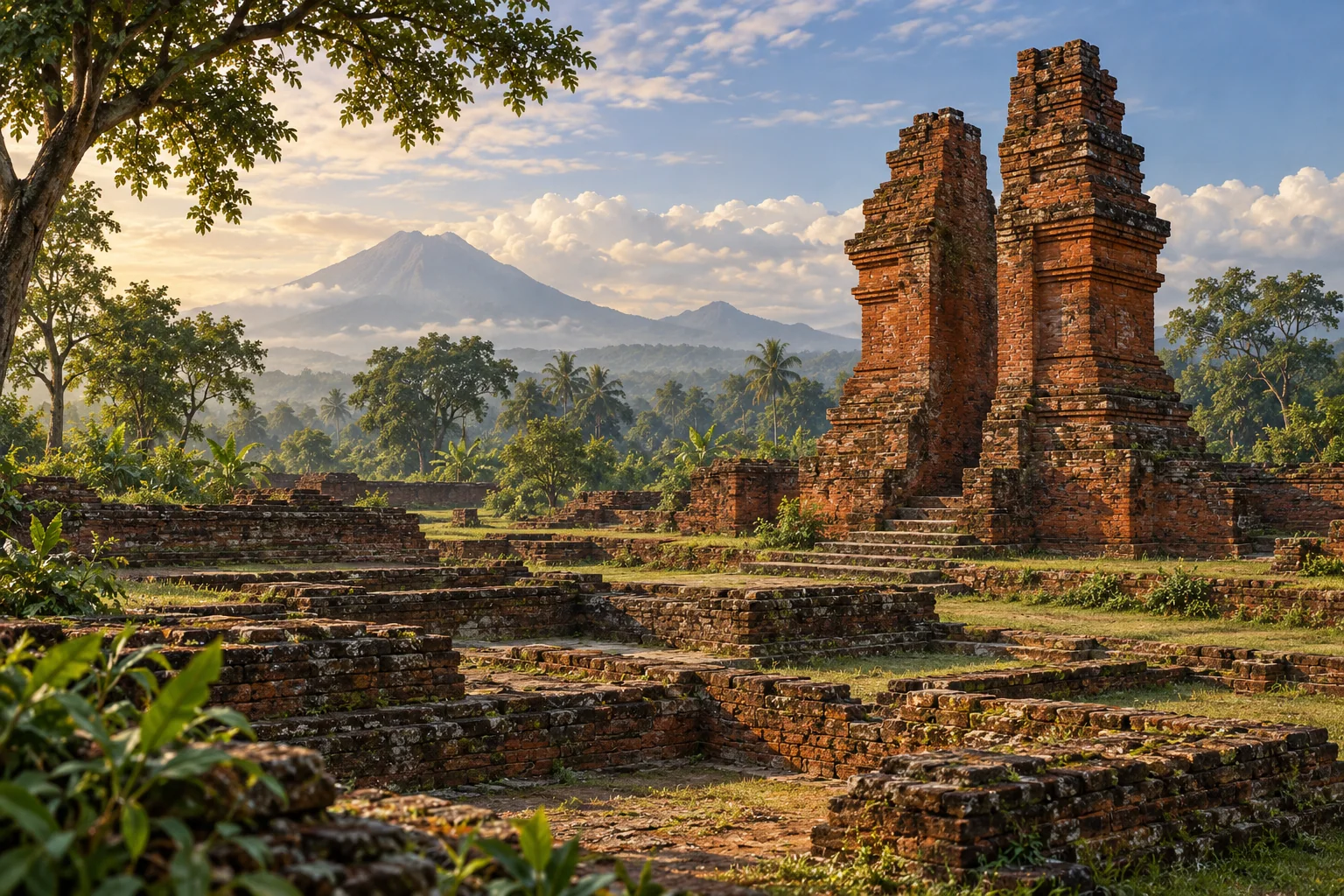
Red-brick archaeological remains in a verdant Javanese landscape.

Trowulan: studying a Majapahit city

1300 CE–1600 CE (focus interval) · Indonesia

How do dispersed remains become a question about a city?

Indonesia’s tentative-list submission describes buildings, objects and water features at Trowulan. Archival and field research challenges a confident canal grid and the proposed metropolitan extent.

Europe3 cases
Read Mycenae and Tiryns: fortified places
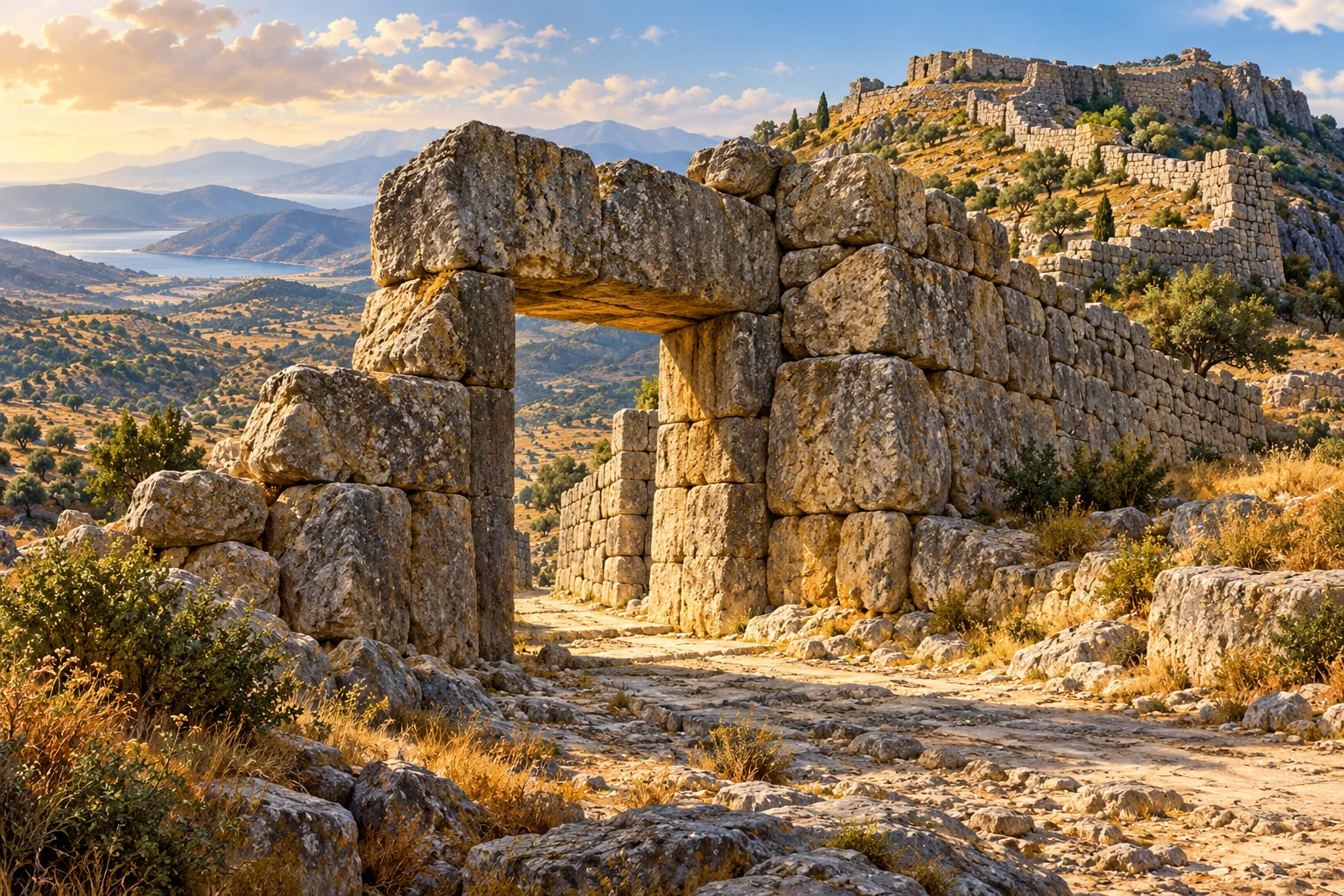
Massive stone gateway and fortified walls in a Greek hill landscape.

Mycenae and Tiryns: fortified places

1500 BCE–1100 BCE (focus interval) · Greece

How should we read a fortress alongside a later story?

Fortified centers survive at Mycenae and Tiryns. Their buildings and associated pottery can be studied separately from the later literary traditions linked to these places.

Read Rome: a city of surviving layers
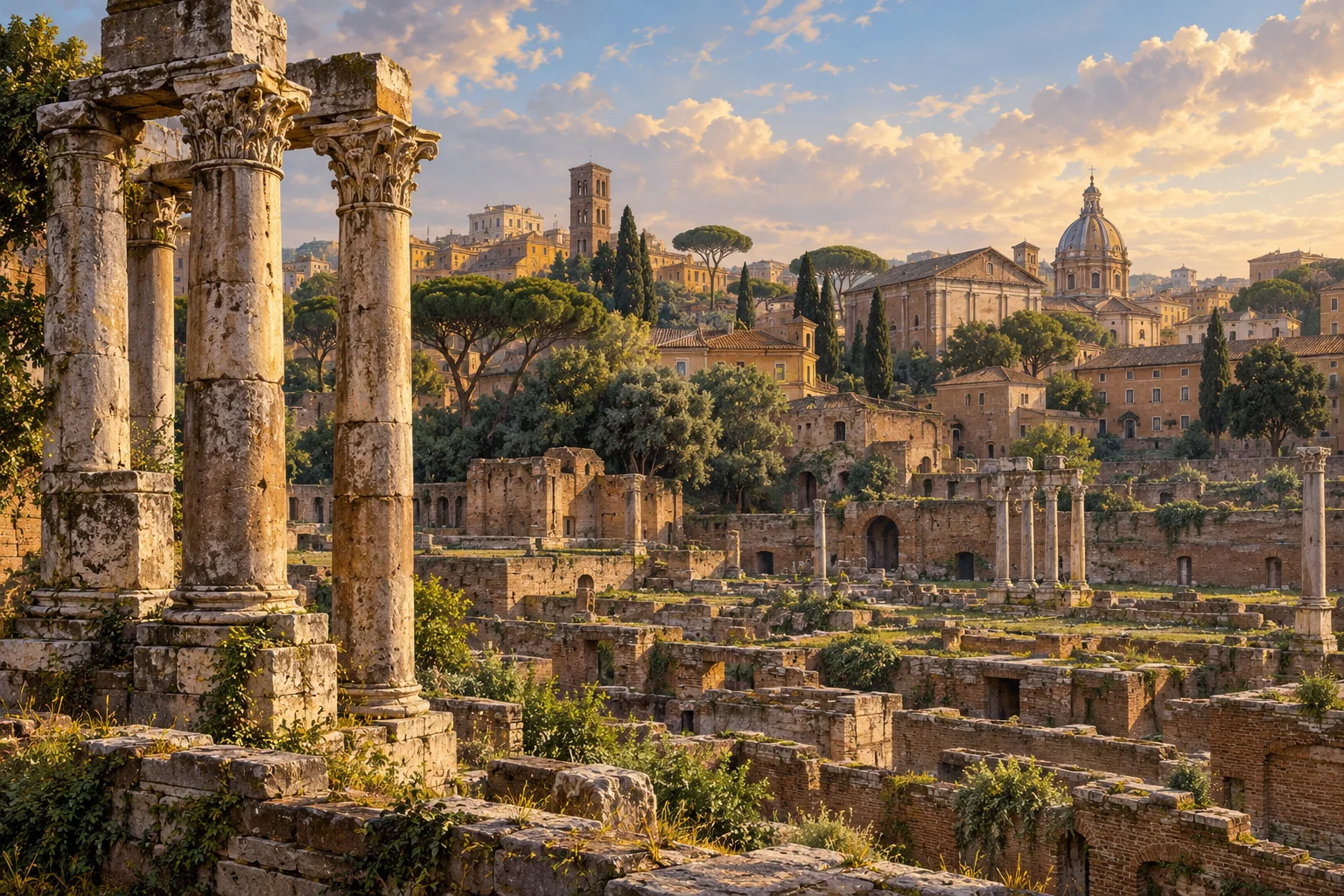
Ancient columns, excavated foundations and later rooflines in an imagined layered Roman cityscape.

Rome: a city of surviving layers

100 BCE–500 CE (focus interval) · Italy

How does a city preserve several pasts at once?

Rome’s historic center contains republican, imperial and later religious monuments. Reading the city means distinguishing when buildings were made, what they were used for and how they survived.

Read New Lanark: work, housing and a model village
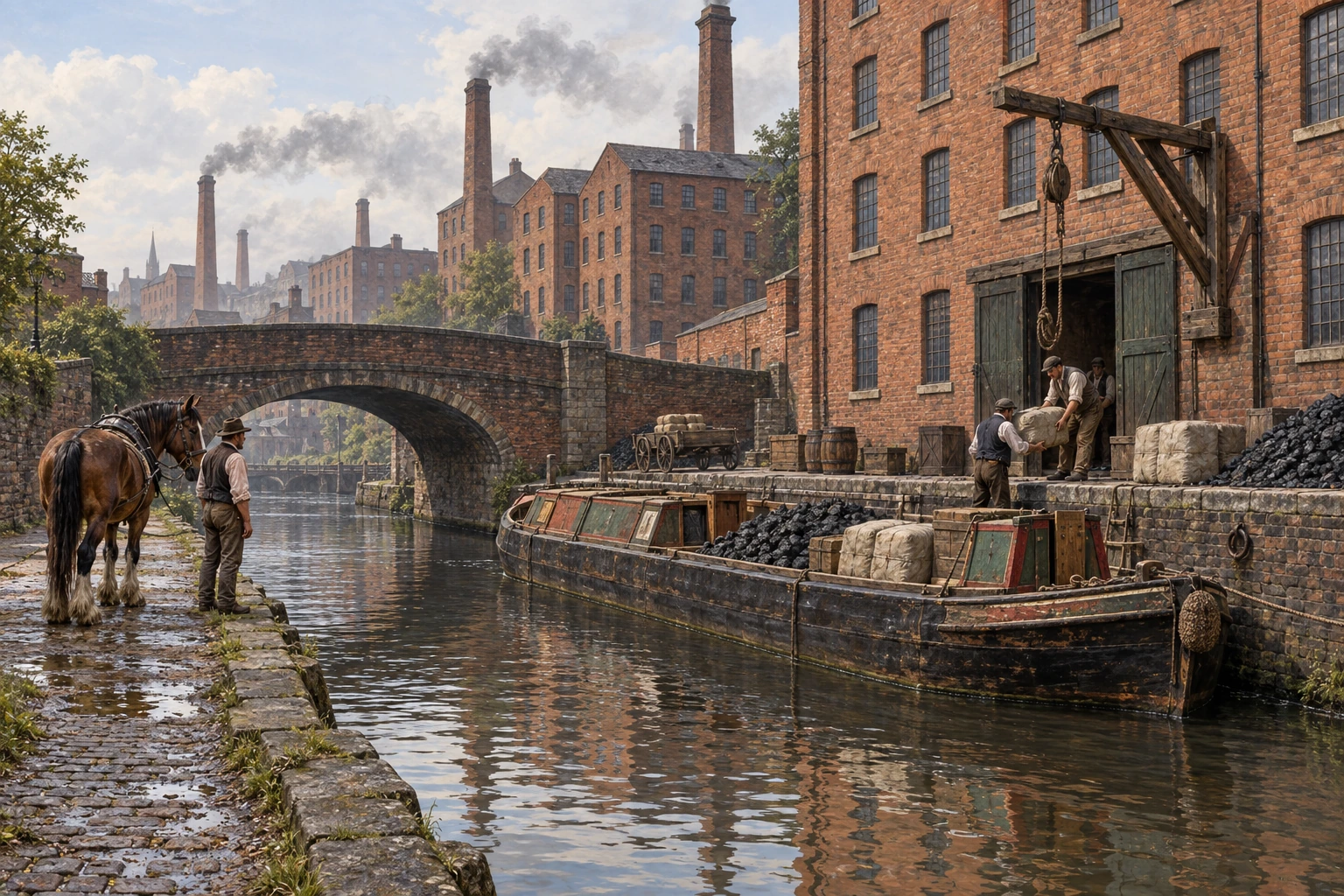
A British industrial canal district

New Lanark: work, housing and a model village

1785–1968 CE (working cotton-mill village) · United Kingdom

What does a model community reveal—and leave out?

Cotton mills, workers’ housing and educational buildings survive at New Lanark. Reading them together raises questions about work and domestic life, including what the surviving village cannot explain on its own.

Global1 case
Read Connectivity: a planetary question with uneven answers
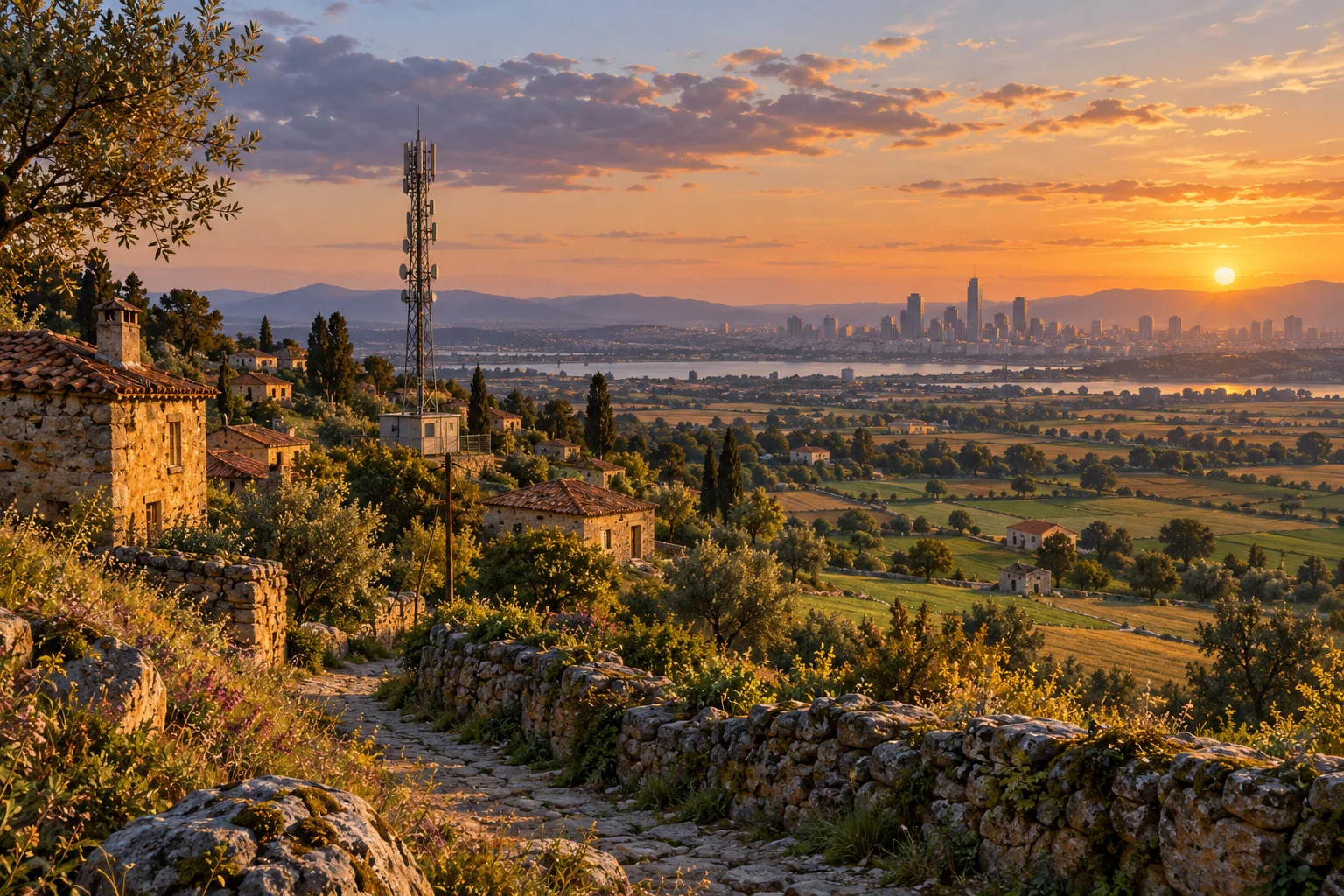
Telecommunications infrastructure between rural fields and a distant city; no actual coverage or connectivity measure is depicted.

Connectivity: a planetary question with uneven answers

2025 CE–2025 CE (focus interval) · Global

What does being connected actually measure?

ITU’s 2025 Facts and Figures reports connectivity estimates and gaps in access, affordability and quality. The figures describe uneven infrastructure, not one uniform planetary society or a live census.

Pacific1 case
Read Taputapuātea: a place of relationships
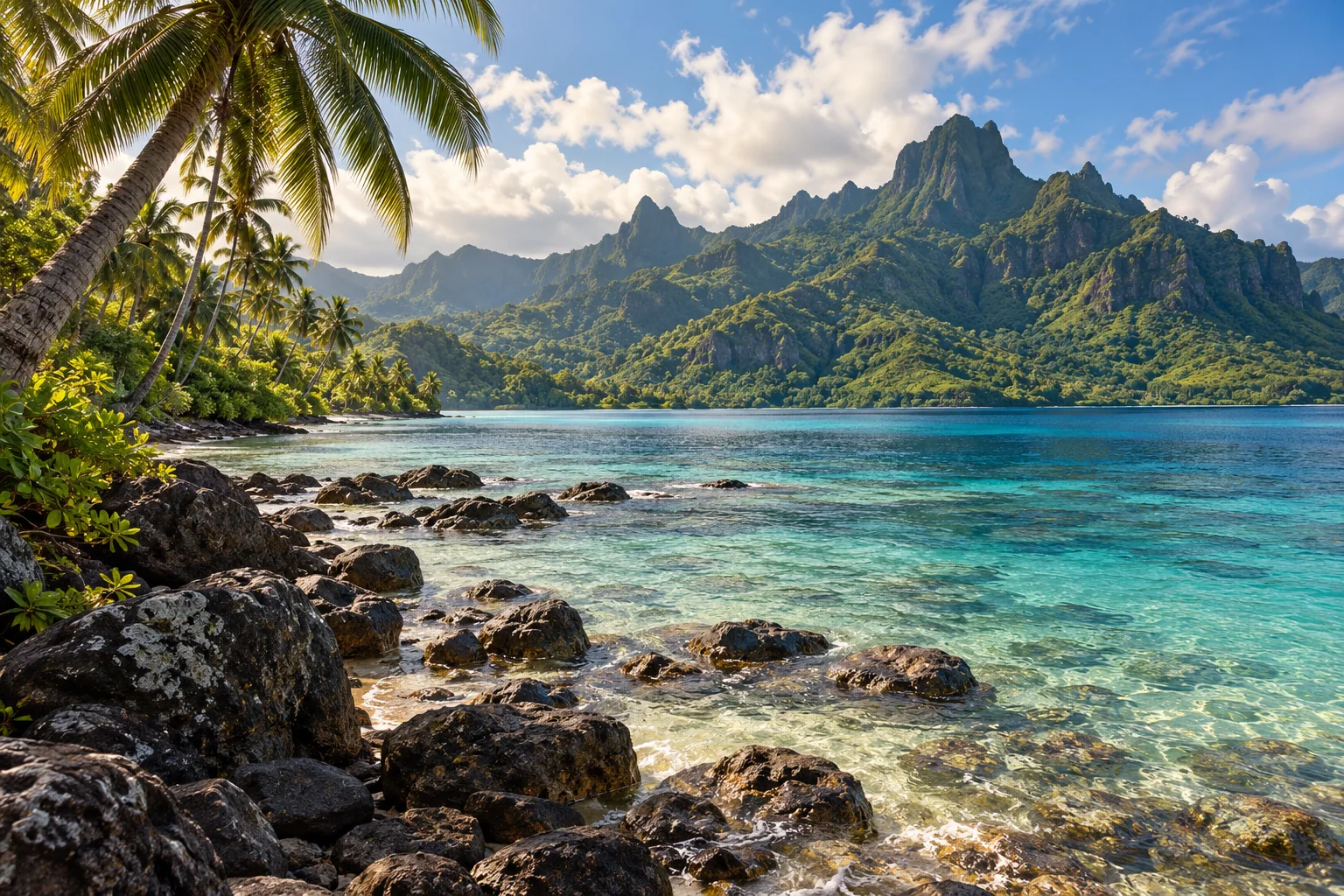
A green island slope, rocky shore and lagoon as ecological context for Raʻiātea.

Taputapuātea: a place of relationships

c. 1600–1765 CE (regional monumental-phase model) · French Polynesia

How can a place hold relationships across an ocean?

The marae complex at Taputapuātea on Raʻiātea has political, ceremonial and funerary functions in a continuing cultural landscape. The case follows this place within Māʻohi worlds, without treating one interval as the date of all Pacific migrations.

About this collection

This collection covers selected places and questions. Its coverage is uneven. Archaeological traditions, states and living communities are different subjects; each page explains what its evidence can tell us. Public sources do not imply community consultation or endorsement of WAWL.

How review works →
All UftB projects